
Social media basics for filmmakers-Facebook
Part 3 in our series on understanding social media tools. Find the rest of the series on these links Mindset Change, Myths, Twitter, Youtube
Facebook is the KING of the social networks (for right now anyway) and, with over 1 billion accounts, there is bound to be some measure of audience for your work to be found there.
Some Facebook stats:
Over a 170 million of the 572 million people who reside in the United States and Canada use Facebook. Europe ranks second in total penetration with 38% of 595 million people using the service. In Asia, Facebook counts just 5% of the 4.3 billion people who live there.
Since this series is geared to basics of getting started or for those who have started, but haven’t progressed very far, I am including this video tutorial [I didn’t make it] on opening up a business (fan) page. You WILL need to have a Facebook personal profile in order to administer a Facebook business (professional) page. If more than one person on your team will be administrating your page, they must first Like the page and then you can choose them as an admin.
A couple of things to think about:
-Are you mainly interested in building this page to show a distributor that you have audience awareness for this film?
-Are you mainly interested in building up audience for all of your work now and in the future?
The reason I am asking you to consider this is it is a little difficult to change the name of your page after it reaches 200 “likes.” Rather than opening a lot of pages and abandoning each one (and the audience you have built) after the film’s marketing push is finished, think about opening one page either for yourself as a professional or for your production company and keeping that audience with you for all of your projects. The way Facebook is set up for search is a little wonky because if someone searches for the title of your film in Facebook search, they may not find it if listed under your production company. But they are improving their graph search all the time and if you do a good job promoting the name of your page on your website, in social ads and in all communications, the chances of people making that connection increase. If you have already opened pages, there is a way to change the name of an existing page, but it isn’t easy if you have over 200 likes. Facebook wants to discourage the practice of building up an audience on a page and then selling it to the highest bidder and confusing those who have liked one page that is then turned into something else.
More on how to request a name change here.
If your only interest is trying to sell to a distributor and have them take over the page, then proceed with setting up under the film’s title. If you have read any of my writing, you will know which route I think you should take 🙂
As for category, you can change this later, but you might choose Company, Product, or Movie as a starting place.
Chances are you won’t be aware of even half the ways you can control and customize your new fan page. Luckily, Mari Smith made a great infographic that breaks it all down for you HERE. I suggest you just print it out and tape it to your monitor!
Ok, so you’ve set up the page how you want it and you’re fairly versed in how to navigate it. Now what?
Create a descriptive cover image. Consider this space the visual representation of whatever it is you want your audience to connect with when they first visit your page and are in decision mode about joining it.
If you want to highlight your current project, make some variation of your key art the main image with a photo of yourself or your logo as the small, profile image. I often refer filmmakers to band and actor pages because they use their cover image to promote their latest work, while keeping their own fanbases.
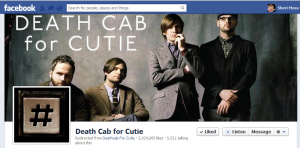
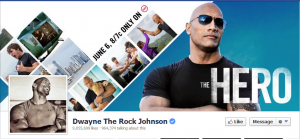
If you want to showcase all that you are involved in as well as what kind of person/company you are, consider a creative montage.
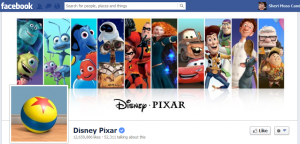
What do you want people to associate with your brand and feel emotionally about joining this page? They will make judgments about it before they have read one word of synopsis and it will be the difference between joining the page and clicking away. Make your cover image something that defines your identity. Dimensions for the cover image on Facebook are 851 pixels wide and 315 pixels tall.
You can hire a professional designer to make your cover images, you can get them made pretty cheaply on Fiverr, or you can try it on your own by using sites listed here.
Facebook guidelines have changed and now images may contain calls to action (subscribe, like our page), contact info (a URL or email address) or references to price or purchase information, while maintaining the 20 percent limit for text overlay, meaning that your text can take up no more than 20% of the image.
–Why Facebook is no longer FREE. The company readily admits that it uses its EdgeRank algorithm to restrict your posts to reach only about 16% of your fans in their newsfeed for free. What is EdgeRank? It is the Facebook algorithm that decides which posts appear in each user’s newsfeed. The algorithm hides boring status and post updates, so if your posts don’t attract comments, likes, shares, they stop showing up in your fans’ newsfeeds. Why should you care? In order to keep reaching your fans for free, you need them to take an action on your posts so it stays in their newsfeed. While you could desperately beg them to act, you could also start posting things they would care about and want to share. For more on EdgeRank, see this post.
Say that the majority of your fans have stopped interacting with your page and you want to regain their attention or announce something really important. To overcome the confines of EdgeRank, you will need to have an advertising budget from which to pay for sponsored stories, promoted posts and Facebook advertising. All of these methods are relatively inexpensive compared to pricing out AdWords, newspaper/magazine,TV, radio and outdoor advertising. You wouldn’t pay to reach all of your fans with every post, but it is a good way to push out important content and updates that you want all of your fans to see. As guidelines change all the time, use Google search to look into your best options for using Facebook ads to help build up a following on your page and to direct traffic to your own website or screenings/online store.
–Lots of Visuals. As Facebook continues to change its newsfeed optimization, they have recently said photos and videos will take precedence in the newsfeed. This means you will want to post a lot of visually compelling material as it will have more weight with EdgeRank. These could be photographs, infographics, video clips (not hosted on Youtube, hosted on your Facebook page), Instagram images, and perhaps pulling in your Pinterest Boards through a Pinterest app on Facebook.
–Post several times a day. The more engagement you have on the page, the more likely your fans will continue to see your posts in their newsfeed (the free way to reach your fans). The newsfeed is constantly updating and if you only post once a day or once every few days, your news quickly disappears. Many of your fans do not visit your page specifically, they only see your posts in their feed so make sure you are updating often.There are tools like EdgeRank Checker that tell you, based on your page’s history, what times of day are best to post for maximum engagement.
–Let’s get some fans! An organic and low cost way to start building your fanbase is by inviting your personal friends and family and the friends of your page administrators to like your page. The more administrators you have for your page, the bigger that pool of friends so consider adding several administrators. Note that administrators have power to make changes to your page so be judicious about whom you select for administration and be sure to revoke that power if an admin leaves the production.
Another way is driving traffic from your other online endeavors. If you have a website, Linkedin page, Twitter account, and/or email signature, post a link to your Facebook page on those. Every place that you are communicating with people should have your social channel information. Probably ALL of those people have Facebook accounts, they just don’t know you have a page to join.
Another way is through spending money. While you can complain about this, think about how else you might potentially reach 1 billion users? There isn’t another way that doesn’t involve money and Facebook is no different. What I like about Facebook advertising is you can get so granular about who you are trying to reach. There is much less spending waste here and you can see fairly immediately how the campaign is going and make adjustments.
For instructions on placing Facebook ads and promoting stories, go here.
–Use Facebook Insights. Monitor what kinds of posts get interaction and are popular so that you will know what kind of content works best on your page.
This is going to take time, patience, experimentation, creativity and consistency. Don’t start a month before you need to start asking the fans to do something. If you are opening the page as your professional or production company page, START NOW.
The next post in this series will cover Twitter.
Sheri Candler June 12th, 2013
Posted In: Marketing, Social Network Marketing
Tags: cover image, EdgeRank, Facebook, Facebook fan page, Facebook insights, key art, Mari Smith, social media for filmmakers
Social media basics for filmmakers-the myths
In the last post, I talked about the mindset change that artists have to go through in order to successfully use social networking. In this post, I want to dispel some myths that people have about how social networking works so that you won’t fall into unrealistic expectations. Other posts include Mindset Change, Facebook, Twitter, Youtube

Myth #1 Social networking is FREE
While it is possible to set up accounts on social channels for free, the expense of time and money to maintain them is not. To accomplish goals on social channels takes planning, creating compelling content, optimizing it for search engines, and publishing it on a consistent basis. If you plan to have a person dedicated to handling all of this for you, they should be paid. If you plan to have Facebook as your main channel for audience engagement, you’ll need a budget just for promoted posts and advertising to help build up the page and keep in contact with the fans you attract (more on EdgeRank when I cover the Facebook platform). Running social media “campaigns” of any kind will take money as they are essentially an advertising function (Campaigns are short term efforts meant to have maximum impact. More on this below.)
Myth #2 It works FAST
As anyone who has been active on social channels will tell you, building up a significant following takes time. Lots of time. Everyone starts with zero. If you were planning to use social channels as your main tool for gathering attention for your work, I hope you have already started giving to a community well before you will ask favors of them like spreading the word on your work, attending screenings, buying merchandise, etc. This isn’t a 10 minutes a day kind of activity (contrary to what some social media authors would have you believe), it is an activity that should be ingrained into your creative life starting now.
Myth #3 You won’t need a website, just use Facebook
It is extremely unwise to be completely dependent on a 3rd party site to keep you in touch with an audience. What if that site gets shut down? What if they close your account? What if they change the rules about what you can do with your page/take away functionality? That direct connection to an audience is in jeopardy when you allow a 3rd party to have control over your account. Your website is YOUR online real estate on which you are building your creative empire and you must have control over it. You will want to control how it looks and how it functions as well as collecting data on your online efforts and on your supporters (email, location, interests etc). While you will use certain social tools, first and foremost you must have a site that is under your control and from which you can make money.
Myth #4 An intern is fine to handle it
Would you let an intern speak for your production on Entertainment Tonight or in the New York Times? Social media channels have a global reach and are cataloged in search engines to be found at any time in the future. Anything published from your social accounts represents YOU and your work. Letting just anyone speak for your brand is not a good idea. The best person to let loose with that kind of responsibility is not your 23 year old intern just because she is “good at Facebooking.” That isn’t a knock on 23 year old marketing professionals because, if they have business training and marketing skills, they are definitely a great member for your team. Social media is really many things wrapped into one: marketing, customer relations, media relations, crisis management, and branding. It will probably take a small team of professional people working from inside of the production (as opposed to hiring an outside firm) to find long term success using these tools. If you entrust a member of the production, intern or otherwise, with this responsibility, make sure your social accounts use your company’s email and everyone has access to the passwords. Otherwise, you could wind up with no access to these accounts if and when that person leaves.
Myth #5 Social media works like advertising
Unknowingly, you may be using your social channels like advertising. Advertising puts out one way messages designed to interrupt the widest audience as possible usually to sell something. It is a paid tactic where the receiver has little choice but to be interrupted from what they are trying to do (watch a TV show, listen to music, read an article, drive in traffic etc). Advertising is about pushing a message with little regard for those who hear it.
Social media is a pull tactic. Rather than interrupting people with messages they don’t want to receive, social channels enable people to give their permission to speak to them by following your page or your account. They expect not only to hear from you, but to speak back to you and they expect you will listen and respond. A dialog, not a monologue. Also, they follow you based on things you share that are valuable to THEM, not just to you. Advertising doesn’t listen, or require any dialog. It is a one marketing tactic of several you can use, but don’t confuse it with what people expect on social channels.
You may use the term “campaign” to speak about using social channels to advertise your work, but social networking is not a campaign. Social networking is a long term, ingrained activity that professionals now have to incorporate into their lives. A campaign is a short term effort meant to drive toward one specific goal and definitely involves spending money to make sure that campaign is heard.
In actuality, any place online where information can be published, commented upon or shared is considered social media. That pretty much encompasses the internet. Now that I have outlined over the last 2 posts how to approach your efforts on social channels, the next few posts will dig into the main 3 sites commonly referred to as social media being used by most people; Facebook, Twitter and Youtube.
Sheri Candler June 5th, 2013
Posted In: Facebook, Social Network Marketing
Tags: campaign, control, myths, social media, social media as advertising, social media basics for filmmakers, social media intern, social networking, websites
Social media basics for filmmakers-a series
For the next several weeks, we will feature information for filmmakers who want to get started in using social media for their personal career and for their projects. These posts will be very basic in nature as we have realized that many members are confused/apprehensive/non tech savvy and we want to encourage them to be excited and proactive about sharing their work with an audience. At the heart of all social network marketing is the authentic, human need to connect and communicate with like minded people. This first post will prime you for the mentality change you need to succeed in using social channels. Quick jump to subsequent posts Myths, Facebook, Twitter, Youtube
Changing the mindset and finding the time
Before starting with questions like which is better, Facebook or Twitter, we need to recognize that the whole idea of sharing online and communicating directly with an audience takes a monumental shift in thinking. While it was the accepted norm that an artist would be separated from her audience and expected to create away from the public eye, only allowing them to see the work when it was launched into the market, this is no longer the case. Artists, and all people and companies really, are now expected to be open, accessible and willing to speak with the public.
Whether one agrees with this expectation is immaterial, it is a fact and those unwilling to accept it are quickly falling behind. Are there well known artists who haven’t accepted this, who still enjoy popularity despite being inaccessible? Yes, for the time being. But 99% of artists reading this post do not fall into that category and cannot compare themselves to these personalities. Even within that category of artists, there is a changing mindset with very prominent directors (ie., Ron Howard, William Friedkin, Darren Aronofsky, Spike Lee etc), cinematographers (Roger Deakins, Matthew Libatique), producers (Frank Marshall, Dana Brunetti, Gale Anne Hurd) and screenwriters (John August, Craig Mazin, Roger Avary) actively using social channels on a consistent basis. If they can find time in THEIR schedules, so can you and you must.
Ending the disposable audience mentality
Every project you make is a startup product, but meant to further the whole of your career in the future. Your body of work should build on itself, growing in experience and helping to push out to the wider world with each successive project . However, it is a mistake to think that audiences also have to be looked at as a new startup with each new project. I would like to do away with the practice of discarding the audience after a film has run through its release windows. This goes for artists as well as distributors. It is extremely wasteful and even rude to court an audience for a period of time and then drop them only to start up again in a year or two or to regard them as mere receptacles for your one way advertising messages. The audience is growing used to expecting access on a near constant basis with brands (if you are an artist, you are a brand) and your brand needs to be more than a logo. It has to be a personality, an identity, it has to show the world what you believe if you expect any loyalty or relationship.The days of viewing your audience as some abstract entity or eyeballs with wallets are over and the days of thinking that all you have to do is make great work and it will just be found are over. Artists need to start cultivating their own audiences for a sustainable living.
Starting from Open, Random and Supportive*
Closed, Selective and Controlling. This is the mindset we have been used to in most aspects of the arts and in business. We have been operating mostly away from the public, hidden behind a logo and faceless entities we hired to speak for us (distributors, managers, agents and publicists). We listened to selective voices and we allowed only a selective group behind our closed doors of creation. We controlled all access in how our work was seen, experienced and who could talk about it or share it. This is NOT the world we live in any longer.
We need to open ourselves up to meeting all kinds of people and listening to all kinds of voices. Openness helps us grow. Be Open in accepting that this change in how people communicate has already happened, no matter how much you wish it hadn’t or how much you think it is just a phase. A major change in human communication has happened and the days of closed, selective and controlling are not returning.
Accept Random information. There is an endless supply of information streaming at us every day and the answer is not to cut yourself off from it. Learning to filter the noise, analyze the random in order to find the relevant is becoming a human skill that we will need in order to evolve and survive. Our children are already learning to do this, we need to catch up.
The Internet operates best in an open environment where sharing information, educating people, and building a large number of connections breeds success. Rather than thinking from greed and competition, think about how much faster you can grow your success by being Supportive of others and giving instead of only figuring out how to take from them.
Social channels are only tools
No matter which channels you choose, know that they are only tools to help accomplish your goals. When evaluating the tools, be realistic about the strengths you are going to bring to them yourselves. If you aren’t much of a writer, blogging probably won’t be a good tool for you I don’t care how much people say you should blog. Having a poorly maintained blog is worse than having no blog. If shooting video or photos is more your speed, then using Youtube, Instagram, Vine etc are tools on which to concentrate. If you would rather engage in short, pithy dialogue, Twitter will be your best tool. Not only will you need social accounts, you will need to populate these channels regularly. If you pick a tool that is torture to maintain, you won’t do it and you won’t accomplish much with it.
Goals to accomplish**
One goal for artists is to secure funding and one of the biggest opportunities in funding art projects is crowdfunding. You know what is at the foundation of successful crowdfunding? Having online connections with a core group of supporters. Crowdfunding can help you expand an audience, but it is extremely rare to have a successful campaign starting at zero connections. If you don’t have an active presence online, it will be exceedingly difficult to raise money this way.
Another goal is industry networking. I haven’t met a first time or unknown filmmaker yet who didn’t say they wanted their work to be a calling card to lead to future work. While you can tour the festival circuit or hit all of the pitchfests in hopes of making industry connections, you can also accomplish this by following prolific industry executives online and interacting with them in a valuable way. Valuable in this instance meaning how you show your value to them, not how they can be valuable to you. We’ll talk about adding value in subsequent posts.
Reaching a group of interested people. While you can do this only through releasing remarkable work, you can do this on a daily basis as well. In sharing what drives you artistically, professionally, you can pull in those who have the same sensibilities as yourself. You can also be a catalyst for meaningful dialog and change. If the thing that drives you as an artist is to raise awareness or give a voice to the voiceless through your work in a visual medium, you can do the same thing on social channels every day. You can mobilize communities and create change.
In the next post, I will talk about the main myths behind social network marketing and you may recognize a few that you believe to be true. In subsequent posts I will highlight the main social channels in use today. Bear in mind that new channels are being adopted and existing ones are being replaced every day. Also there are near constant changes to the capabilities on existing channels. Such is the challenge to using these tools, but the core of what you are trying to do with them is not changing. Connecting and relationship building with an audience will become a cornerstone of your creative success no matter what online tools you use.
*based on this talk from Thomas Power.
**based on Jon Reiss’ 5 goals common to filmmakers when releasing their work
Sheri Candler May 29th, 2013
Posted In: crowdfunding, Marketing, Social Network Marketing
Tags: audience building, connection, digital mindset, Facebook, Instagram, Jon Reiss, social networking, Thomas Power, Twitter, Vine, YouTube
Everybody Cannes Can (Or Not)-A distribution report of last year’s Cannes films
Yes the above title is a reference to my favorite Baz Luhrman film. The fact is that The Cannes Film Festival is truly in its own class. For domestic distribution, it is arguably the best launch pad for foreign language films and can be a high profile place to premiere English language movies too. The problem is that many of the American films are star driven, have large budgets by indie standards and/or have distribution secured before arriving. If your American film isn’t a massive media machine, you will not be premiering at Cannes and honestly you wouldn’t want to.
In looking at how the films from Cannes 2012 festival have performed, one has to note that over 60% of the films acquired for US came from 5 distribution companies (and their subsidiaries). TWC, SPC, IFC, Strand Releasing, and Film Movement dominated the acquisitions zone.
Moonrise Kingdom (Focus, worldwide gross $68, 263, 166), Lawless (TWC, worldwide gross $53, 676, 580), and Killing Them Softly (TWC, worldwide gross $37, 930, 465) all had distribution deals attached when they premiered. All are three of the highest grossing independent films from 2012, but only Moonrise Kingdom could be classified as a hit. In fact Killing Them Softly is arguably a massive failure, failing to recoup its budget in its US theatrical and getting a rare F Cinemascore. TWC’s pick up from Cannes 2012, The Sapphires, has been a modest performer in its 8 weeks of theatrical release so far this year grossing just over $2 mil.
Sony Picture Classics (SPC) has long been a dominant distributor of high art foreign films and they acquired Amour, No, and Rust and Bone. All the films grossed $2,000,000 + in the US however the titles are a mixed bag. Amour grossed less than prior year’s foreign language Oscar entry, but still was a $6 mil plus performer stateside. Rust and Bone failed to get an acting nomination for Marion Cotillard and ended its domestic run with $2,062,027. Internationally, Rust and Bone slightly outperformed Amour, but both had international grosses of around $20 mil. Only No exceeded expectations. Though it has done less than ¼ of what Rust and Bone has internationally, it has actually out grossed it here in the US and it’s still playing in theaters! It’s a rare box office success for a Director’s Fortnight selection. That said, all three are the three highest grossing foreign language films acquired out of Cannes. If you’re foreign, GO FOR SPC! GO FOR SPC! GO FOR SPC! I repeat GO FOR SPC!
IFC/IFC Midnight/Sundance Selects combined for a whopping 10 acquisitions! That’s more than many companies release in a year! They chose not to report grosses though for Antiviral and The Taste of Money which is an alarming sign, even for their VOD business model. Clandestine Childhood failed to gross $10k and none of their films managed over $1,000,000. Their highest grosser (On The Road) has leveled off at over $720k so far, but was not day and date VOD and considering the film played in as many as 107 theaters in a given week, it is clearly a disappointing performer. The Ken Burns directed,The Central Park Five managed just under ½ that with $325k and surprisingly missed the Oscar documentary short list. It will likely have a long life on other platforms. Someone in Love, The Angels Share and Beyond the Hills all grossed over $100k, but only The Angels Share (conveniently in English) could be considered a modest hit as it just crept past $250k. Sightseers was released a week and a half ago and does not look likely to pass $50k. The horror remake Maniac comes out later this year.
Behind IFC is Strand Releasing who acquired 6 films! Though Strand has been around for 20 years+ this is an unprecedented amount. In The Fog, Polluting Paradise, and Mekong Hotel have yet to be released. White Elephant failed to break $10k, and Post Tenebras Lux and Paradise: Love are still in the early stages of release with neither likely passing $50k domestically.
Other low end performers include Cinema Guild’s Night Across the Street with $13,035 domestically and Well Go USA’s Dangerous Liaisons which has reported $54,000 in box office. Both films were in the Director’s Fortnight which often gets overshadowed by the main competition. Think of it as the difference between being in the Next section and the US Dramatic section at Sundance.
Performing on the low end of the main competition films is Oscilloscope’s Reality which has yet to break six figures. The director’s prior film, Gomorrah, grossed over $1.5 mil in the US.
Performing better was Holy Motors handled by the now defunct distribution division of Indomina. It grossed $641,000 despite being literally impossible to describe. However, that is less than half the gross of Samuel Goldwyn’s Renoir which is still averaging over $100,000 a weekend. Despite never playing in more than 100 theaters, this film has quietly amassed a total of $1,484,197, making it the highest grossing film from Un Certain Regard’s program last year. It has also done more than double the box office of Entertainment One’s Cosmopolis and Lee Daniels surprise awards contender The Paperboy. Both films suffered from mediocre reviews and the fact that Zach Efron and Robert Pattinson’s fanbase can’t legally see an R Rated film by themselves.
Films yet to be released include four Film Movement acquisitions (Three Worlds, Alyah, Broken, and La Sirga), Breaking Glass has Laurence Anyways which is easily its biggest acquisition to date, Magnolia has best actor winner The Hunt, and Gkids took the animated Ernest and Celestine.
Now all of this brings me to Mud. The Matthew McConaughey and and Reese Witherspoon starrer has been something of a breakout and looks poised to pass $20 mil by the end of its theatrical run. It has grossed over $2,000,000 for four weekends in a row now and has yet to play on over 1,000 screens. This film did not win any awards at the festival and in fact left the festival without US distribution. It did not get a pick up until August 2012 and was introduced to US audiences at the Sundance Film Festival 2013. With an A list cast, strong reviews and a distributor (Lionsgate/Roadside Attractions) who knows exactly how to handle this kind of film, it did finally find its way. Its international grosses are just barely over $3 mil, but that’s only from two territories.
Less than half of the films from the Critic’s Week, Un Certain Regard, and Director’s Fortnight have received distribution in the US. Many never will. All but one of the Competition films has yet to find one which helps pad the totals. If you have a foreign film, this is arguably your best bet to launch for a Stateside distribution deal. If you’ have an American film, it can provide great publicity, but create bad press to last a lifetime leading up to your release. American bigger budget indie tent poles will continue to use TIFF and Cannes to launch, but for every Moonrise Kingdom or Silver Linings Playbook, there are easily 3x as many Killing Them Softly’s. The Cannes endorsement on a foreign film especially though can drive up arthouse audiences in digital environments and older audiences at this thing called a video store. A few even still exist.
A look back at last year’s Cannes titles:
| Film | Distributor | Gross | Program Section |
| Post Tenesbras Lux | Strand Releasing | $7,096 | Competition |
| Clandestine Childhood | IFC | $9,017 | Director’s Fortnight |
| White Elephant | Strand Releasing | $9,673 | Un Certain Regard |
| Night Across the Street | Cinema Guild | $13,035 | Director’s Fortnight |
| Augustine | Music Box Films | $13,616 | Critic’s Week |
| Paradise: Love | Strand Releasing | $17,356 | Competition |
| Sightseers | IFC | $19,037 | Director’s Fortnight |
| In Another Country | Kino Lorber | $25,079 | Competition |
| The We and the I | Paladin | $42,172 | Director’s Fortnight |
| Dangerous Liaisons | Well Go USA | $54,000 | Director’s Fortnight |
| Reality | Oscilloscope | $72,577 | Competition |
| Beyond the Hills | Sundance Selects | $110,490 | Competition |
| Like Someone In Love | IFC | $222,695 | Competition |
| The Angels Share | IFC | $248,567 | Competition |
| The Central Park Five | Sundance Selects | $325,653 | Special Screening |
| Holy Motors | Indomina | $641,000 | Competition |
| The Paperboy | Millenium Entertainment | $693,286 | Competition |
| On The Road | IFC Films/Sundance Selects | $720,828 | Competition |
| Cosmopolis | Entertainment One | $763,556 | Competition |
| Renoir | Samuel Goldwyn | $1,079,000 | Un Certain Regard |
| The Sapphires | TWC | $2,015,509 | Midnight |
| Rust and Bone | SPC | $2,060,565 | Competition |
| No | SPC | $2,163,379 | Director’s Fortnight |
| Amour | SPC | $6,732,661 | Competition |
| Mud | Roadside Attractions | $11,656,971 | Competition |
| Killing Them Softly | TWC | $15,026,056 | Competition |
| Lawless | TWC | $37,400,127 | Competition |
| Moonrise Kingdom | Focus Features | $45,512,466 | Competition |
| Antiviral | IFC Midnight | BO NOT Reported | Un Certain Regard |
| Trashed | Blenheim Films | BO NOT Reported | Special Screening |
| The Taste of Money | IFC Midnight | BO NOT Reported | Competition |
| You Ain’t Seen Nothin’ Yet! | Kino Lorber | Competition | |
| Maniac | IFC Midnight | Midnight | |
| Laurance Anyways | Breaking Glass | Un Certain Regard | |
| The Hunt | Magnolia | Competition | |
| Thérèse Desqueyroux | MPI Pictures | Out of Competition | |
| In the Fog | Strand Releasing | Competition | |
| La Sirga | Film Movement | Director’s Fortnight | |
| Mekong Hotel | Strand Releasing | Special Screening | |
| Polluting Paradise | Strand Releasing | Special Screening | |
| Ernest and Celestine Gkids | Director’s Fortnight | ||
| Broken | Film Movement | Critic’s Week | |
| Alyah | Film Movement | Critic’s Week | |
| Three Worlds | Film Movement | Un Certain Regard |