
Wrap Report – The Popcorn List: Pop Up Series
An Experiment in Collaborative Non-Theatrical Distribution
By Lela Meadow-Conner (mamafilm) and Kathy Susca (The Film Collaborative)
TL;DR
The Pop Up Series grew visibility for participating films, brought new programming to theaters and audiences, and offered filmmakers an additional exhibition window with built-in marketing to elevate discoverability.
- 100% of participating exhibitors would host the Series again, and mission fulfillment is consistently cited as a core driver of exhibitor satisfaction.
- 83% of audiences would attend another screening, and surveys show they appreciate curation, and want to support indie filmmakers and art house theaters.
- Filmmakers reported an average overall satisfaction rating of 8.14/10, expressing appreciation for the solidarity amongst the cohort, and emphasizing the value of expanding theatrical opportunities for all participating films.
- The cooperative marketing strategy, which promotes both individual films and the Series as a whole, reached 568,526 accounts on TPL’s socials, with just 0.8% generated by ads, indicating strong organic discovery.
- The modest box office ($10,713 for the hybrid Series) was in line with expectations for a first-year Series still building its brand. Unsurprisingly, the most successful screenings were eventized. Of the top 3 grossing films, 1 was virtual.
- In 2026, TPL will expand theatrical opportunities, grow capacity-building offerings, and remain responsive to a changing distribution landscape.
🍿 What is The Popcorn List?
The Popcorn List launched in 2024 as a visibility initiative in hopes of bringing more film industry visibility to independent feature films that had successfully played the film festival circuit and were still without traditional distribution.
It lives as an annual survey of acclaimed feature films recommended by film festival programmers across North America, and strives to:
- amplify independent films that deserve wider release,
- inform the greater film community about practical operational fixes to the current distribution system,
- highlight the discovery nature of film curation, and
- cultivate community and capacity building for new and established filmmakers.
Since 2024, the List has shone a spotlight on 70 films. See Appendix for more details on how the films make the final cut.
The 2025 List:
The 2025 List was compiled based on the recommendations of 30 U.S. film festival programmers. The List, featuring 19 eligible films, was published on our own socials, Substack, and website, as well as with partner outlets IndieWire, Hope For Film, and Letterboxd, on April 23, 2025. The List included:
- 6 Documentaries & 14 Narrative Features
- 13 first time feature film Directors
- 11 Female Directors
By the time of the announcement, we were deep into planning for the Pop Up Series.
🍿 The Inaugural Pop Up Series: Discover Fresh, Hot Films
Inspired by the many opportunities that exist within the distribution space, we set out to take the 2025 List from the page to the screen with the inaugural Pop Up Series. This audience-facing Series would take TPL from a solely industry-driven initiative and broaden our horizons for supporting filmmakers as they pursue wide distribution.
Our primary goals for the 2025 Pop Up Series were to:
- Experiment with a collaborative non-theatrical distribution model
- Facilitate access for theaters to festival darlings before their wide release
- Cultivate audiences for TPL films fueled by the discovery nature of film curation
- Create capacity-building and networking opportunities for filmmakers
- Serve as a springboard for wider distribution opportunities for TPL films
A Hybrid Structure
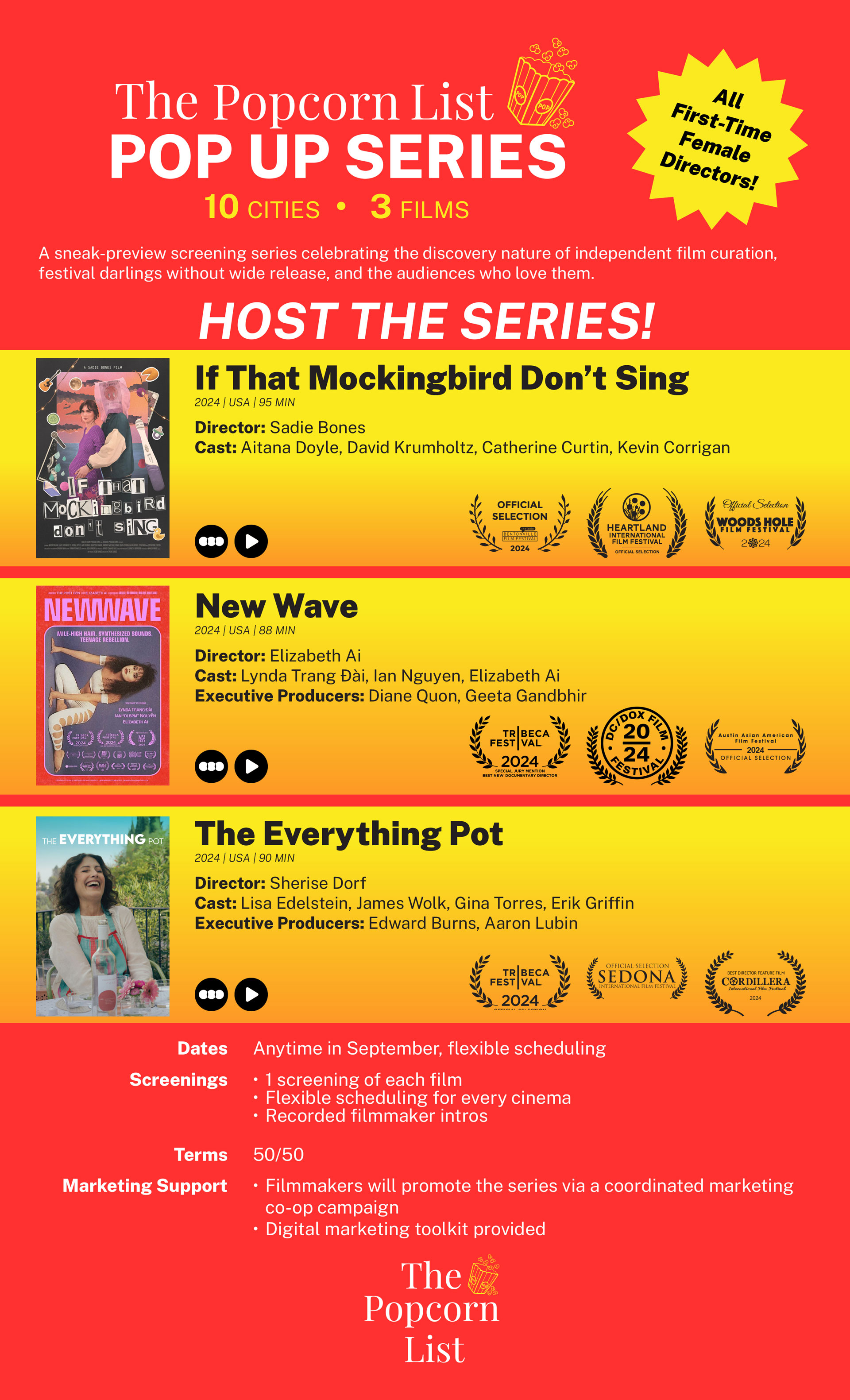
Starting out as a scrappy initiative with no funding, we knew the beta must be contained to ensure we could see the experiment through to completion. As we ideated the ideal structure, we opted to pursue a hybrid model, featuring both in-theater and virtual screenings. Ultimately, eight of TPL’s 2025 recommended films trusted us to help bring their films to audiences.
In keeping with our ethos to support films’ overall distribution plan and subsequent windows, we designed the Pop Up Series so as to not interfere with what distributors refer to as “cannibalizing audiences,” or to scare off potential buyers by being too broad or even referring to it as “theatrical.”
In Theaters: 10 cities, 3 Films, 1 Month Only
Selecting three films for the theatrical portion of the Series felt manageable, so we packaged the in-person Series with three films by first time female feature directors, representing a mix of documentary and narrative and an interesting spectrum of points of view and life experience.
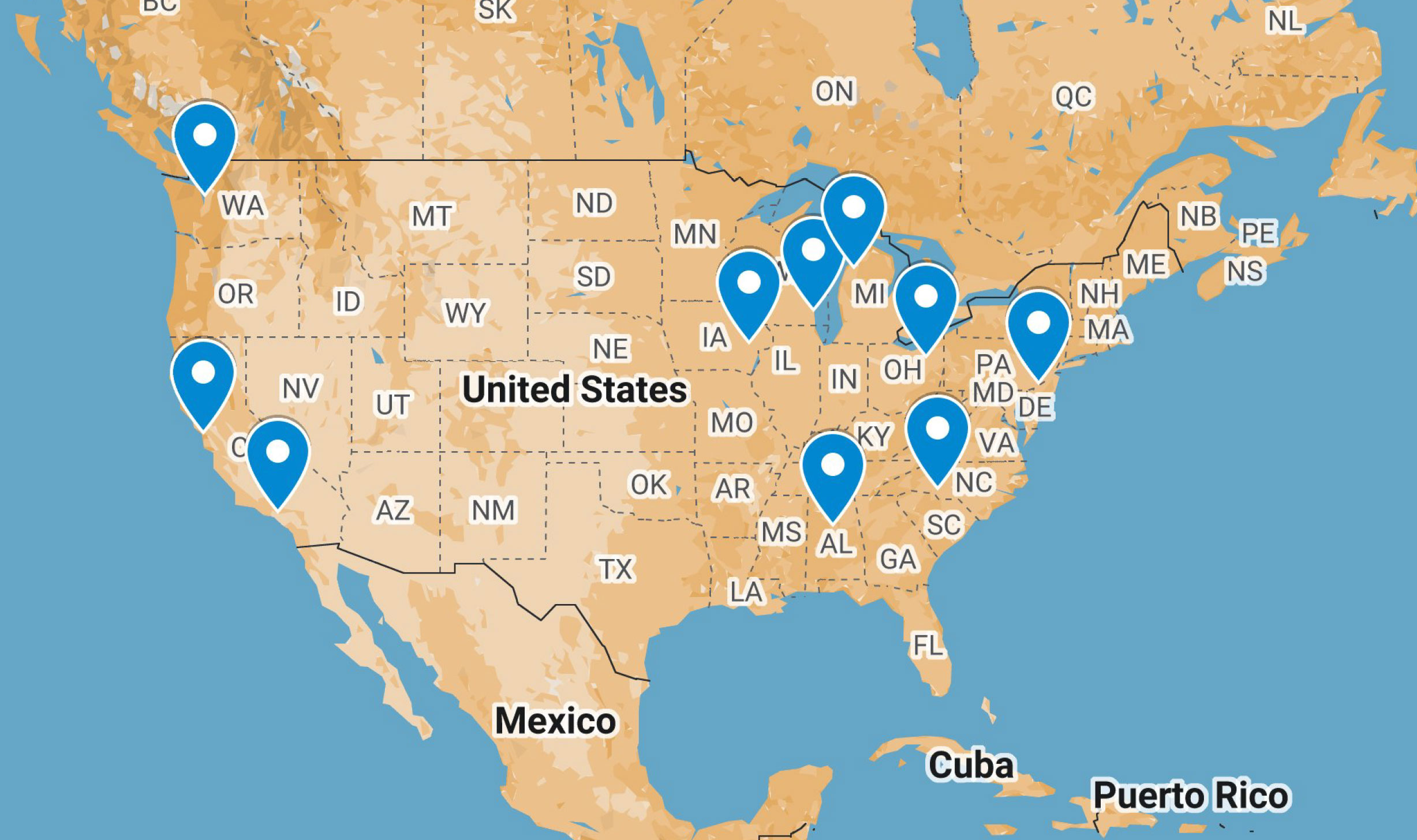
Ten arthouse theaters around the country took the leap and joined us in the inaugural Series, agreeing to play all three films as “one-night-only sneak previews” throughout the month of September – but with complete flexibility on their end as to scheduling – since they know their audiences best.
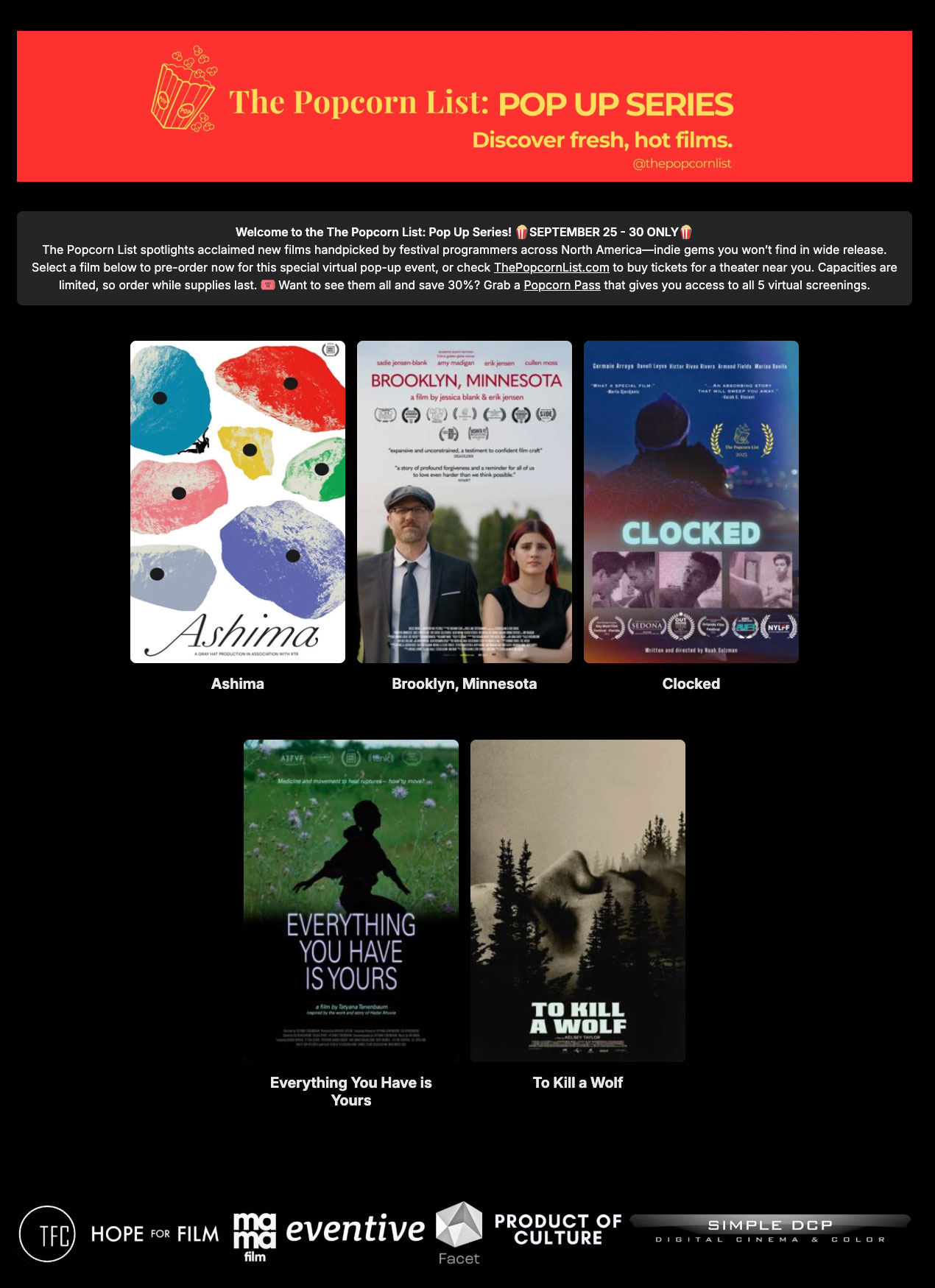
Virtual Screenings: Nationwide on Eventive, 6 days Only
We invited all remaining films from the 2025 List who had expressed interest in participating in the Series. Five films opted in to play virtually for six days at the end of September geo-blocked to the U.S.
Hosted by Eventive, the virtual element allowed us to expand the invitation not only to more filmmakers, but also to more audiences who may not be able to come to a theatrical screening because of geography, childcare, access, or any number of other reasons.
🍿 A Collaborative Approach
TPL’s ethos lies in the fundamental idea that there is power in the collective. We harnessed this notion as we continued to design a collaborative approach to revenue share and marketing.
Filmmaker Solidarity Pool & Rev Share Structure
We built the economics based on a rev-share structure of box office receipts (both for in-theater & virtual screenings). It allowed us to proceed without funds up front to pay licensing fees, while being as fair as possible to exhibitors, filmmakers, and ideally, ourselves as well. The message was clear: we are all in this together.
The payout structure included a Filmmaker Solidarity Pool:15% of every ticket sold went into a pool which was split evenly among teams at the Series’ conclusion. We hypothesized this would incentivize film teams to support and promote each other’s films, ensure that every film would receive some sort of payout regardless of individual box office, and reflect the collaborative nature of the Series.
In-Theater: The terms were 50/50 with the theaters, making us partners with an equal financial stake in this endeavor. The full economic split was:
- 50% to theater
- 25% to film team
- 15% to a Filmmaker Solidarity Pool (to be split equally among the teams)
- 10% to admin & overhead
Virtual: Because the exhibitor share was lower for the virtual Series, we were able to allocate a higher percentage to the individual films and design this split:
- 35% to platform
- 40% to film team
- 15% to a Filmmaker Solidarity Pool (to be split equally among the teams)
- 10% to admin & overhead
Marketing Collective
Independent filmmakers don’t have surplus money, but they do have social capital, so we conceived a collective social media marketing campaign in which the film teams would promote not only their own films but also each other’s films and the Series as a whole, creating crossover among existing followers and leveraging their social media to the collective’s benefit. The more tickets sold, the more each film team could:
- Retain a percentage of their own ticket sales
- Add to the overall value of the Filmmaker Solidarity Pool
- Be on the ground floor of building a new approach to marketing
- Form long-term relationships amongst each other & with key industry partners
Assets:
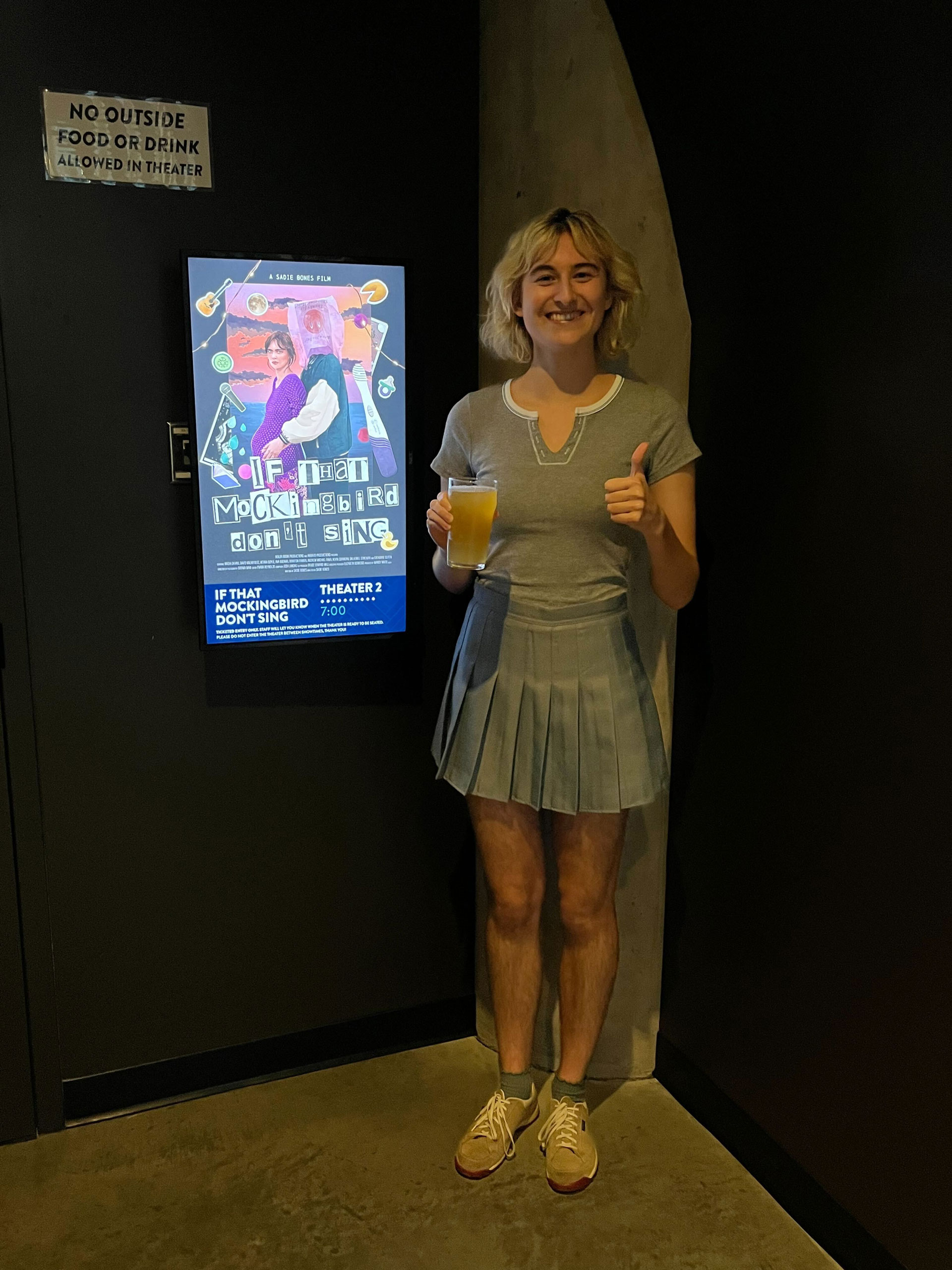
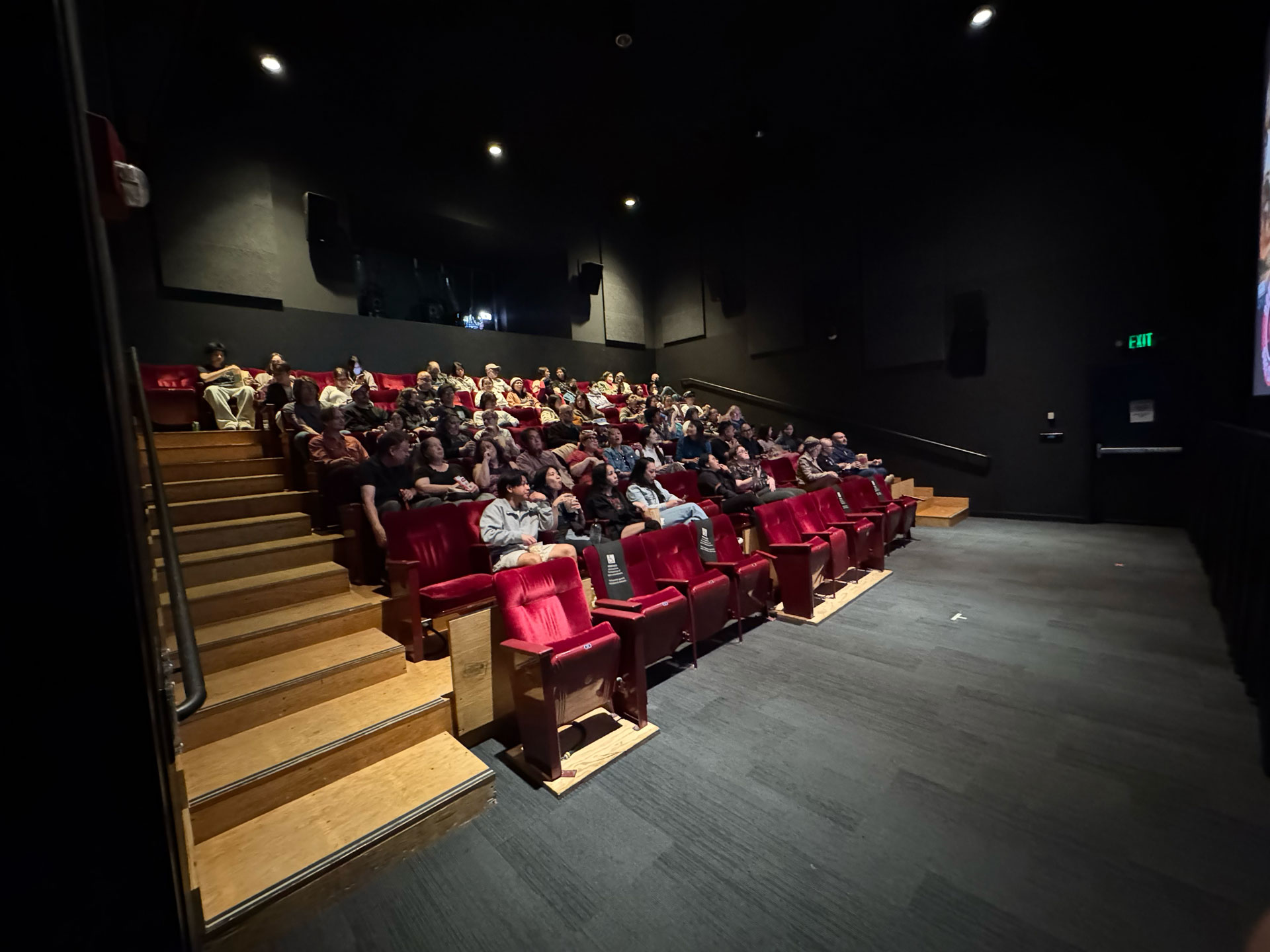
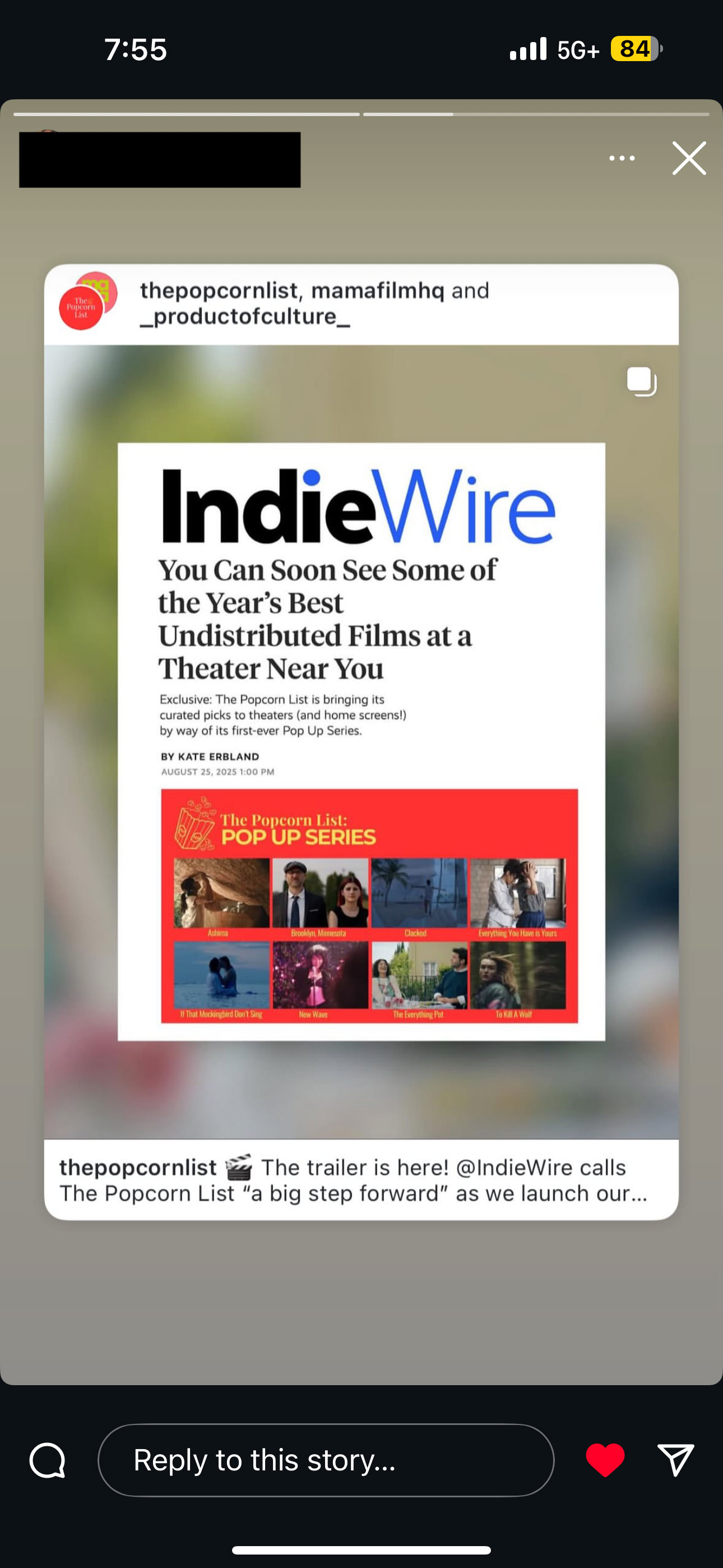
Working with marketing & social media agency Product of Culture, we created a Social Media Toolkit to be used by filmmakers, partners and theaters and a Series Trailer (in both horizontal and vertical formats) which IndieWire debuted. We created myriad promo codes to track ticket sales. All of our social media graphics were created internally in Canva and we ordered TPL stickers to be shipped directly to the theaters. Each theater was offered an additional stipend to collect videos and images.
Campaign:
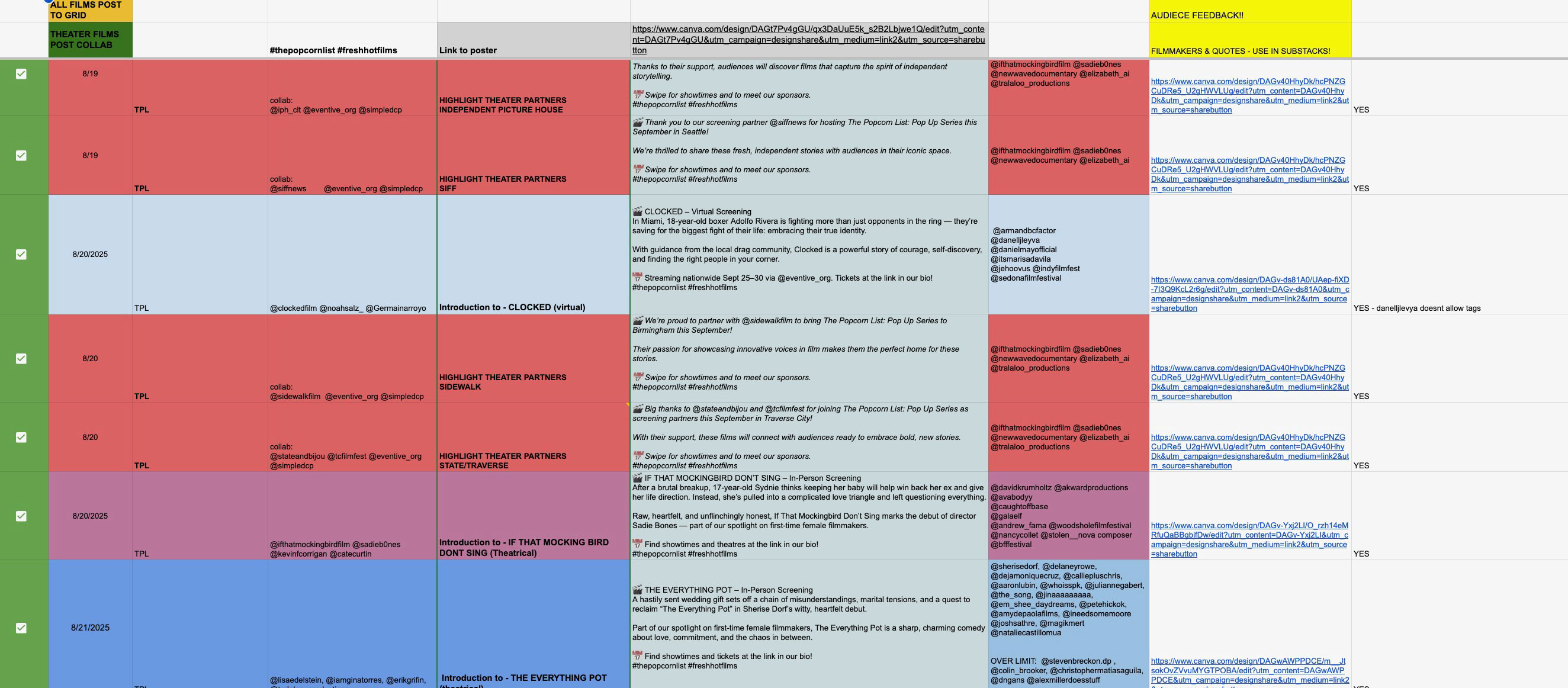
We began our marketing campaign in earnest on August 15th. Each film team was asked to share two posts that promoted all of the films/Series; and each team was guaranteed 3-4 unique posts. We collaborated on as many posts as possible with filmmakers, programmers, festivals, partners and theaters, and the team at Product of Culture cross-posted our content to Facebook and TikTok. In total, the campaign included 110 unique Instagram posts over the course of about 6 weeks. All in, we spent $4,500 on social media marketing (exclusively on Meta platforms).
Some filmmakers noted that the comms, posting schedule, and collab posts were overwhelming at times – a longer lead time for prep would allow us to streamline that process for ourselves and for participating filmmakers.
🍿 Cultivating Community & Capacity
For Filmmakers
Throughout the course of the year, we aimed to create community and opportunity for TPL filmmakers. We hosted group Zooms for networking, introductions to field experts and informational calls throughout the Series. Filmmakers got a peek behind the curtains, in real time, at what it’s like to organize a Series, received social media education from Product of Culture, and learned from each others’ strategies, successes, and failures.
Highlighting the Role of the Curator
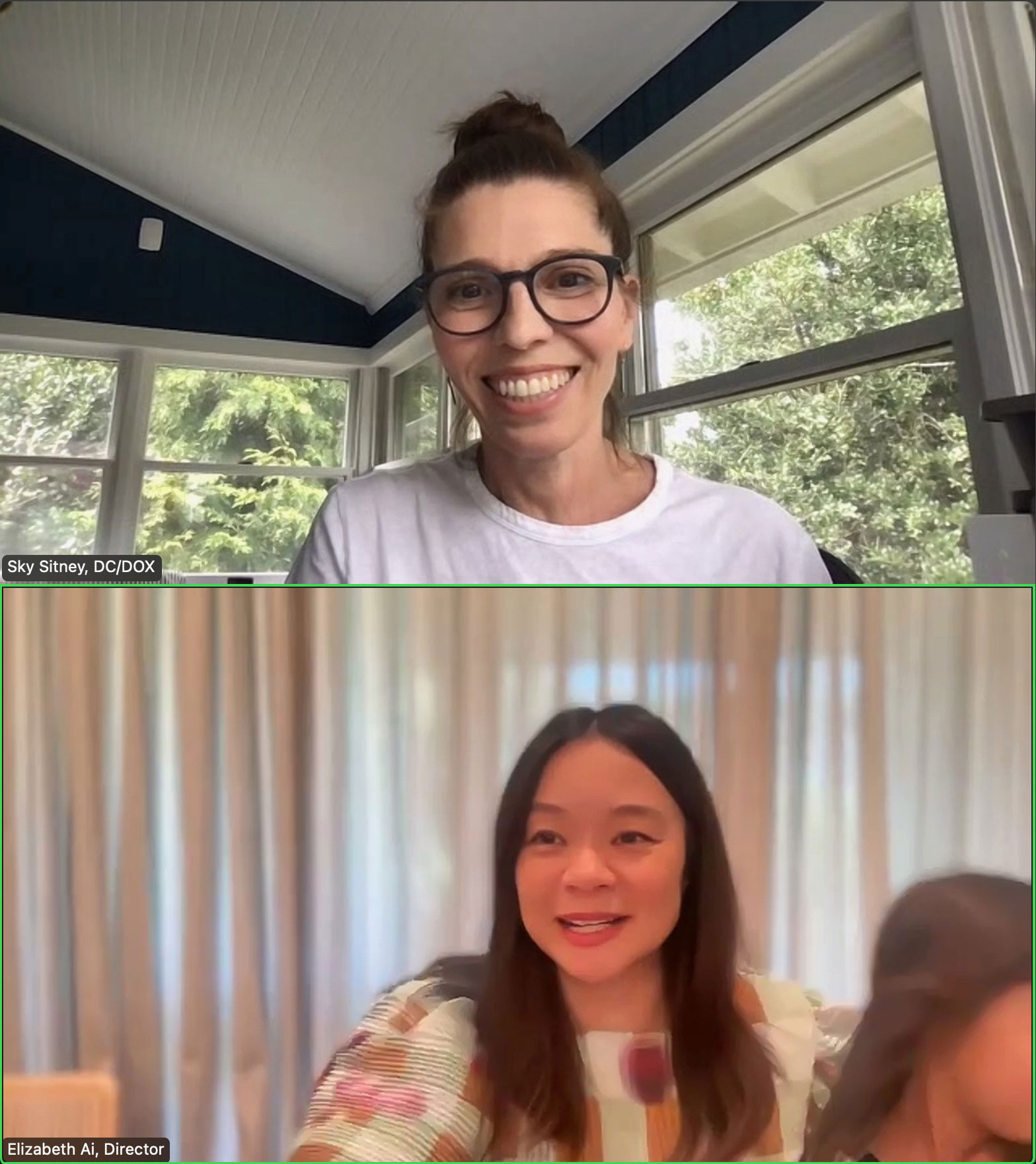
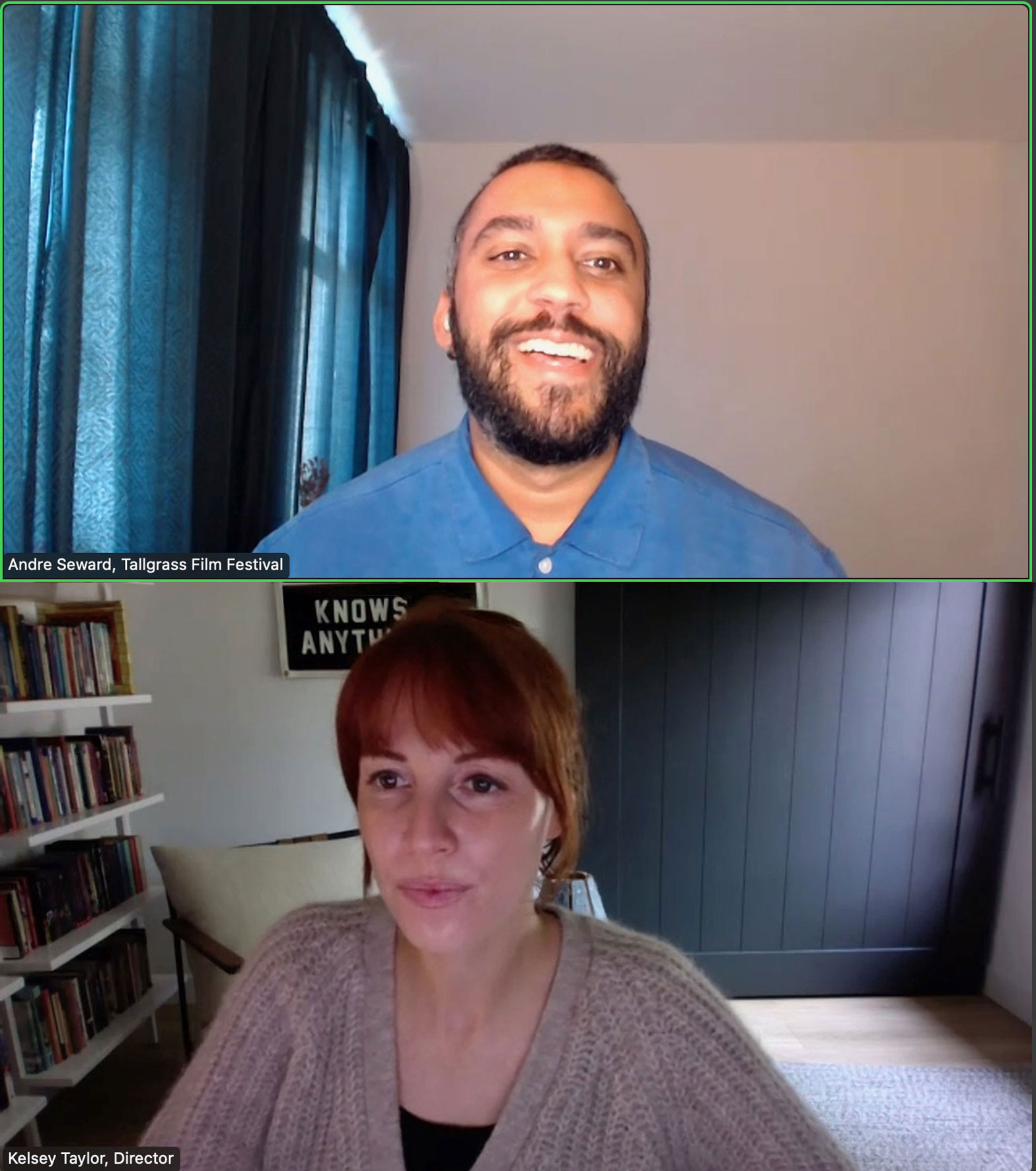
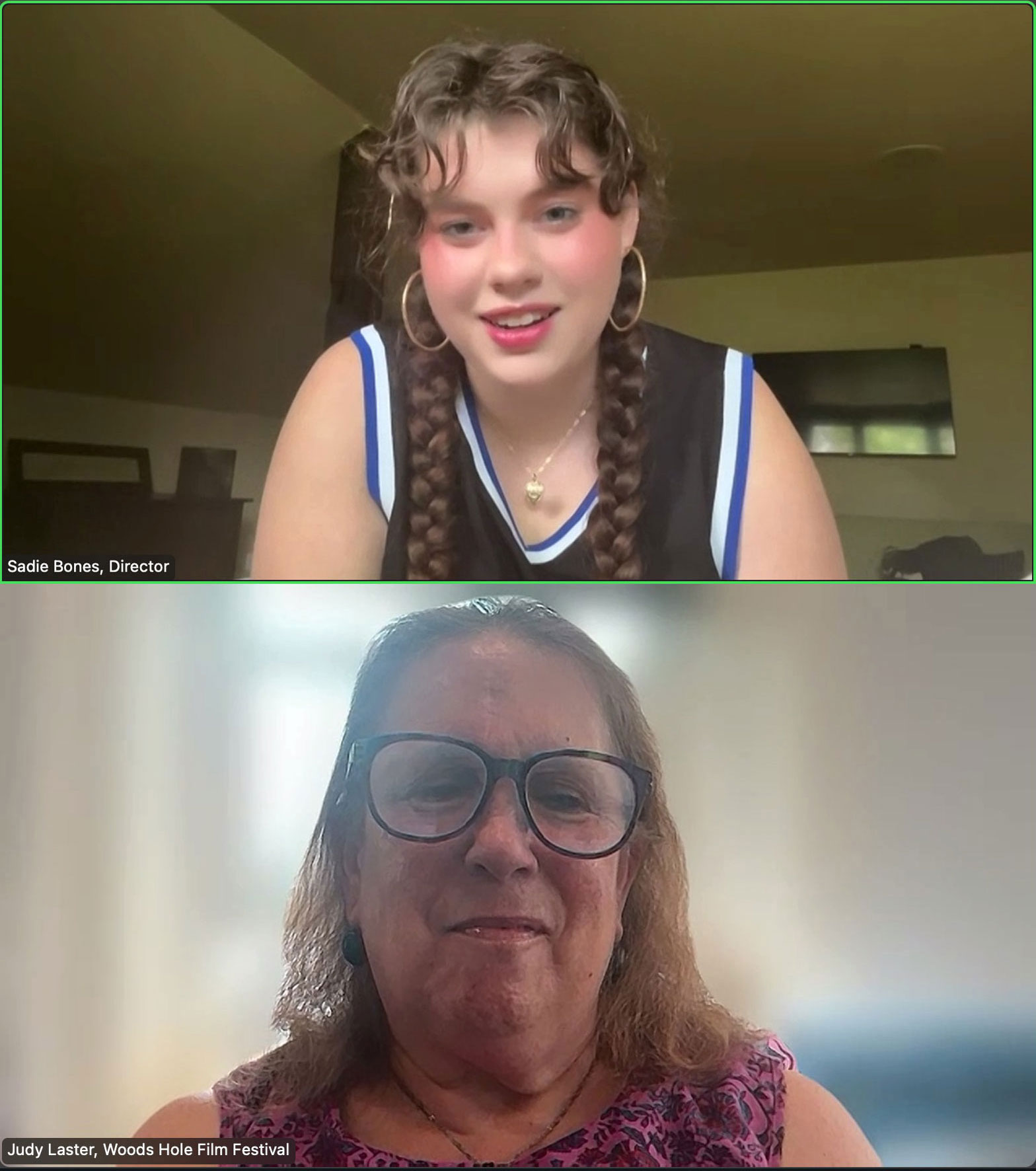
With no travel budget we pre-recorded short intros for every film with the film’s Director and the Programmer who recommended the film to TPL. This allowed audiences to connect with the storyteller and the curator who championed it – setting up TPL films with context and offering a human face in today’s disconnected world. It was important for the Series identity for audiences to have a better understanding of how and why they were watching these films.
Screenshots from the pre-recorded intros
Key Partners Stepped In
As it garnered more visibility, in-kind partners and donors came aboard to support the Series and our own capacity. Thanks to our fantastic partners, who made the Series happen in record time and who trusted us to try something new, together.

Hope for Film/Ted Hope
Ted Hope’s and his Hope for Film Substack have been partners since the first iteration of The Popcorn List in 2024. He offered the Series additional visibility and offered to match $5,000 in donations.
Eventive
Eventive came on as an in-kind partner to host the virtual portion of the Series. They also participated in the cooperative marketing campaign, doing a matching ad spend on socials, and showcased The Pop Up Series as a featured channel on their homepage for all of September.

Facet
In June, Maida Lynn and her philanthropic Facet LTD swooped in with a donation of $25,000, which gave us the ability to do paid ad spends on social media, hire extra muscle to implement our social posting calendar, cut a Series trailer, print stickers, compensate ourselves, and more.
Product of Culture
Product of Culture came on early as in-kind partners, designing our collaborative social strategy, implementing a robust calendar of posts throughout the month and beyond, and providing comprehensive analytics and follow up.

Roseade Wine Spritzer
Our very first brand partner, Roseade collaborated with us at Vidiots to offer a special combo price for spritzer and popcorn for anybody attending the LA screenings.
Simple DCP
Simple DCP came on as an in-kind partner to help us author DCPs for the filmmaker intros and the trailer to package each film’s deliverables into a neat, one-click download for theaters.
🍿 The Results: Did We Achieve Our Goals?
The Series was just a twinkle in our eye on February 9, 2025 and was in the bag by September 30. In order to analyze our success we collected the following:
- Filmmaker surveys: 7/8 film teams responded
- Theater surveys: 9/10 theaters responded
- Audience surveys: 69 respondents from across 9 cities and nationwide virtual
- Social media metrics: Product of Culture synthesized Meta metrics
- Box Office Receipts: From all theaters and Eventive
This year served as a beta; thus our metrics of success focused on participant satisfaction versus financial return. Note: with 7 film teams, 9 theaters, and 69 viewers responding, we don’t have the data to support a full statistical analysis. However, the anecdotal evidence included below is still valuable for us as we revise the Series for 2026, and informative for the field at large.
Overall, the general feedback we got from filmmakers, theaters, and audiences as to their experiences with this new model was very positive.
Goal #1: Experiment with a collaborative, ‘non-theatrical’ distribution model
Regarding the collaborative model, 100% of filmmakers agreed that the Filmmaker Solidarity Pool “was an asset”, though the question “collaborating with other filmmakers was to build audiences and support for each other’s films was useful” received mixed reviews, with 3 responding “Strongly Agree,” 3 responding “Somewhat Agree,” and one responding “Disagree.”
From our filmmaker survey, all responding films indicated that they would recommend participating in the TPL Series to fellow filmmakers, and their satisfaction scores averaged 8.14/10. What are the top things they took away from this experience?
“Understanding that marketing assets are very important.”
- “Understanding local press and outreach/community are necessary.”
- “We could directly see that you get what you put into it!”
- “I thought this was really interesting to include a solidarity pool and I thought it helped share the love amongst everyone.”
A major metric that is not to be overlooked is that the Series worked: the filmmakers trusted us with their projects, the theaters and Eventive came on board to exhibit the films, and the audiences showed up.
Goal #2: Facilitate access for theaters to festival darlings before their wide release
One of the Pop Up Series’ main goals was to help exhibitors access these films, and to support these films with a marketing push. 88% of theaters said that the level of marketing support they received from TPL was “Greater Than” the “amount of support they typically receive from small distributors or individual filmmakers.”
100% of responding theaters said they would be interested in participating in the Series again and expressed a general sentiment that the Pop Up Series is very mission-aligned for them. Open-ended feedback included the following notes:
- “We feel it is important and worthwhile to support independent filmmakers and give them an avenue in which to show their art.”
- “The Popcorn List Pop Up Series was exactly the breath of fresh air we needed as a small non-profit arthouse theater in the Midwest. You can tell they (TPL organizers) care as much about finding creative solutions to the problem of independent movie theaters and IRL audience attrition as they do about uplifting great films & filmmakers.”
Anecdotal feedback also indicates that not only was this goal clearly communicated, it was successfully achieved:
- “TPL lets us bring the films that matter—those the world hasn’t seen yet—directly to our audience, expanding the path from filmmaker to viewer. We look forward to bringing it back next year!”
- “TPL is a brilliant idea to spotlight overlooked gems on the festival circuit, particularly in a time of uncertainty in theatrical distribution.”
- “We loved hosting! There are so many amazing films that don’t get picked up post festival and this is a wonderful way to ensure that these important films don’t get lost in a void. We look forward to future events!”
From the filmmaker point of view, while the virtual had value, the ultimate goalpost remains big screen exhibition. In designing the Series, we did our best to create equal opportunities for all participating films, but we must acknowledge that just by the nature of a hybrid series, the three in-person films got outsized benefit compared to the virtual titles. This is a potential direction to develop the Series moving forward:
- “I never thought a theatrical release would be attainable for us before TPL.”
- “Access to the film from anywhere in the country was super beneficial!…[but] in person events are always appreciated. I think that’s the best way to support us.”
- “You could be of assistance by connecting us with a group of theaters that you have connections with so we could work alongside them to get screenings.”
- “I’m hoping that by getting on the list… it would be enough of a boost to convince theaters to program the film.”
Overall, a combination of in-person and hybrid access for films seems to be the best path forward to achieve the most opportunities for TPL films, reaching audiences that don’t have access to art house theaters, but still leaning into the traditional art house circuit and the importance of the communal viewing experience.
Goal #3: Cultivate audiences for TPL films fueled by the discovery nature of film curation
Audiences enjoyed the experience of the Pop Up Series, both in theater and virtually – and to a significant extent, they were motivated by the same metrics as the theaters:
- 46% attended the Series to support independent filmmakers
- 83% would attend another Pop Up Series screening
The majority of respondents fell into the 35-54 age range, skewed 71% female and regularly attend movies in the theater. Furthermore, the industry has long known that “word of mouth” generates the best ticket sales, and 34% of audience respondents said they learned about The Popcorn List from a friend. But even more importantly, when asked, 89% of respondents answered they were “highly likely to recommend TPL films to a friend.”
We were also excited to see the audience’s love for independent cinemas, who play a large role in the ecosystem and life span of an indie film:
- “(I attended) Because I still adore and prefer watching films on the screens they were intended to be conveyed on, and with an audience.”
- “Great theater, glad to know about it!”
- “The staff was so nice. I love supporting theatres like this one.”
A surprising result was to find that 41% of respondents said they had never been to that arthouse theater before – which shows us that we are successfully reaching new audiences not just for the films, but for the theaters as well.
And a note about virtual: Although virtual has lost some of its luster for filmmakers this far post-pandemic, audience feedback that suggests they still appreciate the access:
- “It was wonderful to access a new indie film. I live in a city with no art house cinema and my young kids keep me closer to home”
- “Excellent selection of interesting films. Streaming option was important.”
Anecdotal feedback from audiences indicates that the curation-forward messaging came across and was valuable to the attendees. When asked “why they would come back to a TPL screening” responses included:
- “To discover cinema gems and support filmmakers.”
- “Great to see a film different from mass releases.”
- “Good film selection.”
- “It was affordable, convenient, and I loved the Q&A with creators beforehand.”
- “It’s a really neat thing! I like supporting programmers doing their jobs and telling me what movie I should see! They’re usually correct!”
- “Because it’s cool to see a movie before it gets distribution and/or goes to VOD!”
- “It was an impactful and meaningful pick, i’d be interested to see other picks from the list!”
Social Media Metrics
Our social metrics told a similar story of broad reach not driven by paid ads or even necessarily by our own followers, but by organic discovery through collabs and cross-promotion. From the report generated by Product of Culture:
- Reach:
- Total Accounts reached: 133,841
- Total views: 568,526 (0.8% from ads)
- Total interactions: 7,577 (48.8% from followers / 51.2% from non-followers)
- Profile activity: 3,454 actions (+66.6%)
- 3,137 profile visits (+62.7%)
- 317 external link taps (+118.6%)
More than half of all engagements now come from non-followers, showing strong organic discovery and shareability.
- Engagement Sources:
- Followers: 48.8%
- Non-followers: 51.2%
- Accounts reached: 133,841
High share and non-follower rates suggest content is traveling beyond the core audience.
Box Office:
While the Box Office for 2025 was relatively modest, it was within the range we anticipated for a first-time Series that is still building its brand. Box office results were:
- In-person: 773 Tickets sold, $7,712.61 box office gross
- Virtual: 291 Virtual views, $3,001.15 virtual gross
- Total hybrid: 1,064 audience members, $10,713.76 gross
- Of the top 3 grossing films, one was virtual
As part of our commitment to transparency, we did our best to update a live shared BOR Google Sheet, so that the film teams had visibility into sales in real time. We also received some donations through Eventive’s portal, which we opted to split with the filmmakers.
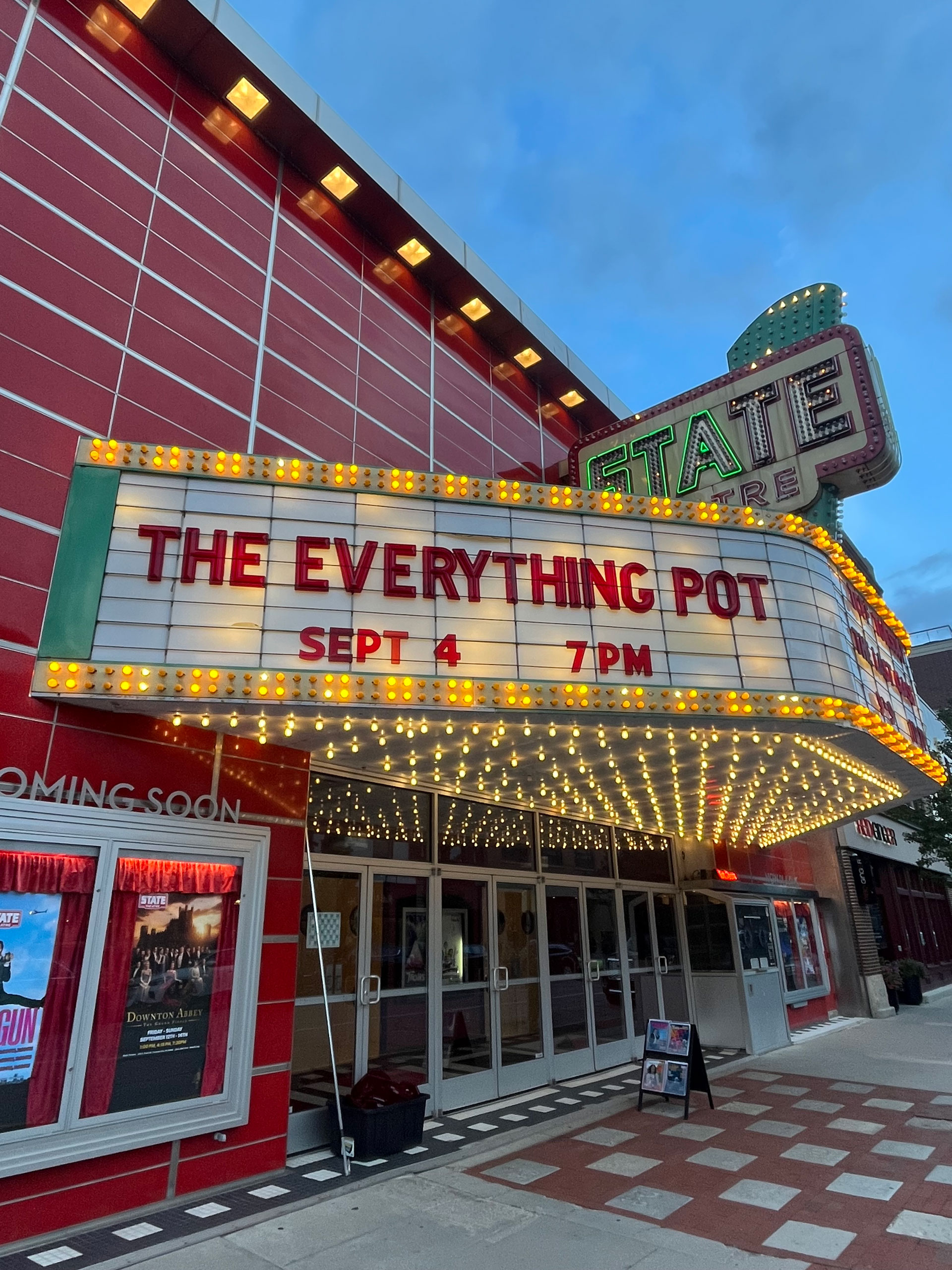
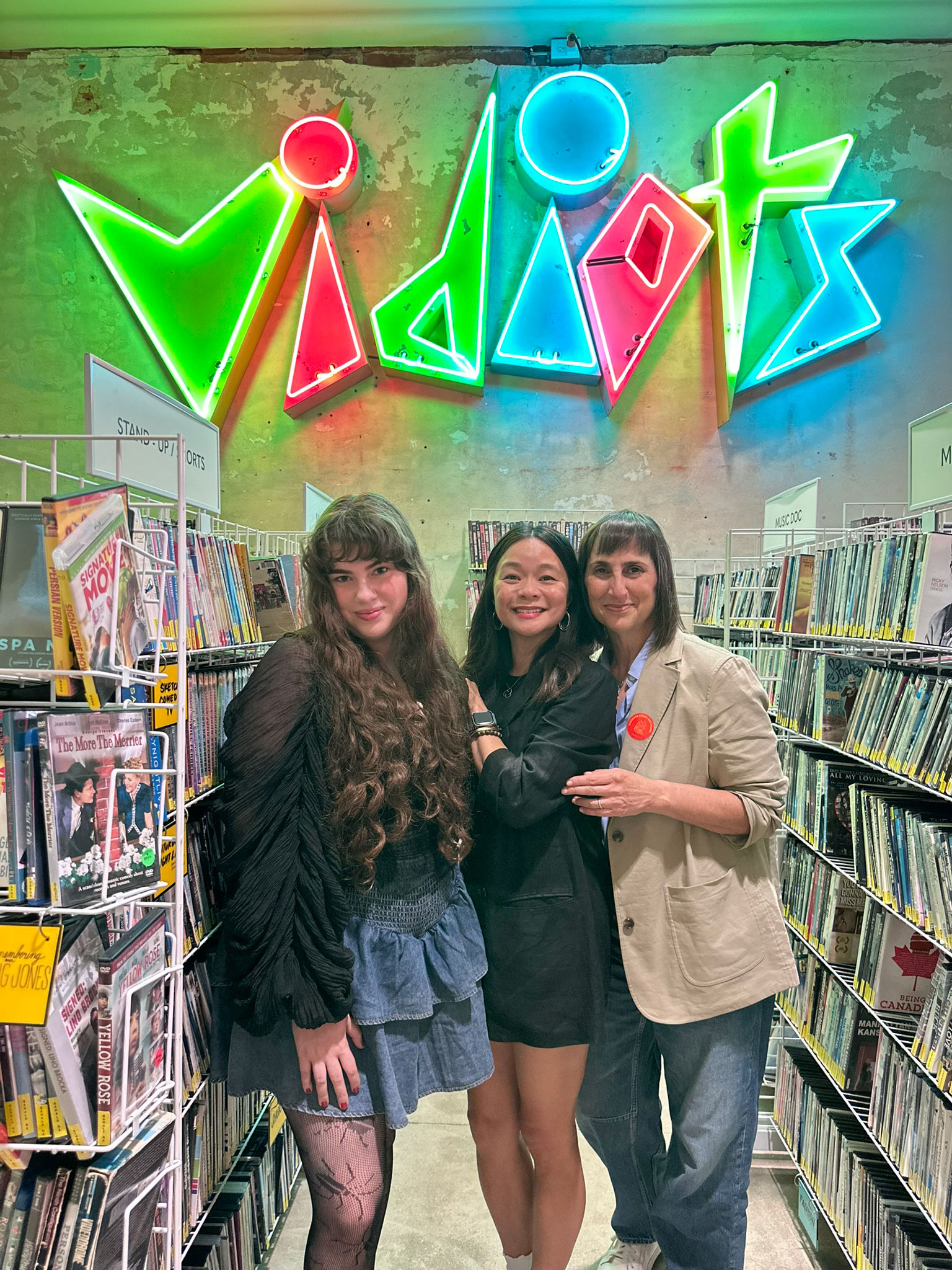
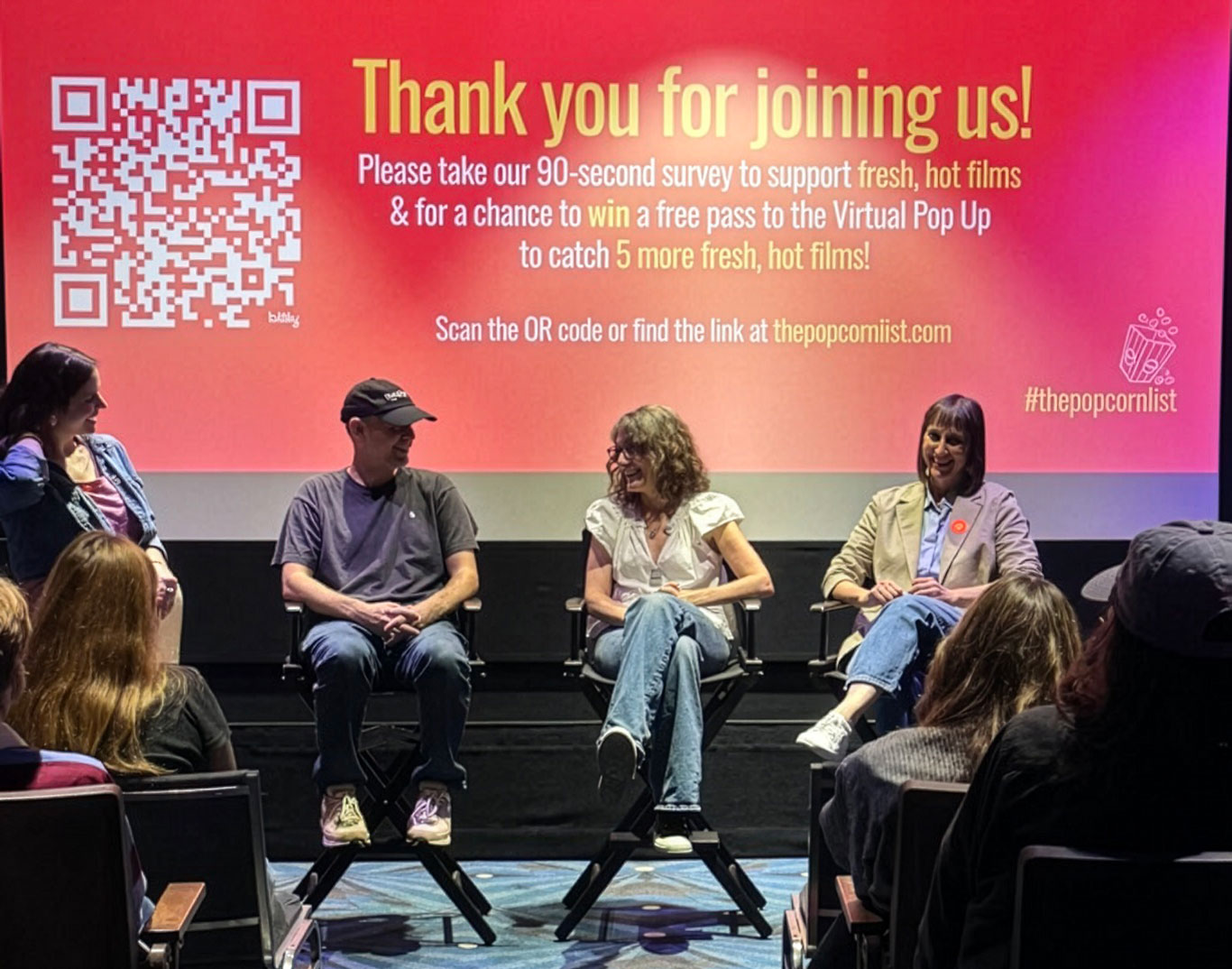
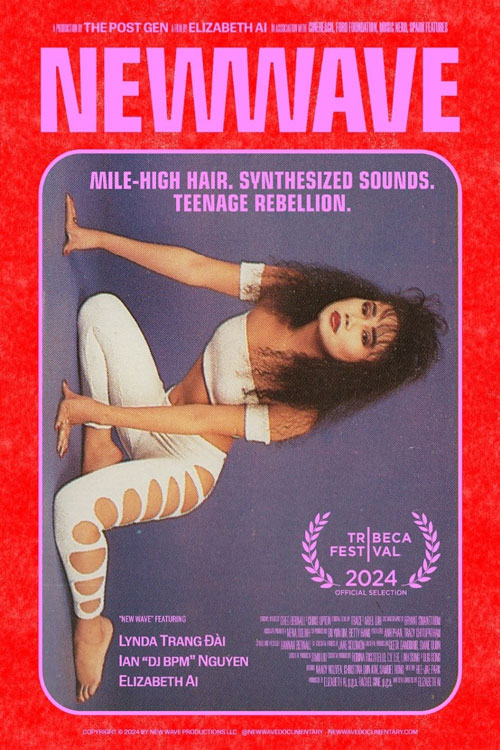
Ticket sales were correlated directly to the level of social media engagement on each film team’s side and their consistent outreach on socials drove significant ticket sales leading up to and during the virtual window. The most successful in-person screenings had filmmakers in attendance, or were eventized (e.g. The State Theatre offered a catered Vietnamese dinner to compliment NEW WAVE). The 3 sold-out screenings at Vidiots microcinema took place all in one day, allowing us to concentrate promotional efforts to a small window of time, create urgency around the scarcity of tickets, and draw audiences with a filmmaker Q&A–making this “mini-fest” a Series highlight.
Goal #4: Create capacity-building and networking opportunities for new and established filmmakers
One of our top priorities in the inaugural Series was filmmaker solidarity, both financially and in practice. We wanted the teams to feel like a cohort, to support each other (on socials and off), and to feel like they all had an equal stake in the Series.
Throughout the course of the Series, when the filmmakers came together (in-person and online) a lot of great energy, inspiration, commiseration, and innovative ideas were born. The film teams told us that it was encouraging to hear that other filmmakers were going through the same struggles.
Filmmaker surveys showed us that all of the film teams are keen to be part of a TPL peer mentorship program and anecdotal feedback around community-building included that filmmakers gained:
- “A feeling of solidarity with other filmmakers without distribution.”
- “New connections in the industry.”
- “A sense of accomplishment.”
- “I’d be happy to connect with new audiences and other filmmakers however possible.”
- “What a wonderful way to be in community w/ some badass indie filmmakers white knuckling their way through this.”
- “Loved the camaraderie with our cohort. Wish there was a bit more!”
Connecting filmmakers in a cohort to discuss their journeys, their struggles, their questions – and also of course their successes and hopes and goals – was a breath of fresh air for everyone. Every film benefits when others succeed and vice versa. A rising tide lifts all boats. We make the tide together.
Goal #5: Serve as a springboard for wider distribution opportunities for TPL films
One of the primary goals of The List and the The Series is visibility for recommended films: visibility to audiences (we sold over 1,000 tickets and passes across the Series), social media presence (we had 568,000 views on our socials alone), and visibility within industry (IndieWire, Hope for Film, Filmmaker Magazine, etc.)
Many filmmakers reported having had conversations with distributors that were generated directly by their participation in the List and/or Series. We fielded some outreach from theaters interested in booking films outside the scope of the Series – we put them directly in touch with the film teams. One film even scored a two-week theatrical run in New Zealand. We’re tracking the film’s journeys as they continue to release wider into the world and are excited to see them making moves that are outside the conventional paths for independent films.
Anecdotal feedback from filmmakers does indicate that they learned something about distribution (in particular, self-distribution) from participating in the Series, and that they came away from the experience more empowered than when they went in. When asked “what does the term “not having distribution” mean to you at this moment?,” responses included:
- “Freedom.”
- “Opportunity.”
- “Control.”
- “Being a Punk Rock Muthfkr.”
- “The journey with this film isn’t over.”
- “We are letting go of a traditional distribution pathway. Our dreams have shifted organically and TPL has been a part of that journey.”
- “Made us more aware of other routes to get eyes on the project that don’t include aggregators or needing to take “the least crappy” deal.”
- “Being able to retain theatrical rights.”
🍿 The 2026 Popcorn List: Pop Up Series
As we move into the next iteration of the Series, we’re thinking about building our audience-facing brand, expanding opportunities for TPL films and fundraising for additive and supplemental elements. Some of the things we’re taking into consideration include:
- Expanding theatrical opportunities to more films and more cinemas.
- Hiring a publicist is always a gamble, but earned media is valuable.
- Lengthening promotional timeframe with a focused spend to & asset to build audience engagement.
- Offering travel support for filmmakers to attend screenings brings out audiences.
- Offering ‘Popcorn Stipends’ so theaters can provide free or discounted popcorn to audiences as part of our brand.
- Scheduling the Series to take advantage of theater’s more available months, and strategize the virtual window accordingly.
- Cultivating more collaborative opportunities to grow networking and capacity-building opportunities for and within the TPL Filmmaker cohorts.
- Expanding our budget. What would be ‘enough’ to execute this Series at the highest levels, checking all the boxes on this list? Our current estimate is over $150k per year.
- Being mindful of labor bandwidth: We’ll be more effective and intentional with how we spend our time and allocate resources.
For TPL, successful distribution means connecting films to audiences who would otherwise not find them; engaging in collaborative marketing and an incentivized financial model, introducing audiences to new filmmakers through the trust of known film curators; and building a community of networked filmmakers who uplift each other on their film’s distribution journey.
As the initiative and experiment grows into something bigger and better in 2026, we’re aware that we sit in the unique position of straddling lines, breaking boundaries, and participating in the discussion around redefining distribution. We know these parameters will continue to evolve with the times, and we want to keep The Popcorn List flexible, reactive and proactive to the industry’s ever-changing needs.
Stay tuned: The third edition of The Popcorn List drops January 5th, 2026.
Stay fresh, stay hot! 🍿🍿🍿
Lela Meadow-Conner (mamafilm) & Kathy Susca (The Film Collaborative)
(with special thanks to Maida Lynn for her invaluable guidance)
🍿 Appendix
*How does TPL work?
TPL is a curation of films recommended by film festival programmers who received a survey asking them to share a film that they believe: 1) deserves to be seen more widely and 2) does not have traditional distribution. TPL compiles all of the recommendations, and communicates with the film teams directly to confirm their eligibility.
Thank you to the Programmers who recommended films to 2025’s The Popcorn List:
- Nehad Khedar (BlackStar)
- Sean Flynn (Camden International Film Festival)
- Mimi Plauché (Chicago International Film Festival)
- Paul Sloop (Cordillera International Film Festival)
- Dan Brawley (Cucalorus)
- Sky Sitney (DC/DOX)
- Paris Burris (deadCenter)
- Matthew Campbell (Denver Film Festival)
- Allegra Madsen (Frameline)
- Kayla Meyers (IndieMemphis)
- Jason Hoffman (Indy Film Fest)
- Cara Ogburn (Milwaukee Film)
- Tom Hall (Montclair Film)
- Crystal Merrill (Mountainfilm)
- Nick McCarthy (NewFest)
- Barak Epstein (Oak Cliff Film Festival)
- Jim Farmer (Out on Film)
- tt stern-enzi (Over-the-Rhine Film Festival)
- Isaac Zablocki (Reel Abilities)
- Lisa Simmons, Allison Simmons-Uvin (Roxbury International Film Festival)
- Beth Barrett (SIFF)
- Paul Sbrizzi (Slamdance)
- Heidi Zwicker (Sundance Film Festival)
- Andre Seward (Tallgrass Film Festival)
- Shailaja Rao (Tasveer Film Festival)
- Faridah Gbadamosi (Tribeca)
- Karen McMullen (Urbanworld)
- Judy Laster (Woods Hole Film Festival)
- Meira Blaustein (Woodstock Film Festival)
*Why the data shows us that there are opportunities within the sector:
- Theatrical releases generate 8x more social buzz than streaming-only releases (MarketCast 2023).
- 78% of US moviegoers go to theaters due to word-of-mouth (Market Data).
- 74% of Gen Z & Millennials prefer originals to remakes and value diversity onscreen, and 71% want to see more indie content. (Tubi)
- Theatrical runs are thriving for films lacking traditional distribution: No Other Land, Hundreds of Beavers
- In 2025 Gen Z will purchase more than 452 Million movie tickets
The Films
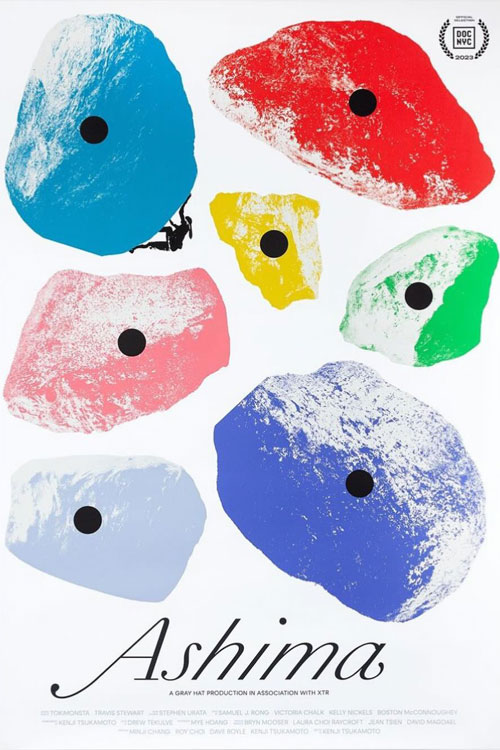
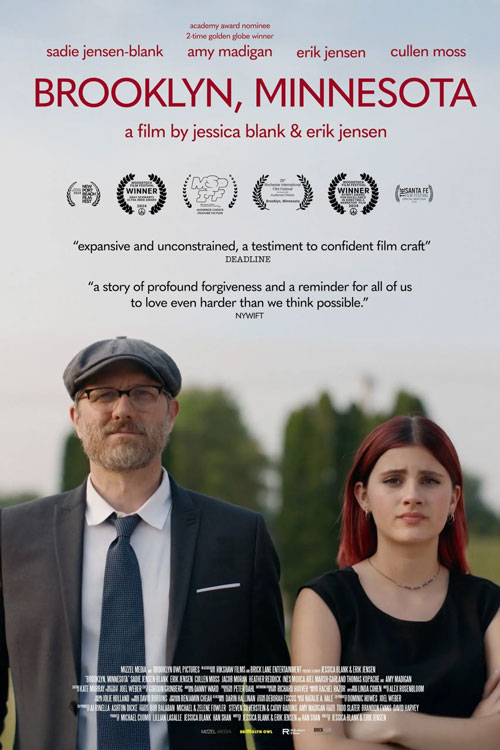
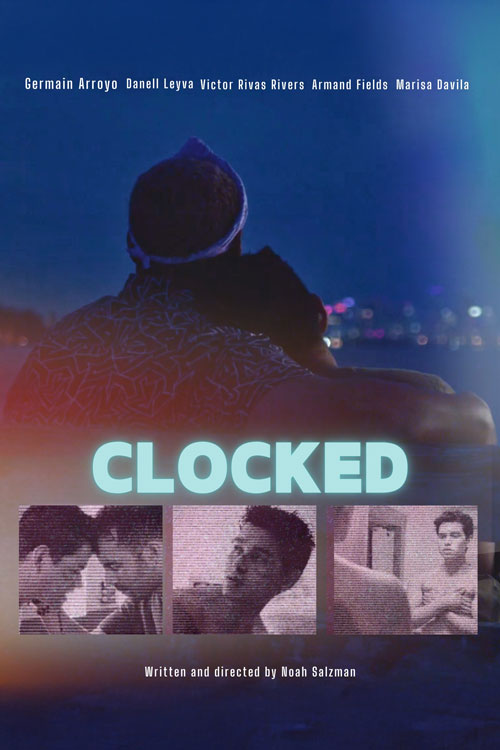
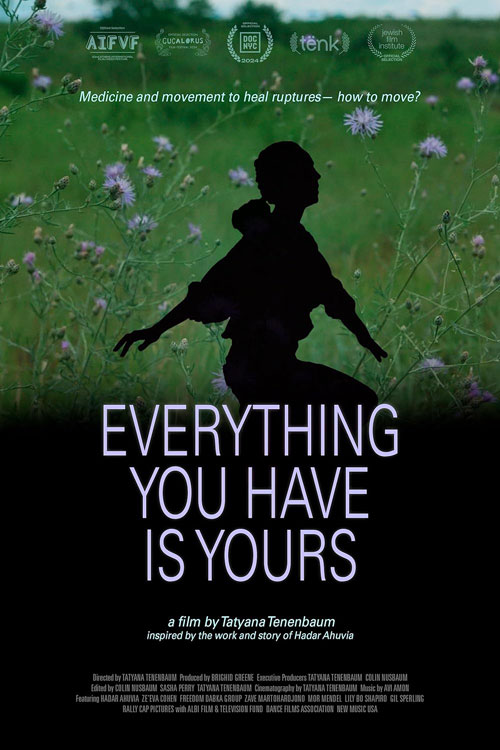
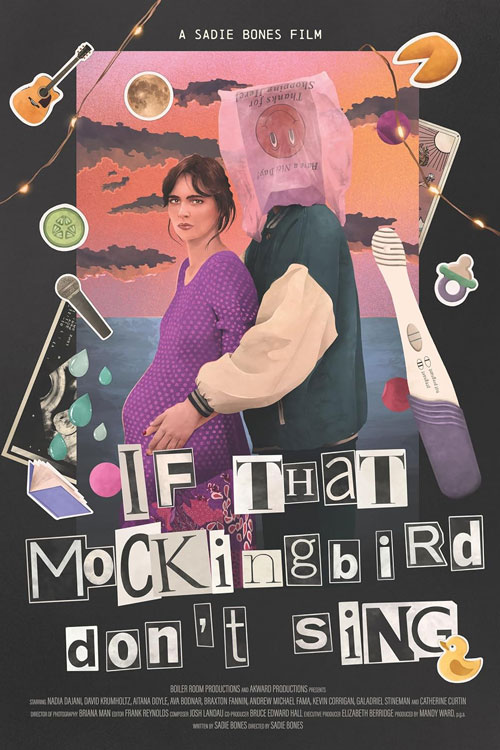
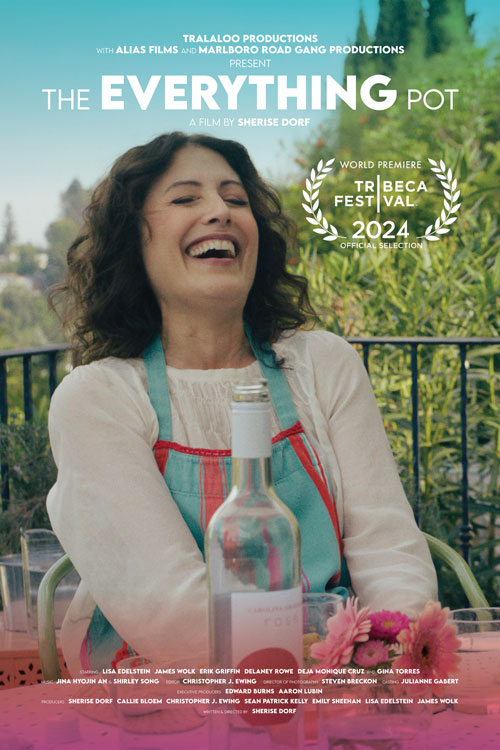
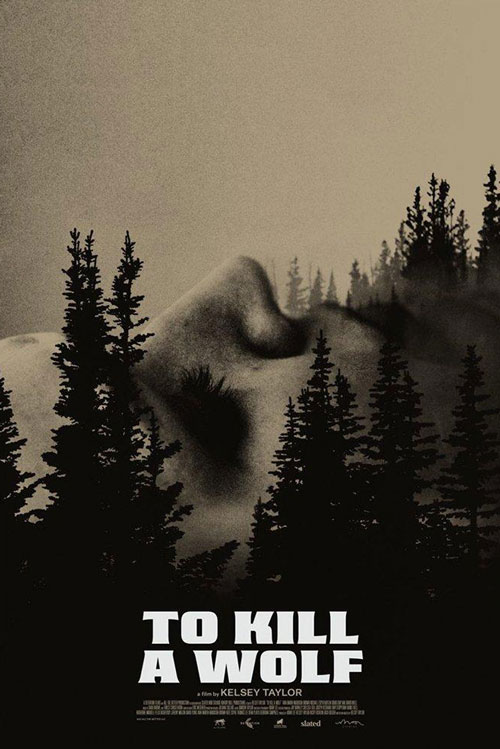
Eight of TPL’s 2025 recommended films trusted us to help bring their films to audiences:
The Theaters
- SIFF Film Center (Seattle, WA)
- cinéSPEAK (Philadelphia, PA)
- The Downer (Milwaukee, WI)
- The Independent Picture House (Charlotte, NC)
- Sidewalk Film Center (Birmingham, AL)
- State Theatre (Traverse City, MI)
- Vidiots (Los Angeles, CA)
- Roxie (San Francisco, CA)
- FilmScene (Iowa City, IA)
- Nightlight Cinema (Akron, OH)
Special Thanks: Archana Jain, Barbara Twist, Charity Hicks, Charlotte Simmons, Chris Hiti, David Averbach, Emily Christensen, Eric Moore, Fire on the Bluff, Gabrielle Wray, Garrett Sargent, Iddo Patt, Isis Masoud, Jeffrey Winter, Karl Ziegler, Kim Kauffman, Kylie Brown, Lynnette Gryseels, Maida Lynn, Marco Paolieri, Monika Sharma, Nina Winter, Onni Creative, Orly Ravid, Rich O’Brien, Robin Rose Singer, Ted Hope, Tejaswi Bhavaraju, Todd Looby, Trent Nakamura, Victoria Ash and to all the filmmakers, programmers, exhibitors and audiences who helped bring the Series to life.
Kathy Susca December 31st, 2025
Posted In: case studies, Community partnership, Distribution, DIY, Documentaries, Film Festivals, Publicity, Social Network Marketing, Theatrical, Trailers
3 Nitty Gritty Tips About Independent Film Deliverables
Whether engaging in digital distribution via a distributor or on one’s own (DIY), the burden of producing deliverables is increasingly shifting onto filmmakers.
At TFC, when we speak of empowerment through education, we are often talking about the digital landscape as a whole. However, there is also a lot to be learned in the details. I’m sure every filmmaker can rattle off a list of annoyingly small screw-ups with deliverables and assets that ended up throwing multiple members of his or her team into a tizzy for an entire day, wasting precious time, manpower and financial resources.
Accordingly, arming yourself with a little more knowledge about how the industry works, and, in particular, how technology works, can help you dodge a few more bullets down the road. Here are 3 nitty gritty tips we’d like to pass on:
1) Trailers
It’s very easy to put your trailer up on YouTube or Vimeo these days. So easy in fact that filmmakers often forget that these platforms are anomalies when it comes to requirements for eligibility.
For other mainstream digital platforms, pretty much any time there is a digital storefront, whatever is outside of the pay wall needs to be viewable for all audiences: free of foul language, nudity, excessive violence, etc.
I can’t tell you the number of trailers we have seen with words like fuck and shit still in them…iTunes is not going to take a trailer with any language that needs to be bleeped out on television. Neither will it accept scenes with a butt shot, a sex toy, naked breasts…the list is long and can get murky real quick, and, like MPAA ratings, may be quite subjective and potentially unfair.
We totally get it…filmmakers want to be as provocative as possible, don’t like being inhibited, and want their trailers to represent as closely as possible the tone of their film. And they usually make their trailers long before they ever have to think about digital distribution. But if you don’t want to have to go back and recut your trailer down the road, you need to think about these things. If you want two versions of your trailer, that’s fine, but at least one one of them has to be no more than, let’s say, PG.
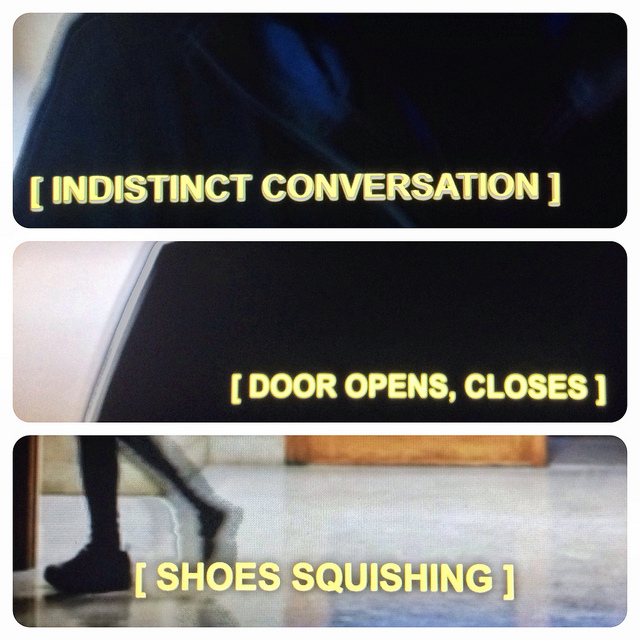
photo credit: CaptMikey9 via photopin cc
2) Closed Captioning and Subtitles
Many platforms, including iTunes and Netflix, now require that all new films be submitted with closed captioning for the hearing impaired. Closed captioning is different from subtitling in that it sometimes includes descriptions of non-speech elements, like sound effects or music. Captioning costs run from $350 to $800 per title.
Most filmmakers send their films out to a captioning/subtitling lab, or use rather expensive software to do it themselves (more information about these labs/software can be found on the ResourcePlace section of our website). Usually, filmmakers receive a small, emailable, external file from the lab and submit to their distributor/aggregator without giving it much additional thought.
However, we have seen a number of cases where mistakes have been made, which can result in a rejection of your content by the platforms and a delay in your scheduled release date. There are many closed captioning requirements, particularly regarding things like when captions come on and how long they stay on screen, and we have seen some problems in this area.
But by far the biggest cause of rejection is when closed captioning covers some of the lower thirds in the film. This is especially true in documentaries, where subjects are interviewed and their names appear as text graphics on screen. In those cases, the offending line of closed captioning must be moved (usually to the top of the screen).
There are two ways that these errors can be prevented. One is to go through your film and note the approximate time codes of all your lower thirds and ask your captioning lab to pay special attention to these areas.
The second way is to check the lab’s work before submitting to a distributor/aggregator. The most common file extension for closed captioning is .SCC (Scenarist Closed Caption). This is the file you are going to submit. However, it is not possible to view this file alongside your film in QuickTime or VLC. So you should ask your lab to convert it into a subtitle file and send that to you as well (this file would be solely for checking purposes…it shouldn’t be submitted to anyone).
The catch is that the most common form of subtitle file, .SRT (SubRip), does not hold placement, so while it is OK to ask for this file type merely for checking timing and accuracy of dialogue, you will not see any difference between lines that are on the bottom or those that have been moved to the top—they will all appear on the bottom. So the key is to ask for a different file format if you have dialogue spoken over lower thirds. Subtitle file types that hold placement are .STL (Spruce subtitle format) or iTunes Timed Text (iTT), a subset of TTML. For more on subtitling than you ever want to know, visit <a “href= http://en.wikipedia.org/wiki/Subtitle_(captioning) “>Wikipedia.
Lastly, speaking of subtitle files, we have seen many filmmakers obtain subtitle files from international film festivals (especially Spanish) and want to know if they can submit that as an extra to their North American release.
The answer is yes as long as it, like closed captioning, doesn’t cover up the lower thirds, and as long as your English master is textless (i.e. no burnt-in English subtitles). An important lesson here is that if your film has any lower thirds where dialogue is spoken over it, you will not be able to use .SRT files for any of your localized languages…use one of the other formats (.STL or .ITT).
So if someone produced an .SRT file for you, and you have lower thirds with dialogue spoken over them, you’ll need to get it converted and fixed before submitting to digital platforms.
Knowing exactly what you need will help you save time and get the best deal from your Subtitling Lab., because you will have pre-negotiated what you need in advance.
3) Digital Output
One of our members from Australia asked us about getting all of their lab deliverables taken care of at once so that they could qualify for The Producer Offset, which is a refundable tax offset (rebate) for producers of Australian feature films, television and other projects. While this credit may not apply to filmmakers who are not down under, I’d like to reiterate here what I told him: that producing deliverables too soon can cost you more in the long run.
If you produce a DCP or HDCAM, which can cost $2K or more, and approximately $350, respectively, before you sell your film, what happens when your distributor asks you to submit deliverables with their logo in front of it? You have to go back and do it again.
As far as DCP goes, until you are SURE that your film is playing at a top-notch festival, or that your film is even going to have a theatrical release, it may be best for you to wait, and only produce deliverables like ProRes, Blu-Ray and DVD in the short-term.
And by way of conclusion, speaking of DCP, TFC’s head of Festival Distribution, Jeffrey Winter, has offered a post on DCP headaches HERE.
David Averbach September 10th, 2014
Posted In: Digital Distribution, Distribution, DIY, iTunes, Netflix, Trailers
Tags: David Averbach, DCP, film subtitles, film trailers, independent film deliverables, independent film distribution, iTunes, Jeffrey Winter, MPAA ratings, Netflix
A quick, affordable way to solve your trailer editing problem
Trailer and short clip video editing is a much needed service in the independent film world, especially by lower budget filmmakers who can’t go to the bigger digital agencies and spend tens of thousands to get a trailer cut. Too often, lower budget filmmakers try to edit trailers themselves, but are too close to the material to understand that a trailer is a sales tool, not a visual synopsis.
In addition, the internet space is becoming dominated by visual material, photos and video clips. It isn’t enough to have just one trailer, multiple video pieces are now needed to enable social sharing, video channel subscription growth and capture and maintain an audience’s attention over a long period of time in the lead up to release.
While searching online for video editors that specialize in short clips and trailers, I came across a new site called Videopixie, a community of video freelancers offering post-production services at fair prices. I immediately contacted the site’s cofounder and COO, Thomas Escourrou, to find out more about how Videopixie might be the solution for independent film marketers who are long on footage, and short on money and skills to create compelling marketing videos.
How long has Video Pixie been around?
TE: “We launched in June 2013. My cofounder and I have been in the video space for a while, but the site is less than a year old. We are growing quickly with a 700 member community of video freelancers: from editors, motion designers, animators, FX specialists, to videographers and writers.”
Video material is quickly taking over the internet space. Over 100 hours of video are uploaded just to Youtube every minute and over 6 billion hours of video are watched every month. There is a lot of competition for attention so a video really has to be compelling. Is Videopixie trying to help companies, non profits and artists who don’t have the skills and expertise to create their own videos do that in an affordable and collaborative way?
TE: “Definitely! Videos are everywhere now. With mobile access and higher bandwidths, video is becoming the medium of the web. Companies make videos to announce new products. Inventors and creators make videos to crowdfund their projects. Experts make videos to teach the world. App developers and filmmakers make trailers to sell more of their apps and films. As video distribution gets easier, the stakes are shifting to video production. How to create quality video content, frequently and affordably? When there was little distribution for a short video, it was an undertaking to invest in making a video and getting it into the world. Now that video can be put out online in a global way by anyone, it is a much more worthwhile investment.”
Video is also a great medium to put a face on a company or artist or non profit. You can demonstrate what they do, bring it to life, and make an emotional connection to an entity.
TE: “Right, basically show the soul of the venture. It isn’t easy to communicate soul through text and ad copy on the web. Video is more like real life. It hits a lot of the senses; sight, hearing, and the ability to have conversations around it. The web is becoming warmer and more human through the use of video.”
There is a nonprofit video clip I saw on your site showing what they do in Africa. It was awareness building for the organization and a fundraising initiative I guess.
TE: “Yes, the Impact Network is a non-profit improving the quality of education in rural Africa through digital tools. They needed a video for their annual fundraiser, to connect with potential donors. Their staff on the ground in Zambia shot some every day footage and interviews with their iPhones. They uploaded the footage to Videopixie and had it edited for about ~$250. The editor arranged the footage to tell a compelling story, and added some simple motion graphics.
It proves that you can get solid videos without spending a fortune. Of course, higher production value projects aren’t going away! The video production market is as vibrant as ever. But with marketplaces like Videopixie, it’s now possible to find great options for a wide range of budgets.
Often times, our users ask for help with their script and storyboard in the pre-production phase and we connect them with writers and directors. Buying 1 hour of a writer’s time to jazz-up a script is well worth it.
Kickstarter videos require planning and we have freelance directors/writers on the platform who help with pre-production. Kickstarter videos also benefit from polished post-production. Here is one of our blogs with tips to make great crowdfundng videos.”
How does one get started with Video Pixie for a project? What would I need to upload? How does the system work in getting an editor interested?
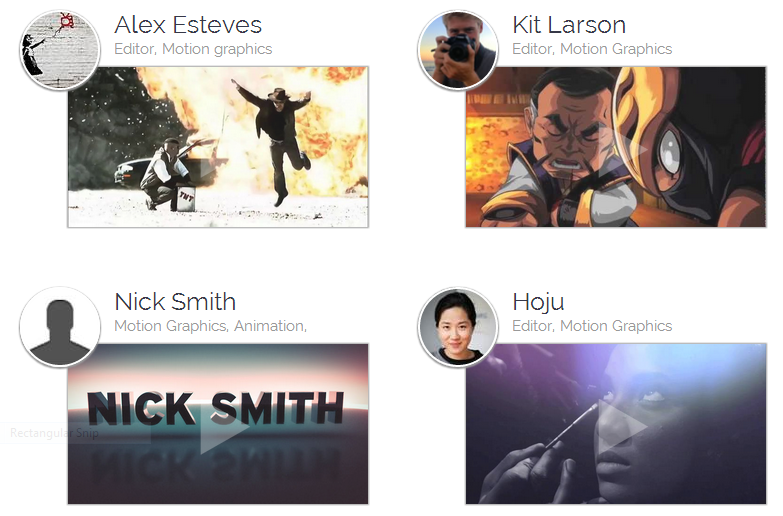
TE: “To get started, just answer a few questions about your video, upload any existing footage, and post the project to the community. Freelancers engage, suggesting ideas and styles. Some create teasers from the uploaded assets, others link to relevant videos they’ve made.
You receive the first bids within a few hours and hire the freelancer you like best. Then project delivery starts using collaboration tools (real time chat, easy file transfer, reviewing tools etc). Payment happens at the end when everyone is satisfied.”
Choose from a community of editors
Right, I saw there is a money back guarantee so there is protection on both sides. The editor knows the money is there so they won’t get stiffed for work. And the buyer is protected in that their money isn’t paid until they sign off on the final cut.
TE: “We play an insurance role for both parties, which brings peace of mind to the users and the freelancers. Users know they’ll only pay when satisfied. And freelancers know they’ll get paid for their work.
We chime in when necessary to make sure projects are budgeted properly, and that quality standards are met.”
If I am an editor looking for extra work, how do I get started with Video Pixie?
TE: “Signing up is easy, there is a link at the bottom of the home page. We require reels and a list of skill sets. Within minutes you can browse available projects and you’ll start receiving email notifications when new projects are posted.
You can ask questions directly to the clients from the real-time chat. You submit bids for projects you are interested in. If you have relevant reels then great – just attach those to your bid – or you have the option to create a teaser (using the project’s footage which we make available in SD for faster download in the bidding phase).”
When you say bid, do you mean you offer to do a project for a certain amount of money? Is it by the hour, by the project?
TE: “It is by the project, not an hourly rate. Editors have access to the database of projects that includes a brief, the asset list, and the budget range. They can quickly scan through and see what is involved in the project and how many others are also interested in bidding. If a lot of people are bidding, it might not be attractive to submit something. “
What is the typical turn around time on an edited piece?
TE: “It depends on the scope of what needs to be done. It could be just a few hours for very simple, scripted clips. Many of our users make videos every week, so they know exactly what to submit and what they want. For projects that need more creativity and back and forth, it could be one to two weeks.”
In uploading assets, how long can the footage be? A trailer for a feature film would involve uploading a 90 minute film.
TE: “There is no size limit. Uploading 200 GB of footage is no problem on a fast connection. We built an HTML5 resumable uploader called Evaporate JS. It works straight from the browser, no plugin. It’s free, and takes full advantage of your connection speed.
Uploading is the recommended workflow for most projects. Shipping hard-drives is also an option, and it is sometimes needed. For example, if the director wants the trailer cut from TeraBytes of uncompressed footage (eg. DPX , open EXR). In that case we still recommend to upload at least some footage so that interested editors can make teasers for you in the bidding period.
With the easy upload, you get a notification that it went through. We also have a notification system that alerts you when input is requested from either party. There is also a real time chat feature that gives a better sense of what it would be like to be in the editing suite with the person working on the project. We are also working on in-timeline commenting, so instead of making note of the timestamp to make comments on a certain aspect of the edit (make a hard cut or transition here, or insert a different image, or whatever), you can leave a comment within the timeline edit and the editor can bring those comments right into their editing suite, instead of searching through email or message communication. This is our next improvement.
It may be that you don’t upload the full hi res footage. Maybe you want to do proxy edits where you upload SD footage and editor works off of that to get the final cut. Then you would take that trailer file into your own editing system and render the high definition trailer on your own system. This is a process for a more advanced person who just needs help formulating a good edit.”
Besides non profit videos, weddings, music videos, what other kinds of videos have been made through Videopixie?
TE: “Hundreds of videos have been made on Videopixie since launch: Kickstarter videos, animated explainers for start-ups, Udemy course videos, game trailers, movie trailers, sizzle reels for TV shows. Here is a link to recent examples: www.videopixie.com/happy-new-year
Some projects are straight forward, others involve tons of footage, creative scripts, motion graphics, FX, color grading, animations.
We also have started doing a lot of work with Youtubers. We created a partnership with a multi channel network (MCN) called Fullscreen. Videopixie serves as a post production house for their network of Youtube channels to get shows edited and make motion graphic logos or intro or bumper pieces to make the videos unique.”
This would be great for independent filmmakers who want to make audience testimonials as people come out of a screening or on set video for crowdfund backers. There are all kinds of things a production shoots, but never finds time to edit.
TE: “Yes, the goal is to make video production easier and possible for a wide range of budgets. So people can create quality video content frequently with economics that make sense.
Audience testimonials are a no brainer, they are very compelling and cost very little to make. Just film, upload the footage, and get a finished video back for under $150 a day later to post on your FB page.”
Also, films need more video content than just a trailer. In the months leading up to release, many short clips need to be created and released at regular intervals to keep an audience’s attention and enable them to share these videos on their own channels. Every filmmaker and distributor wants buzz for their films, but they need to enable people to share material with their friends and widen that buzz.
TE: “We also see this trend in the video game industry. It used to be about one big trailer for the game, but now the most successful games are creating new videos every month in lead up to release and well after. It is important to find a workflow for creating this content that doesn’t become burdensome.”
Videos can be used to bring critical moments in the production of a film to life for its audience, in near real time. Why only shoot on set for the special features when you could share a critical moment on the set from this morning or this week? This is a great way to keep backers of a crowdfunding campaign up to date on how their donation is working to create a project. Having an on demand editing service that is affordable and quick keeps the production from having a backlog of shot footage that no one is in charge of editing.
Videopixie takes a 10% fee for facilitating the editing project. If you plan to have a regular schedule of videos that need to be edited, many of the editors will offer a bulk discount for repeat customers.
As already stated, there is a money back guarantee for your satisfaction. If you are unhappy with the work of the editor you chose, Videopixie either will pay to have another editor re edit your piece or release your money from escrow and return it to you.
There is a full FAQ section on the site as well as some sample work. Before you sit down at the editing console and struggle for the right cut, consider spending a little bit to get a professional’s time and experience instead. In fact Videopixie is giving $100 credits to the first 20 readers who start a project. Make the perfect trailer or compelling short video clips for your film with the community on Videopixie.
Sheri Candler March 20th, 2014
Posted In: Trailers, Uncategorized
Tags: animation, audience testimonials, Fullscreen, Kickstarter, motion graphics, pitch videos, short video clips, Thomas Escourrou, trailer editing, video editing, Videopixie, YouTube
Marketing a horror film-the trailer
One of the absolute strongest pieces of marketing you will create for your film is its trailer. The other is the key art. I wish more filmmakers appreciated how important having a kick ass trailer is and stop trying to save money by editing it themselves or having their feature editor do it. A horror film audience is typically younger and very distracted. A trailer that fails to capture attention in less than 5 seconds is easily turned off in the quest to find something more interesting.
I spoke with professional trailer editor Michael Kurthy of Ye Olde Trailer Shoppe, Inc. about what goes into editing film trailers, especially horror trailers.
SC:What is the first thing you do when you sit down to edit? How do you evaluate the film to choose the elements that will go into a compelling trailer?
MK: “If I’m working directly with the producer, we usually collaborate on coming up with a marketing direction for the film. The producer usually has some ideas, but is so close to the film that they don’t see the ‘big’ picture on how to sell the film to a wide audience. Every film is different and requires a different approach. I will do a ‘Break down’ of the film prior to cutting the trailer. This is basically deconstructing the entire film shot by shot/dialog line by dialog line. I try to use the footage and dialog to tell a story, but if that can’t be done, I will write or hire a copy writer to tell the story with narration. The trend these days is NOT to use copy. Sometimes we will be working on a film in the early stages of production and we will indeed use a shot that may not make it into the final cut of the released feature.”
SC: Is there a difference between what goes into cutting a trailer for a horror film and cutting any other kind of narrative film? Are there “rules” or conventions that go into marketing a horror film that you follow? Does it depend on what the trailer is supposed to do (IE, sell the film to industry vs sell the film to the consumer)?
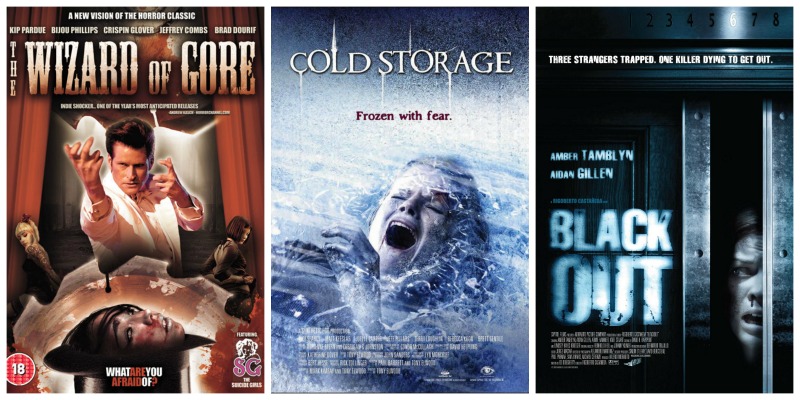
MK:”The only difference is that horror is usually paced slower, more pregnant pauses are used to accentuate a particular moment and we like to use more sound FX. When I cut the trailer for The Wizard of Gore, a remake of a 70’s Vincent Price horror film, I chose to skillfully use music and sound FX that would drive the trailer along in a frenetic manner, with lots of stops. I concluded with a high energy rock cue from the feature soundtrack because it worked so well to pull the whole trailer together at the end.”
SC: How important is music in a horror trailer? Where do you source your music from?
MK: “Music searches are really one of the most important elements in trailer making. The music will set the tone of the piece as well as the mood and what I would like the audience to feel and think. For most of the indy horror film trailers I create, I’m usually handcuffed into using the feature score from the film because of ultra low budgets.This can be a good thing or a bad thing depending on the score.”
SC: Are there certain fonts or motion graphics that can be used to great effect? Should you have text/graphics or should the scenes play out to demonstrate the full effect of the film? What about using festival laurels or critic quotes? What about foreign films, how do subtitles play in trailers?
MK: “The only reason you need text or graphics in a trailer is because you have to convey another story that can’t be accomplished with using dialogue from the film; or the dialogue from the film isn’t enough to tell the story.
When we use the festival laurels or critic quotes in a cut, we are trying to use the accolades of the film to our advantage. Testing shows that people do respond to awards and such. A lot of times we ‘hide’ foreign films by doing a trailer with no dialogue,it’s very difficult to sell a sub-titled foreign language movie here in the States.”
SC: How is trailer editing different from feature editing?
MK: “I almost exclusively cut just trailers. I think it really is necessary to hire a professional trailer editor who is not biased on the film. One who can step back and really see the big picture. I recently edited a feature documentary for the first time, a film called The Sound of the Surf about the origins of ‘Surf’ music. Unlike trailers, this feature’s files were so big and daunting, so many things to keep track of ie: photos, interviews, music,flyers etc. With a trailer, one simply has the 1 ½ hr film to be concerned with plus miscellaneous music, graphics and select pulls. Quite frankly, after completing this feature edit, I wonder if I could still cut a trailer for this film, after being so immersed into it.”
SC: Given the audience for horror is usually young (teens), does this dictate the length and style of the trailer? How about different lengths depending on where it is shown (online vs in theater)?
MK: “Less is more in this case. Attention spans have shrunk in recent years probably due to the obliteration of broadcast material out there.There is no official maximum length, but if your trailer is over 2m 30secs, it probably won’t get played in a theater.”
SC: How do you feel about the accusation that trailers “give away the movie”? Is that true? Are there instances where they have to in order to get bums in seats/streams sold?
MK: “A good trailer should never give away the story or ending. However, today a lot of trailers do just that. A lot of this has to do with creatives in charge at the studios.There is a lot of pressure on them to ‘Open’ a film [ie, provide a successful opening weekend of the release] because if they don’t, it’s their job on the line. Being a creative advertising exec at a studio is a very short lived career.”
SC: Now for the question all of our readers will want to know for budgeting purposes, could you give me a range for how much a professional trailer would cost? Also, how far in advance should a producer plan for trailer edit?
MK: “If you go to a trailer house (large company with many producers, editors, graphics people), you are going to be charged anywhere from $40,000 on up to $75,000. Smaller shops like mine (1 to 5 employees) can bring the price way down. My rate for an indy trailer is around $4000-$5,000.
It’s always a good idea to plan in advance, but unfortunately people wait until the last minute. I have had to cut trailers in ONE DAY!-not fun. Ideally, it takes 1 to 2 weeks to get a great trailer cut that the client likes.”
Michael Kurthy is an award-winning motion picture marketing veteran who, over a 20 year career, has created successful theatrical campaigns for dozens of block-buster hits including: “Independence Day”, “The Matrix”, and “The Lord of the Rings”.
Currently,he owns Ye Olde Trailer Shoppe Inc., a boutique trailer house, for which he creates quality advertising campaigns for major and independent features. Mike has created campaigns for many horror films including, “The Wizard of Gore”, “Cold Storage”, “Friday the 13th Part Vlll”, “Blackout”, “Close Your Eyes” and “Freddy’s Dead” all of which can be seen at www.michaelkurthy.com
Sheri Candler October 24th, 2013
Posted In: Marketing, Publicity, Trailers, Uncategorized
Tags: Black Out, Cold Storage, film marketing, film trailers, horror film, horror trailers, independent film, Michael Kurthy, Sheri Candler, Sound of the Surf, The Film Collaborative, Wizard of Gore, Ye Olde Trailer Shoppe