Wrap Report – The Popcorn List: Pop Up Series
An Experiment in Collaborative Non-Theatrical Distribution
By Lela Meadow-Conner (mamafilm) and Kathy Susca (The Film Collaborative)
TL;DR
The Pop Up Series grew visibility for participating films, brought new programming to theaters and audiences, and offered filmmakers an additional exhibition window with built-in marketing to elevate discoverability.
- 100% of participating exhibitors would host the Series again, and mission fulfillment is consistently cited as a core driver of exhibitor satisfaction.
- 83% of audiences would attend another screening, and surveys show they appreciate curation, and want to support indie filmmakers and art house theaters.
- Filmmakers reported an average overall satisfaction rating of 8.14/10, expressing appreciation for the solidarity amongst the cohort, and emphasizing the value of expanding theatrical opportunities for all participating films.
- The cooperative marketing strategy, which promotes both individual films and the Series as a whole, reached 568,526 accounts on TPL’s socials, with just 0.8% generated by ads, indicating strong organic discovery.
- The modest box office ($10,713 for the hybrid Series) was in line with expectations for a first-year Series still building its brand. Unsurprisingly, the most successful screenings were eventized. Of the top 3 grossing films, 1 was virtual.
- In 2026, TPL will expand theatrical opportunities, grow capacity-building offerings, and remain responsive to a changing distribution landscape.
🍿 What is The Popcorn List?
The Popcorn List launched in 2024 as a visibility initiative in hopes of bringing more film industry visibility to independent feature films that had successfully played the film festival circuit and were still without traditional distribution.
It lives as an annual survey of acclaimed feature films recommended by film festival programmers across North America, and strives to:
- amplify independent films that deserve wider release,
- inform the greater film community about practical operational fixes to the current distribution system,
- highlight the discovery nature of film curation, and
- cultivate community and capacity building for new and established filmmakers.
Since 2024, the List has shone a spotlight on 70 films. See Appendix for more details on how the films make the final cut.
The 2025 List:
The 2025 List was compiled based on the recommendations of 30 U.S. film festival programmers. The List, featuring 19 eligible films, was published on our own socials, Substack, and website, as well as with partner outlets IndieWire, Hope For Film, and Letterboxd, on April 23, 2025. The List included:
- 6 Documentaries & 14 Narrative Features
- 13 first time feature film Directors
- 11 Female Directors
By the time of the announcement, we were deep into planning for the Pop Up Series.
🍿 The Inaugural Pop Up Series: Discover Fresh, Hot Films
Inspired by the many opportunities that exist within the distribution space, we set out to take the 2025 List from the page to the screen with the inaugural Pop Up Series. This audience-facing Series would take TPL from a solely industry-driven initiative and broaden our horizons for supporting filmmakers as they pursue wide distribution.
Our primary goals for the 2025 Pop Up Series were to:
- Experiment with a collaborative non-theatrical distribution model
- Facilitate access for theaters to festival darlings before their wide release
- Cultivate audiences for TPL films fueled by the discovery nature of film curation
- Create capacity-building and networking opportunities for filmmakers
- Serve as a springboard for wider distribution opportunities for TPL films
A Hybrid Structure
Starting out as a scrappy initiative with no funding, we knew the beta must be contained to ensure we could see the experiment through to completion. As we ideated the ideal structure, we opted to pursue a hybrid model, featuring both in-theater and virtual screenings. Ultimately, eight of TPL’s 2025 recommended films trusted us to help bring their films to audiences.
In keeping with our ethos to support films’ overall distribution plan and subsequent windows, we designed the Pop Up Series so as to not interfere with what distributors refer to as “cannibalizing audiences,” or to scare off potential buyers by being too broad or even referring to it as “theatrical.”
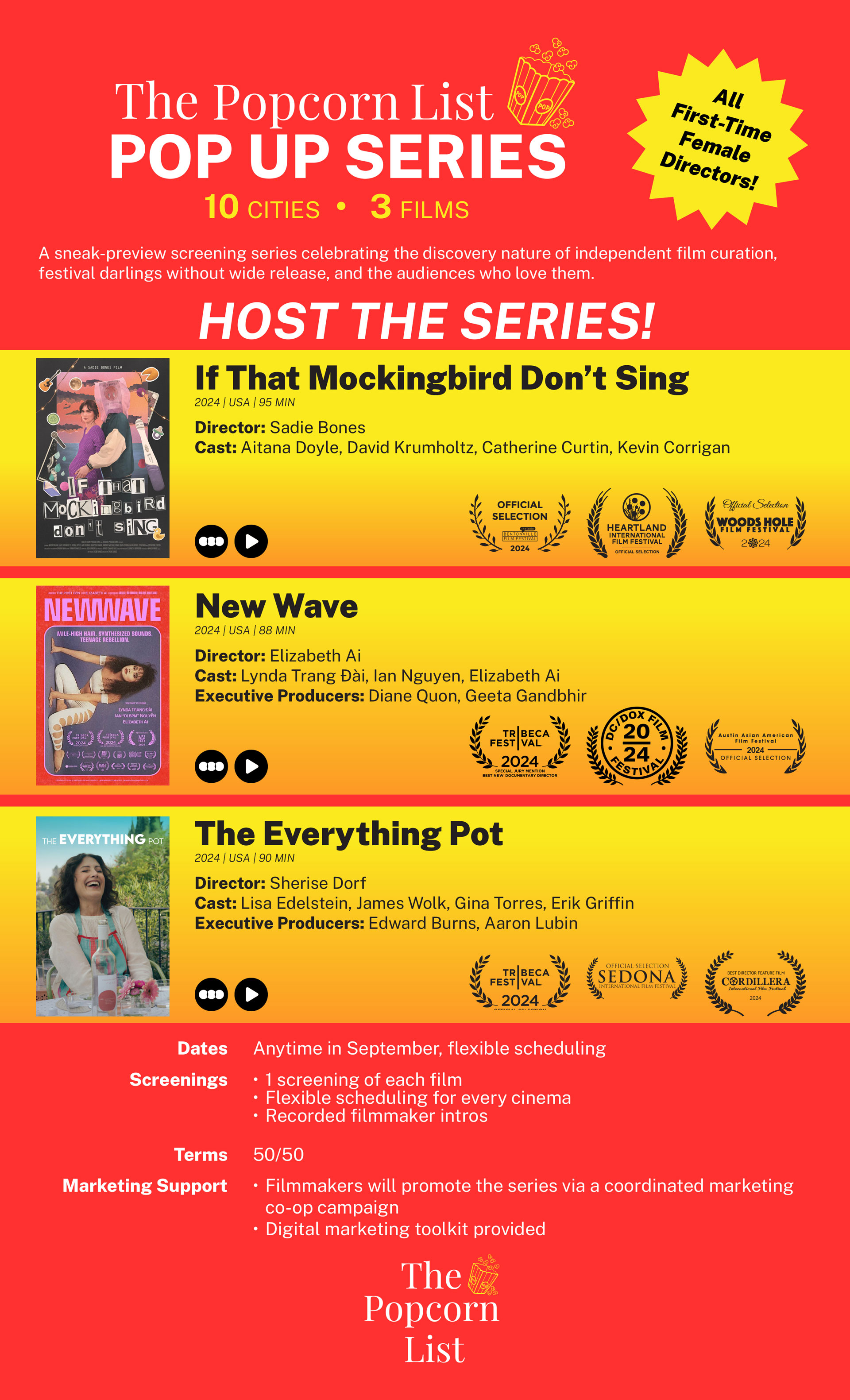
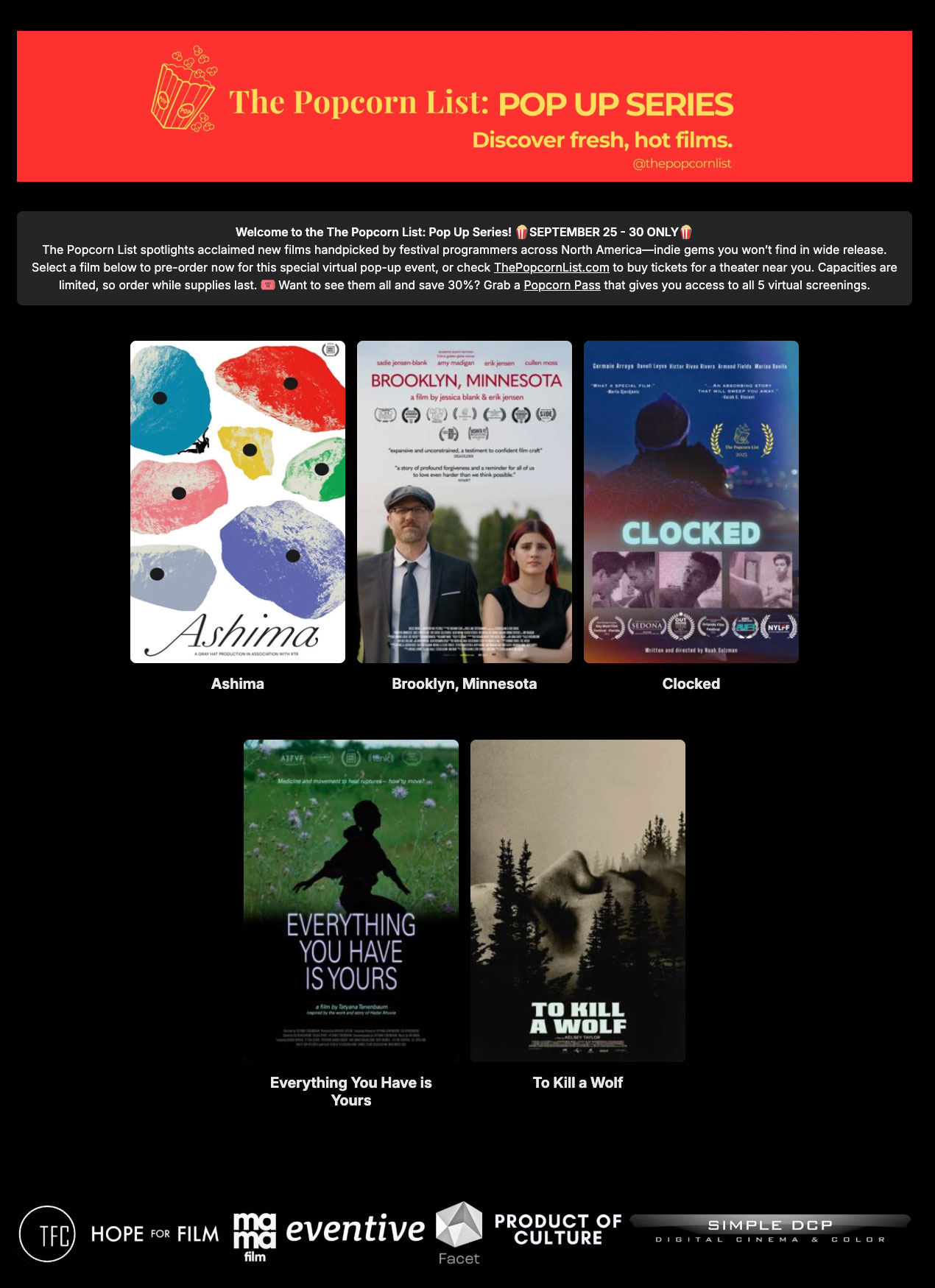
In Theaters: 10 cities, 3 Films, 1 Month Only
Selecting three films for the theatrical portion of the Series felt manageable, so we packaged the in-person Series with three films by first time female feature directors, representing a mix of documentary and narrative and an interesting spectrum of points of view and life experience.
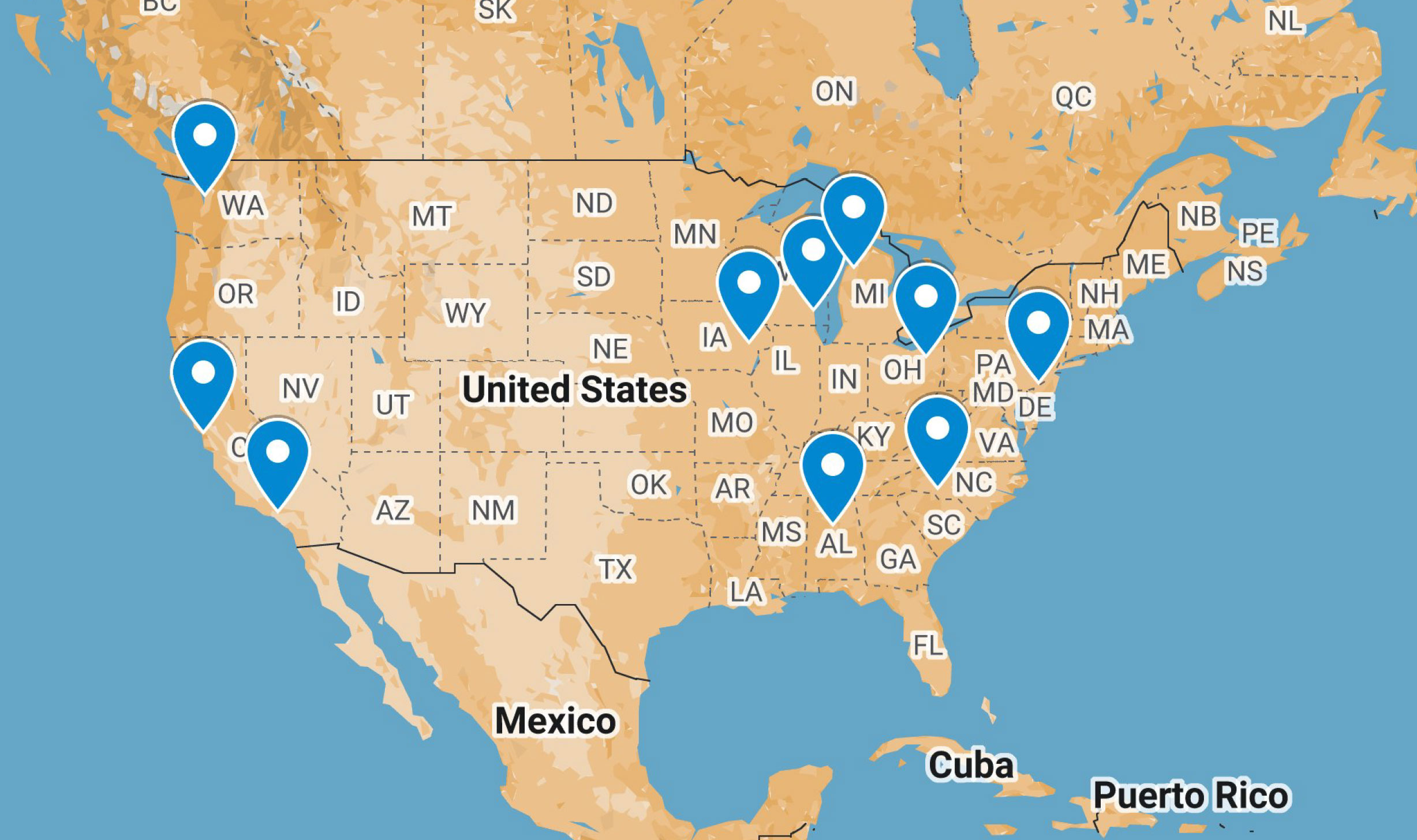
Ten arthouse theaters around the country took the leap and joined us in the inaugural Series, agreeing to play all three films as “one-night-only sneak previews” throughout the month of September – but with complete flexibility on their end as to scheduling – since they know their audiences best.
Virtual Screenings: Nationwide on Eventive, 6 days Only
We invited all remaining films from the 2025 List who had expressed interest in participating in the Series. Five films opted in to play virtually for six days at the end of September geo-blocked to the U.S.
Hosted by Eventive, the virtual element allowed us to expand the invitation not only to more filmmakers, but also to more audiences who may not be able to come to a theatrical screening because of geography, childcare, access, or any number of other reasons.
🍿 A Collaborative Approach
TPL’s ethos lies in the fundamental idea that there is power in the collective. We harnessed this notion as we continued to design a collaborative approach to revenue share and marketing.
Filmmaker Solidarity Pool & Rev Share Structure
We built the economics based on a rev-share structure of box office receipts (both for in-theater & virtual screenings). It allowed us to proceed without funds up front to pay licensing fees, while being as fair as possible to exhibitors, filmmakers, and ideally, ourselves as well. The message was clear: we are all in this together.
The payout structure included a Filmmaker Solidarity Pool:15% of every ticket sold went into a pool which was split evenly among teams at the Series’ conclusion. We hypothesized this would incentivize film teams to support and promote each other’s films, ensure that every film would receive some sort of payout regardless of individual box office, and reflect the collaborative nature of the Series.
In-Theater: The terms were 50/50 with the theaters, making us partners with an equal financial stake in this endeavor. The full economic split was:
- 50% to theater
- 25% to film team
- 15% to a Filmmaker Solidarity Pool (to be split equally among the teams)
- 10% to admin & overhead
Virtual: Because the exhibitor share was lower for the virtual Series, we were able to allocate a higher percentage to the individual films and design this split:
- 35% to platform
- 40% to film team
- 15% to a Filmmaker Solidarity Pool (to be split equally among the teams)
- 10% to admin & overhead
Marketing Collective
Independent filmmakers don’t have surplus money, but they do have social capital, so we conceived a collective social media marketing campaign in which the film teams would promote not only their own films but also each other’s films and the Series as a whole, creating crossover among existing followers and leveraging their social media to the collective’s benefit. The more tickets sold, the more each film team could:
- Retain a percentage of their own ticket sales
- Add to the overall value of the Filmmaker Solidarity Pool
- Be on the ground floor of building a new approach to marketing
- Form long-term relationships amongst each other & with key industry partners
Assets:
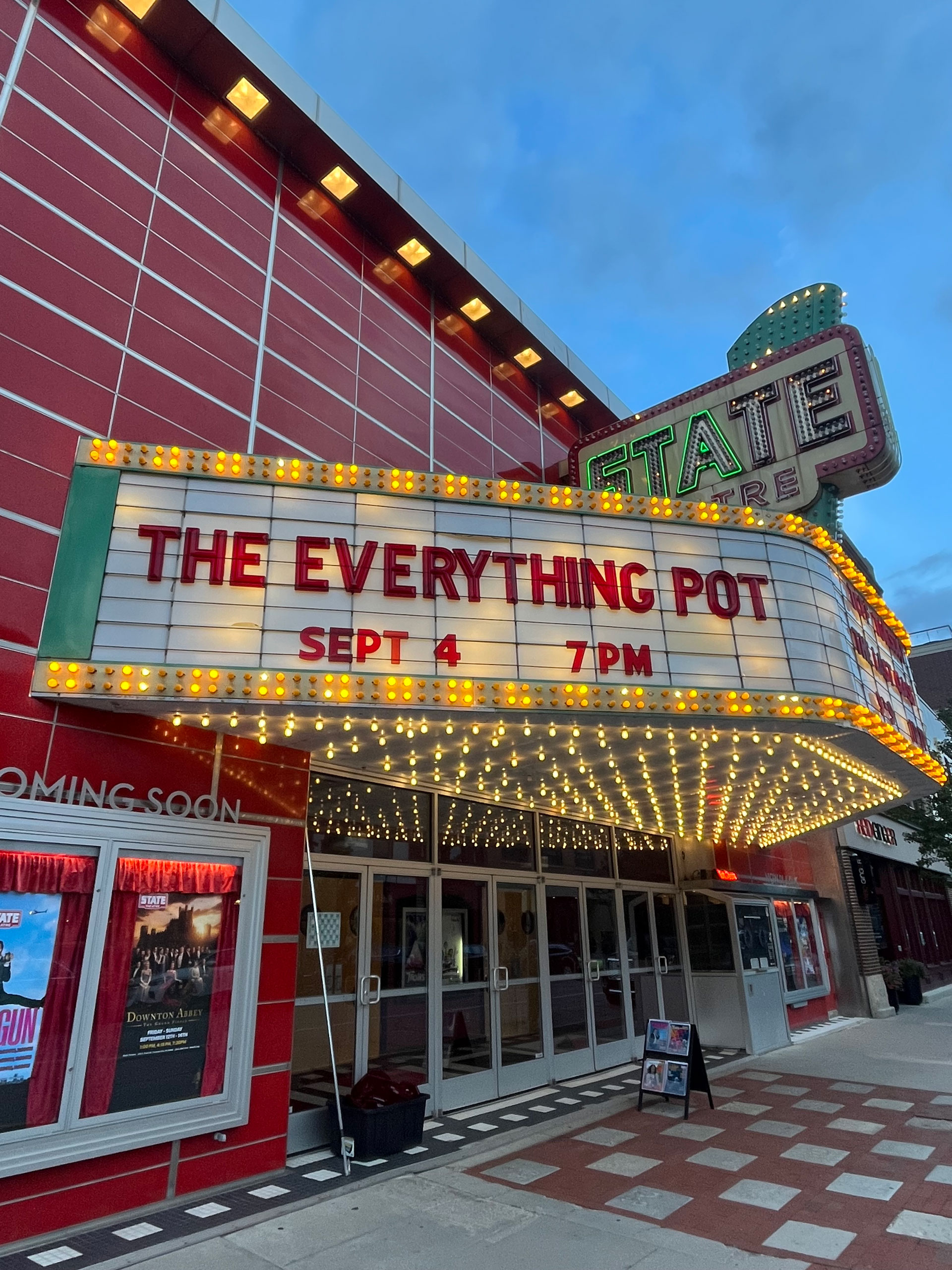
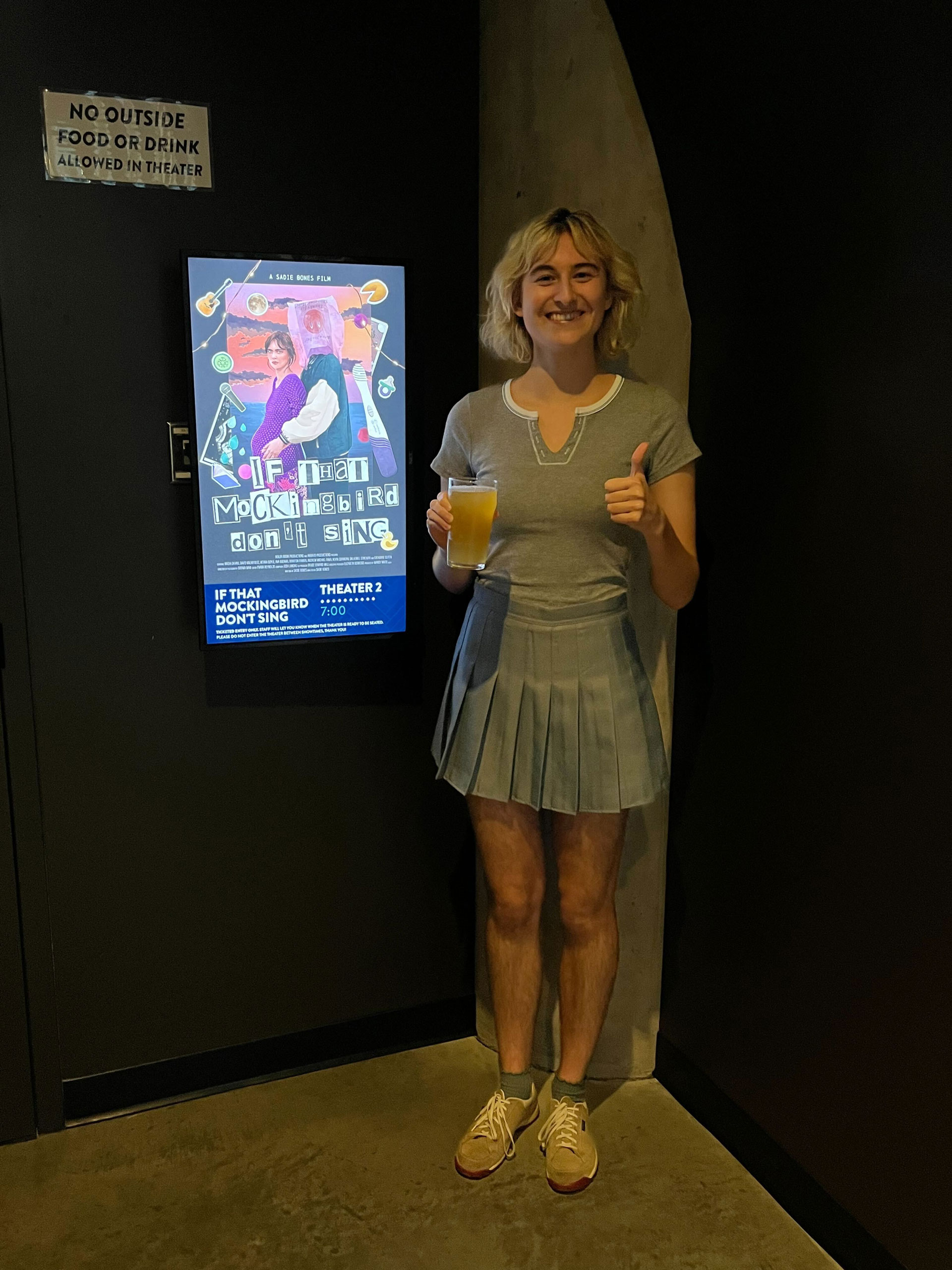
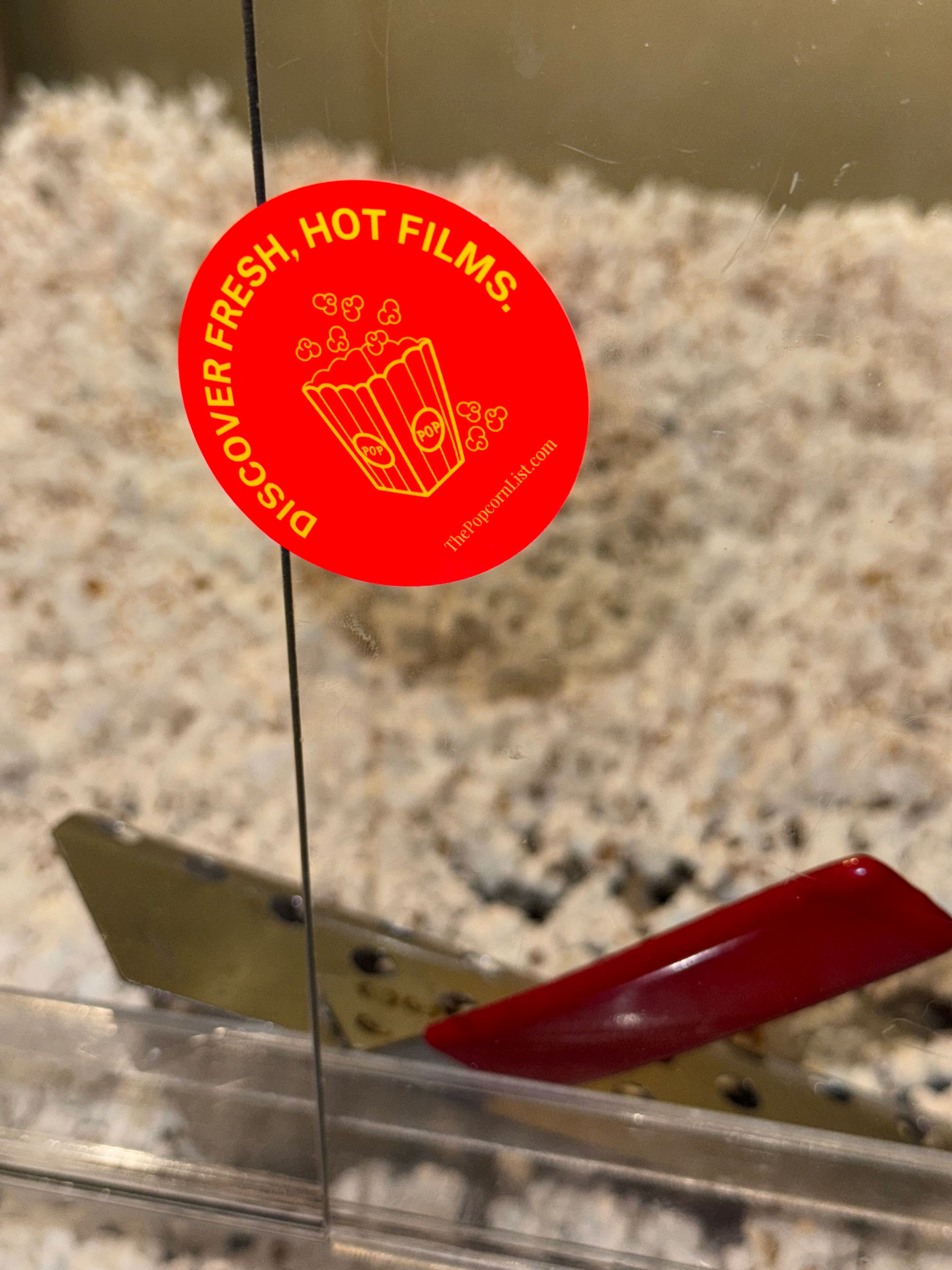
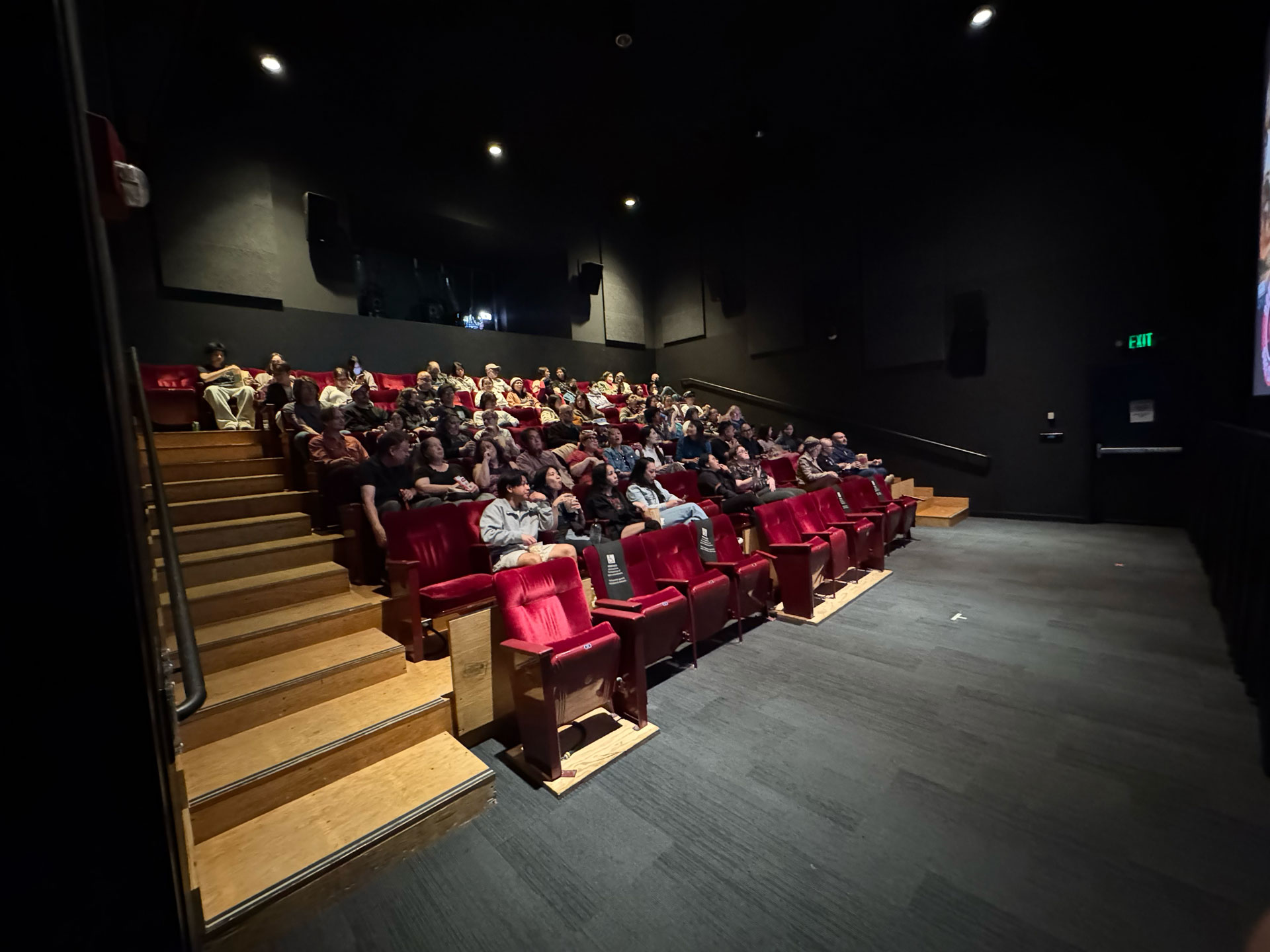
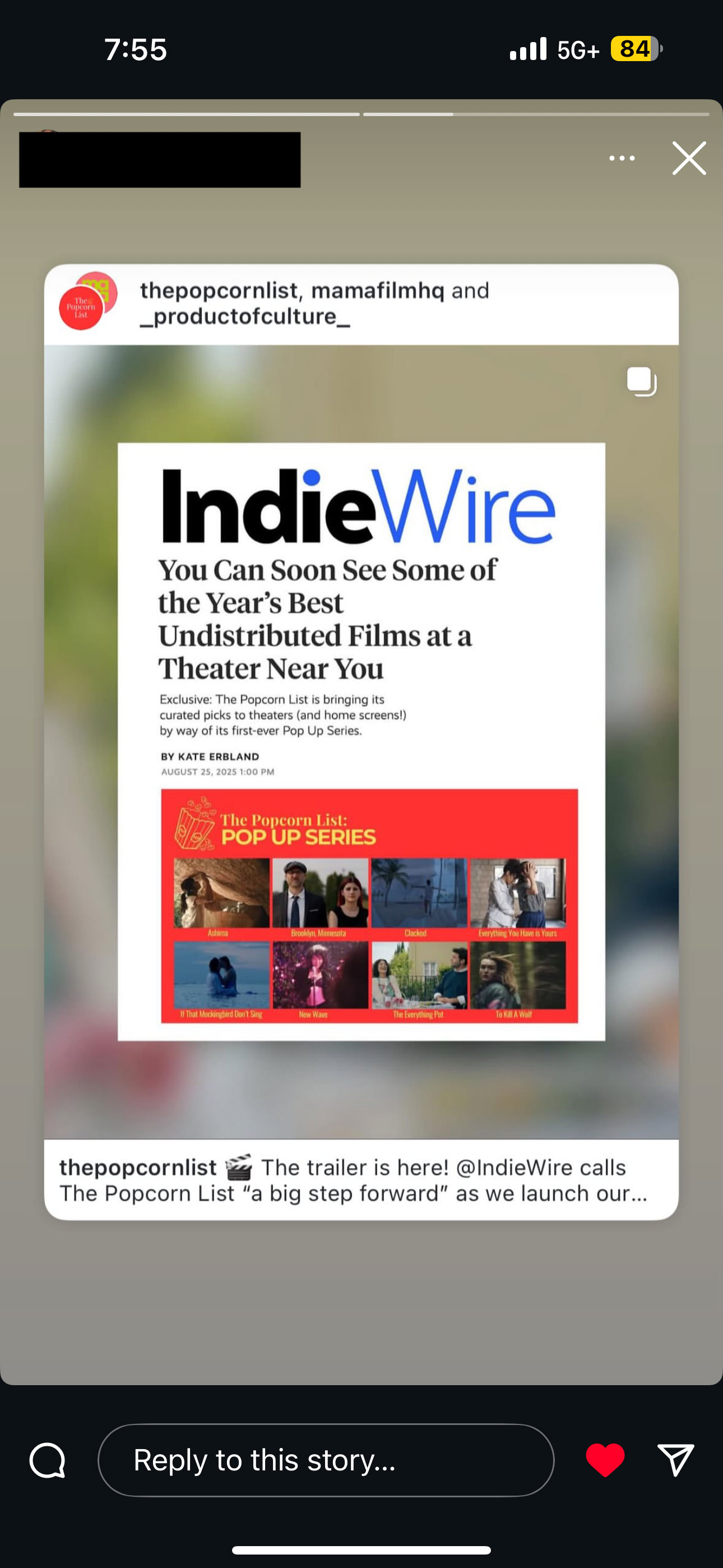
Working with marketing & social media agency Product of Culture, we created a Social Media Toolkit to be used by filmmakers, partners and theaters and a Series Trailer (in both horizontal and vertical formats) which IndieWire debuted. We created myriad promo codes to track ticket sales. All of our social media graphics were created internally in Canva and we ordered TPL stickers to be shipped directly to the theaters. Each theater was offered an additional stipend to collect videos and images.
Campaign:
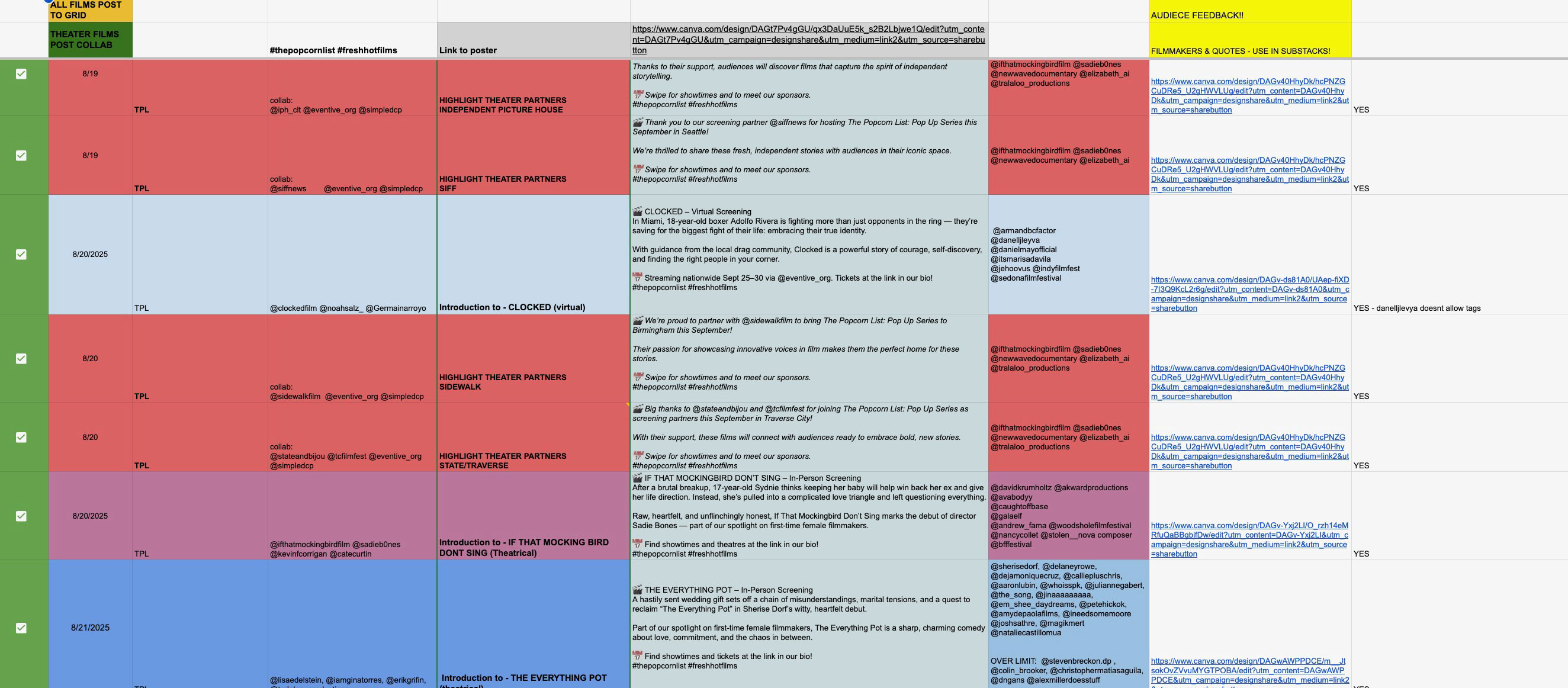
We began our marketing campaign in earnest on August 15th. Each film team was asked to share two posts that promoted all of the films/Series; and each team was guaranteed 3-4 unique posts. We collaborated on as many posts as possible with filmmakers, programmers, festivals, partners and theaters, and the team at Product of Culture cross-posted our content to Facebook and TikTok. In total, the campaign included 110 unique Instagram posts over the course of about 6 weeks. All in, we spent $4,500 on social media marketing (exclusively on Meta platforms).
Some filmmakers noted that the comms, posting schedule, and collab posts were overwhelming at times – a longer lead time for prep would allow us to streamline that process for ourselves and for participating filmmakers.
🍿 Cultivating Community & Capacity
For Filmmakers
Throughout the course of the year, we aimed to create community and opportunity for TPL filmmakers. We hosted group Zooms for networking, introductions to field experts and informational calls throughout the Series. Filmmakers got a peek behind the curtains, in real time, at what it’s like to organize a Series, received social media education from Product of Culture, and learned from each others’ strategies, successes, and failures.
Highlighting the Role of the Curator
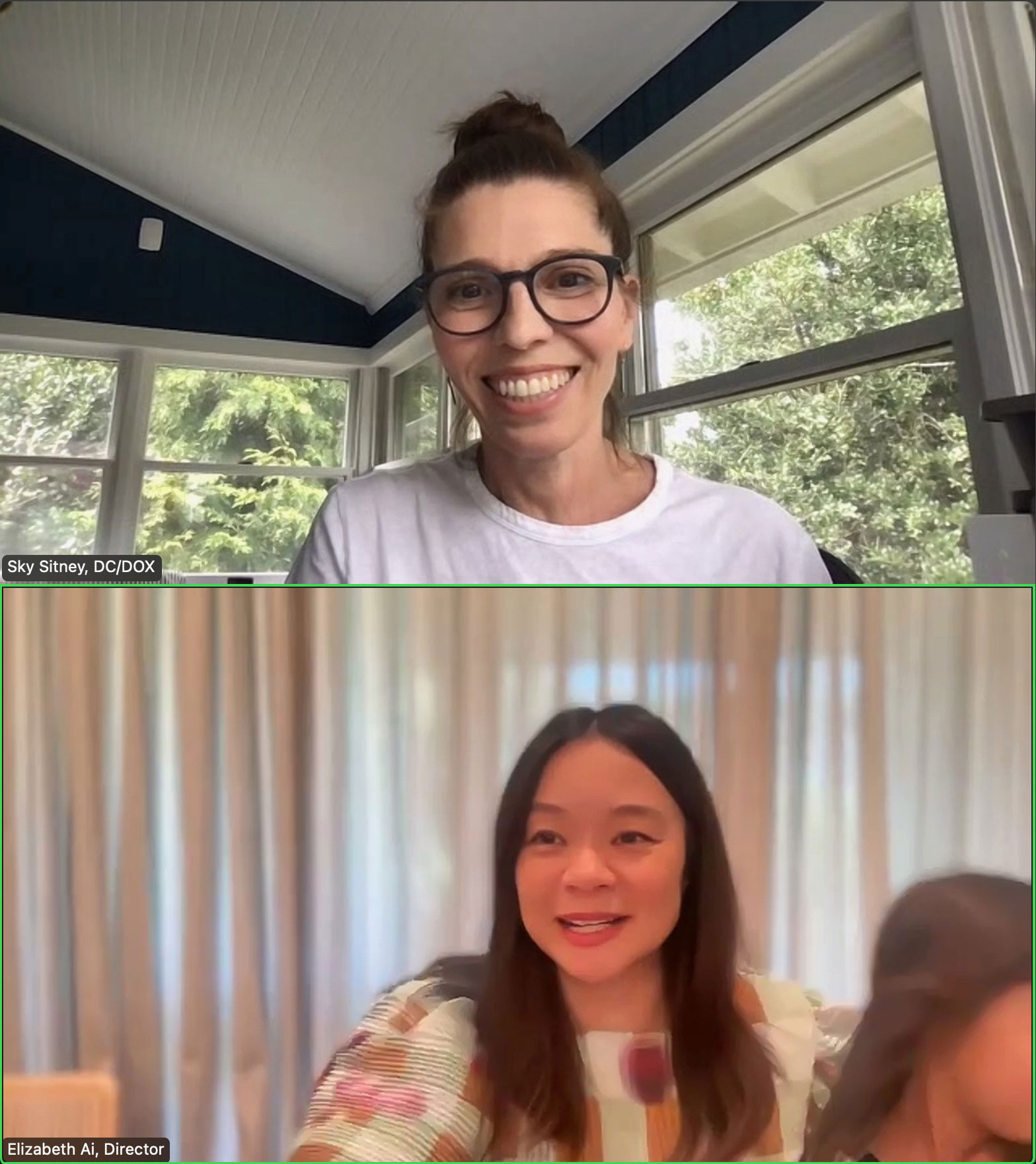
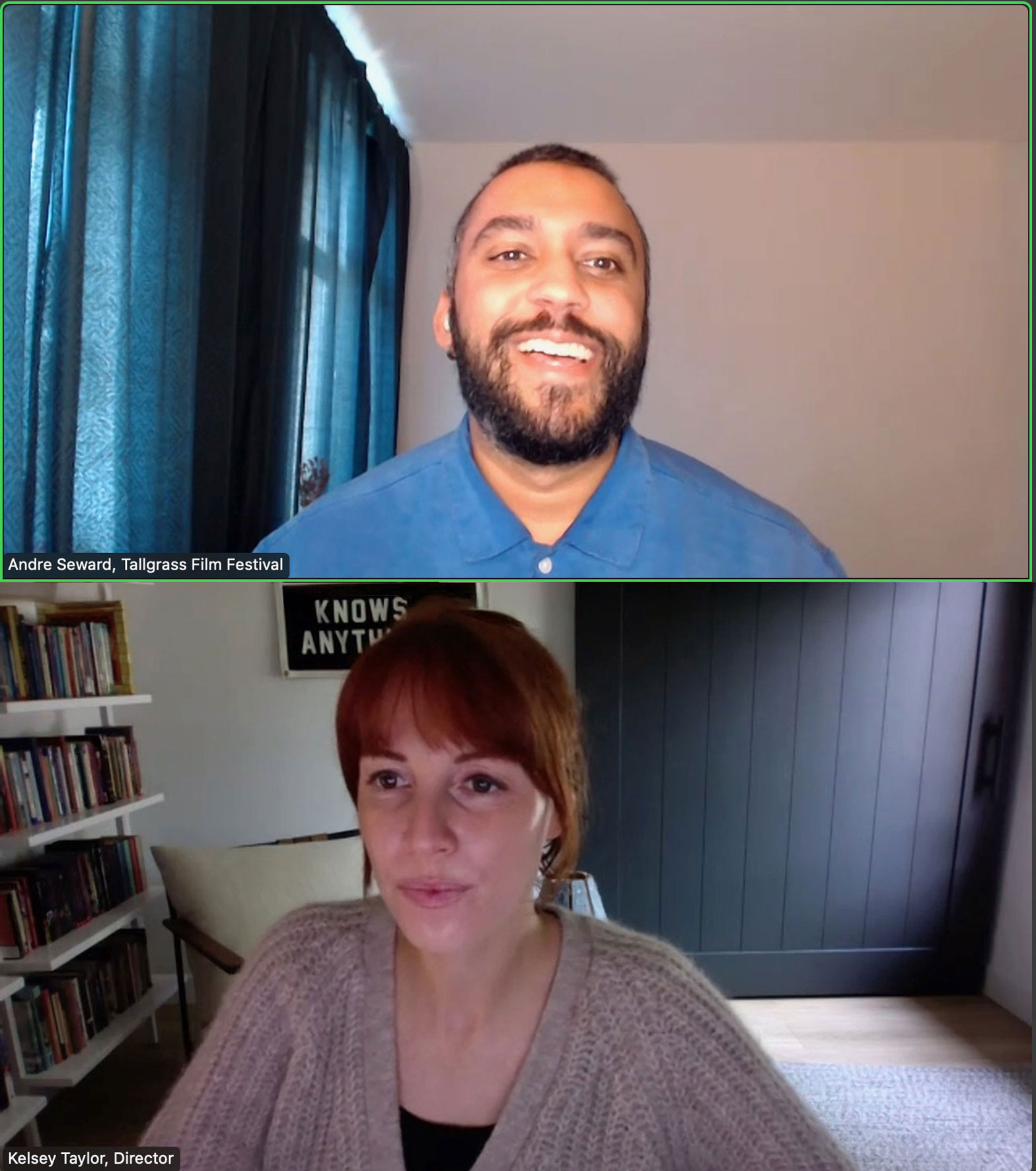
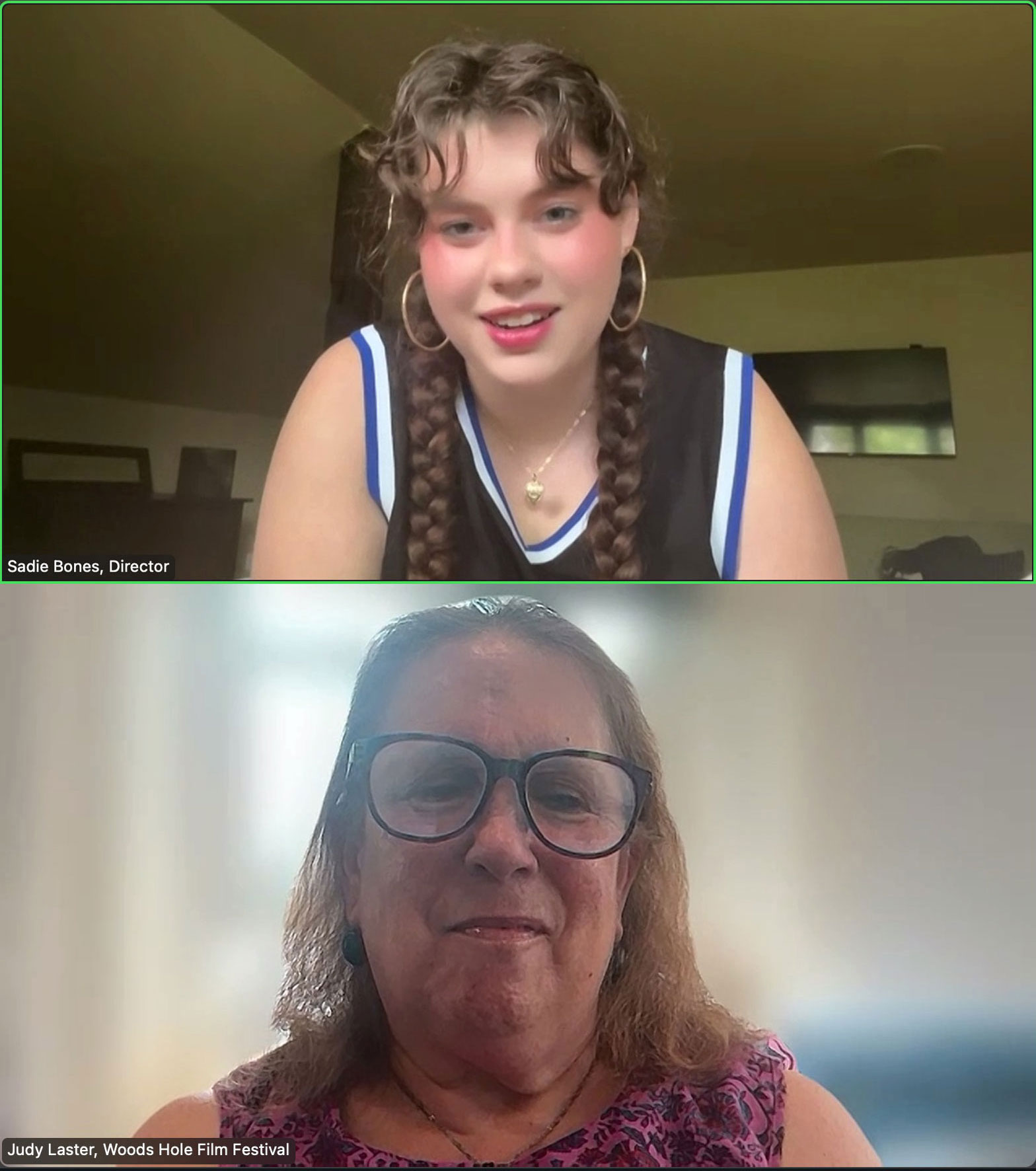
With no travel budget we pre-recorded short intros for every film with the film’s Director and the Programmer who recommended the film to TPL. This allowed audiences to connect with the storyteller and the curator who championed it – setting up TPL films with context and offering a human face in today’s disconnected world. It was important for the Series identity for audiences to have a better understanding of how and why they were watching these films.
Screenshots from the pre-recorded intros
Key Partners Stepped In
As it garnered more visibility, in-kind partners and donors came aboard to support the Series and our own capacity. Thanks to our fantastic partners, who made the Series happen in record time and who trusted us to try something new, together.

Hope for Film/Ted Hope
Ted Hope’s and his Hope for Film Substack have been partners since the first iteration of The Popcorn List in 2024. He offered the Series additional visibility and offered to match $5,000 in donations.
Eventive
Eventive came on as an in-kind partner to host the virtual portion of the Series. They also participated in the cooperative marketing campaign, doing a matching ad spend on socials, and showcased The Pop Up Series as a featured channel on their homepage for all of September.
Facet
In June, Maida Lynn and her philanthropic Facet LTD swooped in with a donation of $25,000, which gave us the ability to do paid ad spends on social media, hire extra muscle to implement our social posting calendar, cut a Series trailer, print stickers, compensate ourselves, and more.
Product of Culture
Product of Culture came on early as in-kind partners, designing our collaborative social strategy, implementing a robust calendar of posts throughout the month and beyond, and providing comprehensive analytics and follow up.

Roseade Wine Spritzer
Our very first brand partner, Roseade collaborated with us at Vidiots to offer a special combo price for spritzer and popcorn for anybody attending the LA screenings.

Simple DCP
Simple DCP came on as an in-kind partner to help us author DCPs for the filmmaker intros and the trailer to package each film’s deliverables into a neat, one-click download for theaters.
🍿 The Results: Did We Achieve Our Goals?
The Series was just a twinkle in our eye on February 9, 2025 and was in the bag by September 30. In order to analyze our success we collected the following:
- Filmmaker surveys: 7/8 film teams responded
- Theater surveys: 9/10 theaters responded
- Audience surveys: 69 respondents from across 9 cities and nationwide virtual
- Social media metrics: Product of Culture synthesized Meta metrics
- Box Office Receipts: From all theaters and Eventive
This year served as a beta; thus our metrics of success focused on participant satisfaction versus financial return. Note: with 7 film teams, 9 theaters, and 69 viewers responding, we don’t have the data to support a full statistical analysis. However, the anecdotal evidence included below is still valuable for us as we revise the Series for 2026, and informative for the field at large.
Overall, the general feedback we got from filmmakers, theaters, and audiences as to their experiences with this new model was very positive.
Goal #1: Experiment with a collaborative, ‘non-theatrical’ distribution model
Regarding the collaborative model, 100% of filmmakers agreed that the Filmmaker Solidarity Pool “was an asset”, though the question “collaborating with other filmmakers was to build audiences and support for each other’s films was useful” received mixed reviews, with 3 responding “Strongly Agree,” 3 responding “Somewhat Agree,” and one responding “Disagree.”
From our filmmaker survey, all responding films indicated that they would recommend participating in the TPL Series to fellow filmmakers, and their satisfaction scores averaged 8.14/10. What are the top things they took away from this experience?
“Understanding that marketing assets are very important.”
- “Understanding local press and outreach/community are necessary.”
- “We could directly see that you get what you put into it!”
- “I thought this was really interesting to include a solidarity pool and I thought it helped share the love amongst everyone.”
A major metric that is not to be overlooked is that the Series worked: the filmmakers trusted us with their projects, the theaters and Eventive came on board to exhibit the films, and the audiences showed up.
Goal #2: Facilitate access for theaters to festival darlings before their wide release
One of the Pop Up Series’ main goals was to help exhibitors access these films, and to support these films with a marketing push. 88% of theaters said that the level of marketing support they received from TPL was “Greater Than” the “amount of support they typically receive from small distributors or individual filmmakers.”
100% of responding theaters said they would be interested in participating in the Series again and expressed a general sentiment that the Pop Up Series is very mission-aligned for them. Open-ended feedback included the following notes:
- “We feel it is important and worthwhile to support independent filmmakers and give them an avenue in which to show their art.”
- “The Popcorn List Pop Up Series was exactly the breath of fresh air we needed as a small non-profit arthouse theater in the Midwest. You can tell they (TPL organizers) care as much about finding creative solutions to the problem of independent movie theaters and IRL audience attrition as they do about uplifting great films & filmmakers.”
Anecdotal feedback also indicates that not only was this goal clearly communicated, it was successfully achieved:
- “TPL lets us bring the films that matter—those the world hasn’t seen yet—directly to our audience, expanding the path from filmmaker to viewer. We look forward to bringing it back next year!”
- “TPL is a brilliant idea to spotlight overlooked gems on the festival circuit, particularly in a time of uncertainty in theatrical distribution.”
- “We loved hosting! There are so many amazing films that don’t get picked up post festival and this is a wonderful way to ensure that these important films don’t get lost in a void. We look forward to future events!”
From the filmmaker point of view, while the virtual had value, the ultimate goalpost remains big screen exhibition. In designing the Series, we did our best to create equal opportunities for all participating films, but we must acknowledge that just by the nature of a hybrid series, the three in-person films got outsized benefit compared to the virtual titles. This is a potential direction to develop the Series moving forward:
- “I never thought a theatrical release would be attainable for us before TPL.”
- “Access to the film from anywhere in the country was super beneficial!…[but] in person events are always appreciated. I think that’s the best way to support us.”
- “You could be of assistance by connecting us with a group of theaters that you have connections with so we could work alongside them to get screenings.”
- “I’m hoping that by getting on the list… it would be enough of a boost to convince theaters to program the film.”
Overall, a combination of in-person and hybrid access for films seems to be the best path forward to achieve the most opportunities for TPL films, reaching audiences that don’t have access to art house theaters, but still leaning into the traditional art house circuit and the importance of the communal viewing experience.
Goal #3: Cultivate audiences for TPL films fueled by the discovery nature of film curation
Audiences enjoyed the experience of the Pop Up Series, both in theater and virtually – and to a significant extent, they were motivated by the same metrics as the theaters:
- 46% attended the Series to support independent filmmakers
- 83% would attend another Pop Up Series screening
The majority of respondents fell into the 35-54 age range, skewed 71% female and regularly attend movies in the theater. Furthermore, the industry has long known that “word of mouth” generates the best ticket sales, and 34% of audience respondents said they learned about The Popcorn List from a friend. But even more importantly, when asked, 89% of respondents answered they were “highly likely to recommend TPL films to a friend.”
We were also excited to see the audience’s love for independent cinemas, who play a large role in the ecosystem and life span of an indie film:
- “(I attended) Because I still adore and prefer watching films on the screens they were intended to be conveyed on, and with an audience.”
- “Great theater, glad to know about it!”
- “The staff was so nice. I love supporting theatres like this one.”
A surprising result was to find that 41% of respondents said they had never been to that arthouse theater before – which shows us that we are successfully reaching new audiences not just for the films, but for the theaters as well.
And a note about virtual: Although virtual has lost some of its luster for filmmakers this far post-pandemic, audience feedback that suggests they still appreciate the access:
- “It was wonderful to access a new indie film. I live in a city with no art house cinema and my young kids keep me closer to home”
- “Excellent selection of interesting films. Streaming option was important.”
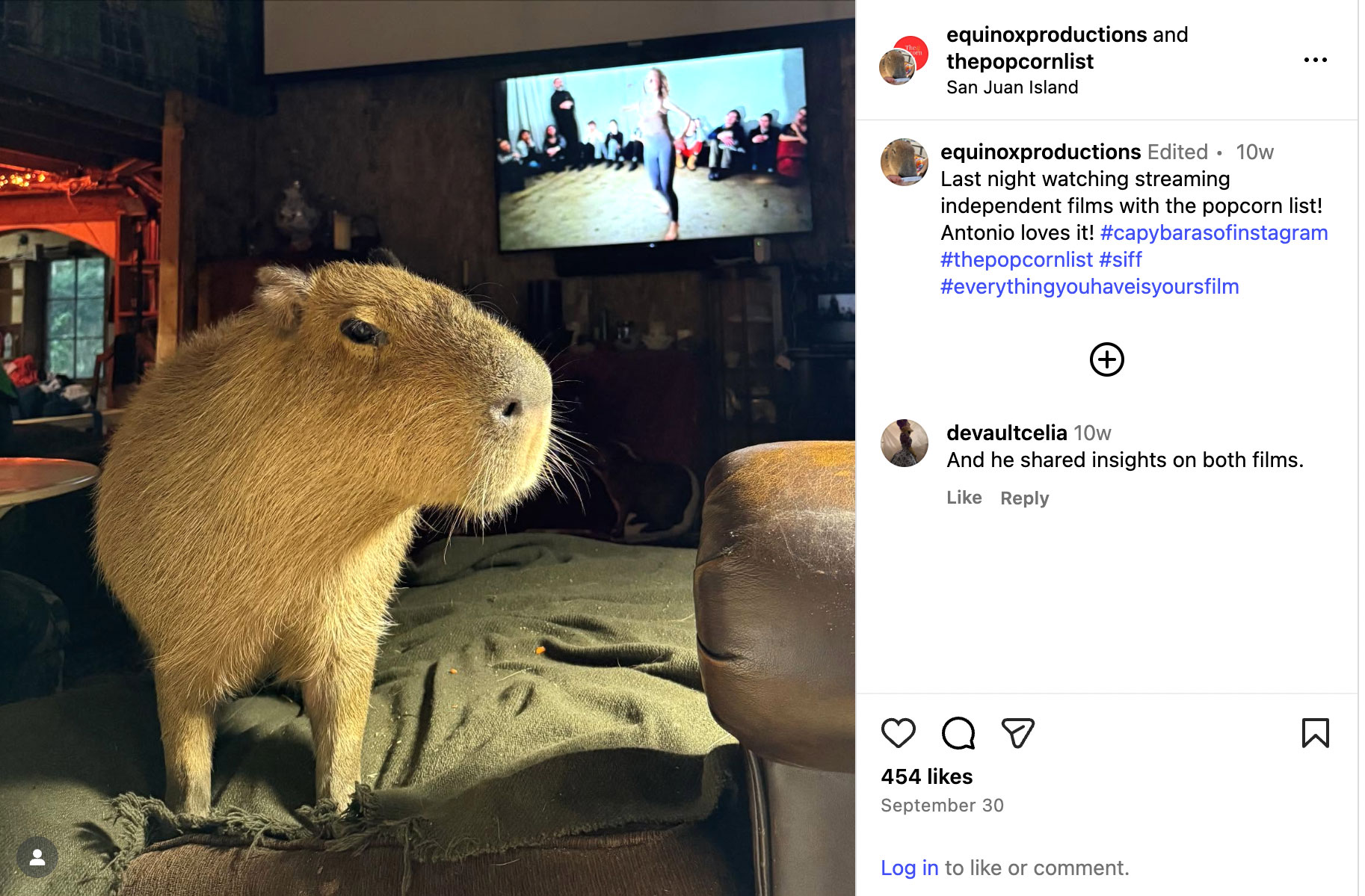
Anecdotal feedback from audiences indicates that the curation-forward messaging came across and was valuable to the attendees. When asked “why they would come back to a TPL screening” responses included:
- “To discover cinema gems and support filmmakers.”
- “Great to see a film different from mass releases.”
- “Good film selection.”
- “It was affordable, convenient, and I loved the Q&A with creators beforehand.”
- “It’s a really neat thing! I like supporting programmers doing their jobs and telling me what movie I should see! They’re usually correct!”
- “Because it’s cool to see a movie before it gets distribution and/or goes to VOD!”
- “It was an impactful and meaningful pick, i’d be interested to see other picks from the list!”
Social Media Metrics
Our social metrics told a similar story of broad reach not driven by paid ads or even necessarily by our own followers, but by organic discovery through collabs and cross-promotion. From the report generated by Product of Culture:
- Reach:
- Total Accounts reached: 133,841
- Total views: 568,526 (0.8% from ads)
- Total interactions: 7,577 (48.8% from followers / 51.2% from non-followers)
- Profile activity: 3,454 actions (+66.6%)
- 3,137 profile visits (+62.7%)
- 317 external link taps (+118.6%)
More than half of all engagements now come from non-followers, showing strong organic discovery and shareability.
- Engagement Sources:
- Followers: 48.8%
- Non-followers: 51.2%
- Accounts reached: 133,841
High share and non-follower rates suggest content is traveling beyond the core audience.
Box Office:
While the Box Office for 2025 was relatively modest, it was within the range we anticipated for a first-time Series that is still building its brand. Box office results were:
- In-person: 773 Tickets sold, $7,712.61 box office gross
- Virtual: 291 Virtual views, $3,001.15 virtual gross
- Total hybrid: 1,064 audience members, $10,713.76 gross
- Of the top 3 grossing films, one was virtual
As part of our commitment to transparency, we did our best to update a live shared BOR Google Sheet, so that the film teams had visibility into sales in real time. We also received some donations through Eventive’s portal, which we opted to split with the filmmakers.
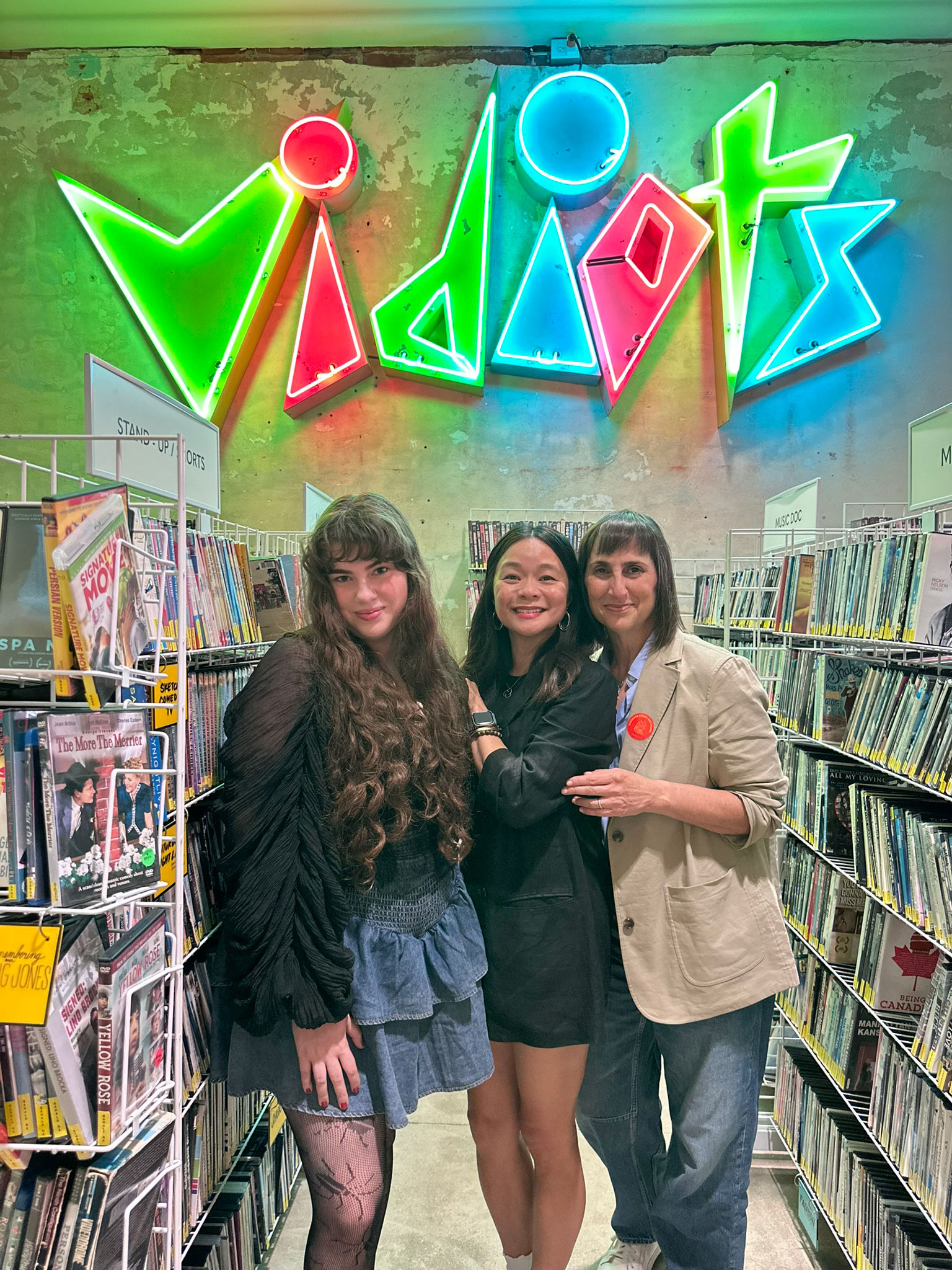
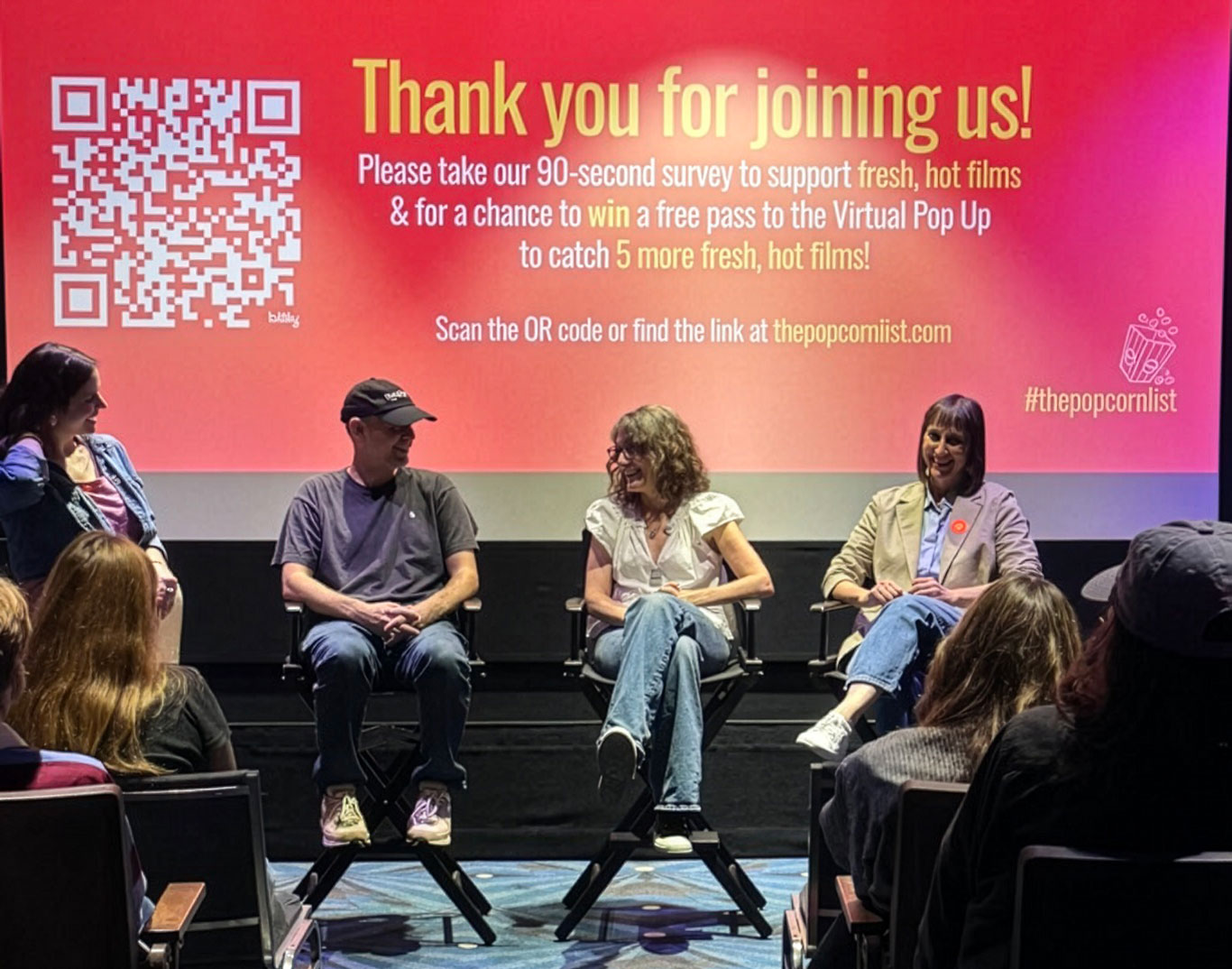
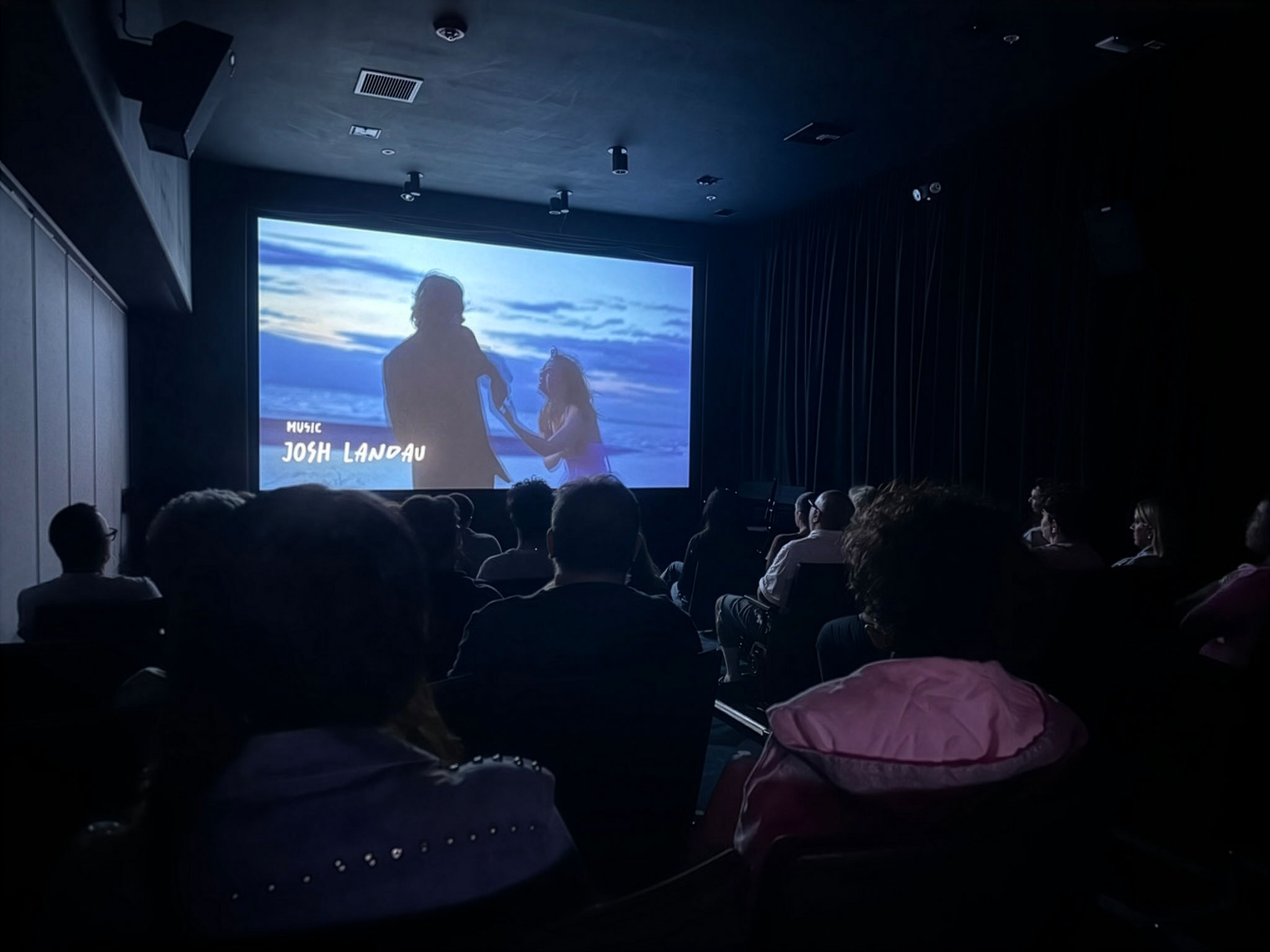
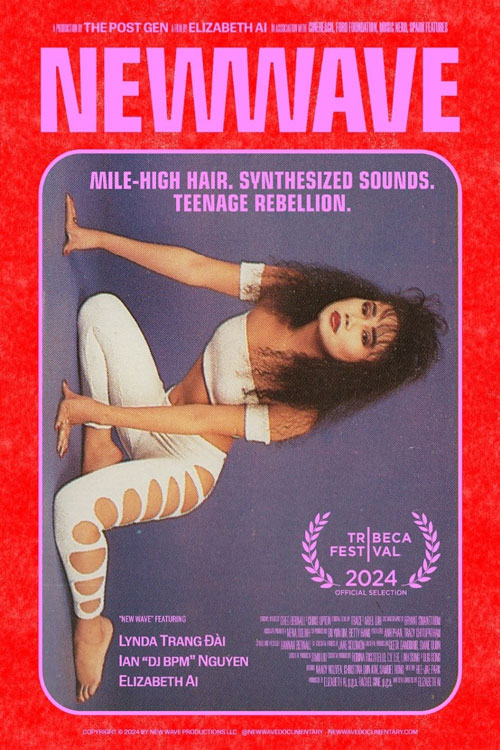
Ticket sales were correlated directly to the level of social media engagement on each film team’s side and their consistent outreach on socials drove significant ticket sales leading up to and during the virtual window. The most successful in-person screenings had filmmakers in attendance, or were eventized (e.g. The State Theatre offered a catered Vietnamese dinner to compliment NEW WAVE). The 3 sold-out screenings at Vidiots microcinema took place all in one day, allowing us to concentrate promotional efforts to a small window of time, create urgency around the scarcity of tickets, and draw audiences with a filmmaker Q&A–making this “mini-fest” a Series highlight.
Goal #4: Create capacity-building and networking opportunities for new and established filmmakers
One of our top priorities in the inaugural Series was filmmaker solidarity, both financially and in practice. We wanted the teams to feel like a cohort, to support each other (on socials and off), and to feel like they all had an equal stake in the Series.
Throughout the course of the Series, when the filmmakers came together (in-person and online) a lot of great energy, inspiration, commiseration, and innovative ideas were born. The film teams told us that it was encouraging to hear that other filmmakers were going through the same struggles.
Filmmaker surveys showed us that all of the film teams are keen to be part of a TPL peer mentorship program and anecdotal feedback around community-building included that filmmakers gained:
- “A feeling of solidarity with other filmmakers without distribution.”
- “New connections in the industry.”
- “A sense of accomplishment.”
- “I’d be happy to connect with new audiences and other filmmakers however possible.”
- “What a wonderful way to be in community w/ some badass indie filmmakers white knuckling their way through this.”
- “Loved the camaraderie with our cohort. Wish there was a bit more!”
Connecting filmmakers in a cohort to discuss their journeys, their struggles, their questions – and also of course their successes and hopes and goals – was a breath of fresh air for everyone. Every film benefits when others succeed and vice versa. A rising tide lifts all boats. We make the tide together.
Goal #5: Serve as a springboard for wider distribution opportunities for TPL films
One of the primary goals of The List and the The Series is visibility for recommended films: visibility to audiences (we sold over 1,000 tickets and passes across the Series), social media presence (we had 568,000 views on our socials alone), and visibility within industry (IndieWire, Hope for Film, Filmmaker Magazine, etc.)
Many filmmakers reported having had conversations with distributors that were generated directly by their participation in the List and/or Series. We fielded some outreach from theaters interested in booking films outside the scope of the Series – we put them directly in touch with the film teams. One film even scored a two-week theatrical run in New Zealand. We’re tracking the film’s journeys as they continue to release wider into the world and are excited to see them making moves that are outside the conventional paths for independent films.
Anecdotal feedback from filmmakers does indicate that they learned something about distribution (in particular, self-distribution) from participating in the Series, and that they came away from the experience more empowered than when they went in. When asked “what does the term “not having distribution” mean to you at this moment?,” responses included:
- “Freedom.”
- “Opportunity.”
- “Control.”
- “Being a Punk Rock Muthfkr.”
- “The journey with this film isn’t over.”
- “We are letting go of a traditional distribution pathway. Our dreams have shifted organically and TPL has been a part of that journey.”
- “Made us more aware of other routes to get eyes on the project that don’t include aggregators or needing to take “the least crappy” deal.”
- “Being able to retain theatrical rights.”
🍿 The 2026 Popcorn List: Pop Up Series
As we move into the next iteration of the Series, we’re thinking about building our audience-facing brand, expanding opportunities for TPL films and fundraising for additive and supplemental elements. Some of the things we’re taking into consideration include:
- Expanding theatrical opportunities to more films and more cinemas.
- Hiring a publicist is always a gamble, but earned media is valuable.
- Lengthening promotional timeframe with a focused spend to & asset to build audience engagement.
- Offering travel support for filmmakers to attend screenings brings out audiences.
- Offering ‘Popcorn Stipends’ so theaters can provide free or discounted popcorn to audiences as part of our brand.
- Scheduling the Series to take advantage of theater’s more available months, and strategize the virtual window accordingly.
- Cultivating more collaborative opportunities to grow networking and capacity-building opportunities for and within the TPL Filmmaker cohorts.
- Expanding our budget. What would be ‘enough’ to execute this Series at the highest levels, checking all the boxes on this list? Our current estimate is over $150k per year.
- Being mindful of labor bandwidth: We’ll be more effective and intentional with how we spend our time and allocate resources.
For TPL, successful distribution means connecting films to audiences who would otherwise not find them; engaging in collaborative marketing and an incentivized financial model, introducing audiences to new filmmakers through the trust of known film curators; and building a community of networked filmmakers who uplift each other on their film’s distribution journey.
As the initiative and experiment grows into something bigger and better in 2026, we’re aware that we sit in the unique position of straddling lines, breaking boundaries, and participating in the discussion around redefining distribution. We know these parameters will continue to evolve with the times, and we want to keep The Popcorn List flexible, reactive and proactive to the industry’s ever-changing needs.
Stay tuned: The third edition of The Popcorn List drops January 5th, 2026.
Stay fresh, stay hot! 🍿🍿🍿
Lela Meadow-Conner (mamafilm) & Kathy Susca (The Film Collaborative)
(with special thanks to Maida Lynn for her invaluable guidance)
🍿 Appendix
*How does TPL work?
TPL is a curation of films recommended by film festival programmers who received a survey asking them to share a film that they believe: 1) deserves to be seen more widely and 2) does not have traditional distribution. TPL compiles all of the recommendations, and communicates with the film teams directly to confirm their eligibility.
Thank you to the Programmers who recommended films to 2025’s The Popcorn List:
- Nehad Khedar (BlackStar)
- Sean Flynn (Camden International Film Festival)
- Mimi Plauché (Chicago International Film Festival)
- Paul Sloop (Cordillera International Film Festival)
- Dan Brawley (Cucalorus)
- Sky Sitney (DC/DOX)
- Paris Burris (deadCenter)
- Matthew Campbell (Denver Film Festival)
- Allegra Madsen (Frameline)
- Kayla Meyers (IndieMemphis)
- Jason Hoffman (Indy Film Fest)
- Cara Ogburn (Milwaukee Film)
- Tom Hall (Montclair Film)
- Crystal Merrill (Mountainfilm)
- Nick McCarthy (NewFest)
- Barak Epstein (Oak Cliff Film Festival)
- Jim Farmer (Out on Film)
- tt stern-enzi (Over-the-Rhine Film Festival)
- Isaac Zablocki (Reel Abilities)
- Lisa Simmons, Allison Simmons-Uvin (Roxbury International Film Festival)
- Beth Barrett (SIFF)
- Paul Sbrizzi (Slamdance)
- Heidi Zwicker (Sundance Film Festival)
- Andre Seward (Tallgrass Film Festival)
- Shailaja Rao (Tasveer Film Festival)
- Faridah Gbadamosi (Tribeca)
- Karen McMullen (Urbanworld)
- Judy Laster (Woods Hole Film Festival)
- Meira Blaustein (Woodstock Film Festival)
*Why the data shows us that there are opportunities within the sector:
- Theatrical releases generate 8x more social buzz than streaming-only releases (MarketCast 2023).
- 78% of US moviegoers go to theaters due to word-of-mouth (Market Data).
- 74% of Gen Z & Millennials prefer originals to remakes and value diversity onscreen, and 71% want to see more indie content. (Tubi)
- Theatrical runs are thriving for films lacking traditional distribution: No Other Land, Hundreds of Beavers
- In 2025 Gen Z will purchase more than 452 Million movie tickets
The Films
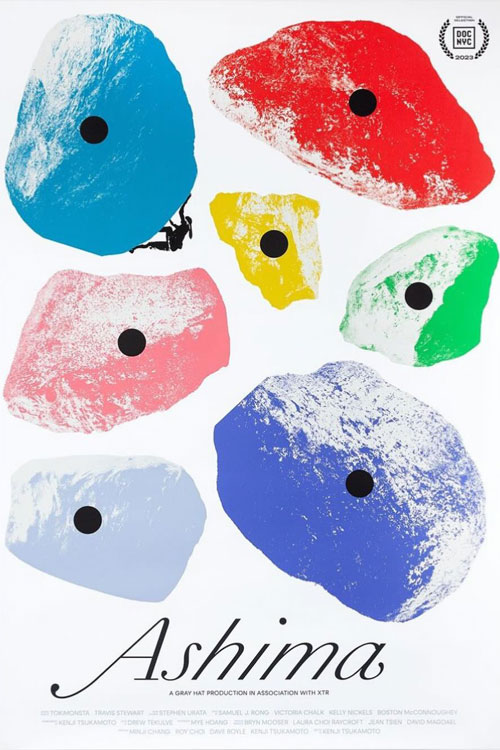
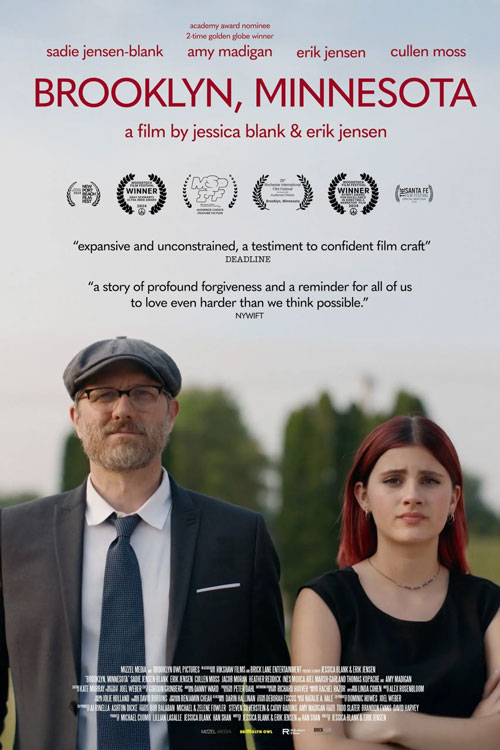
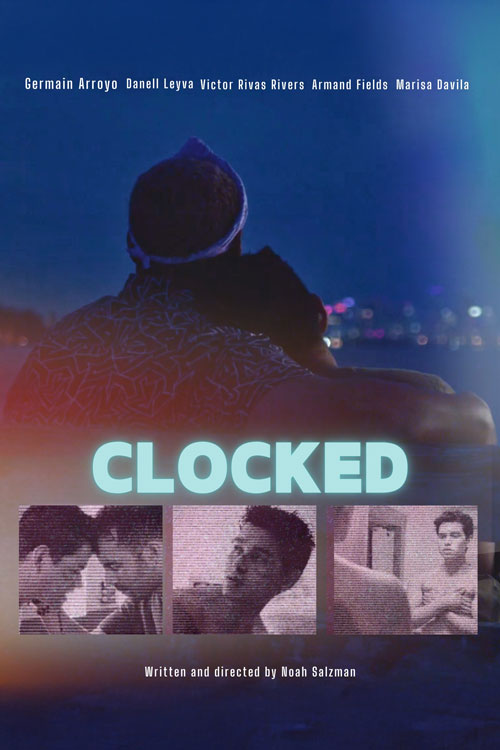
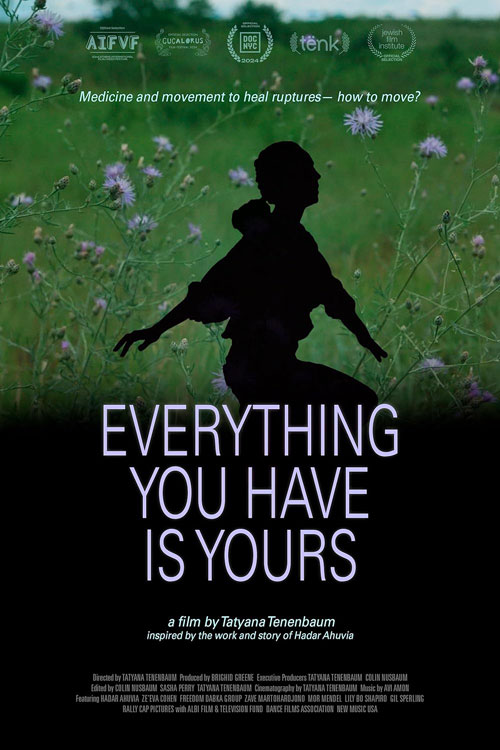
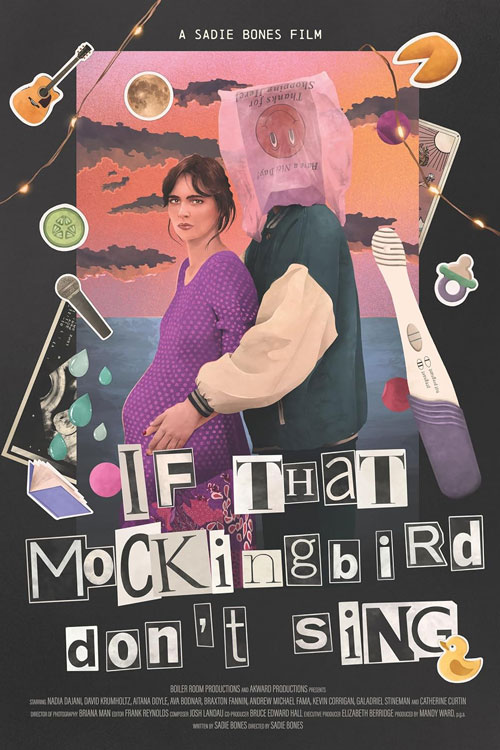
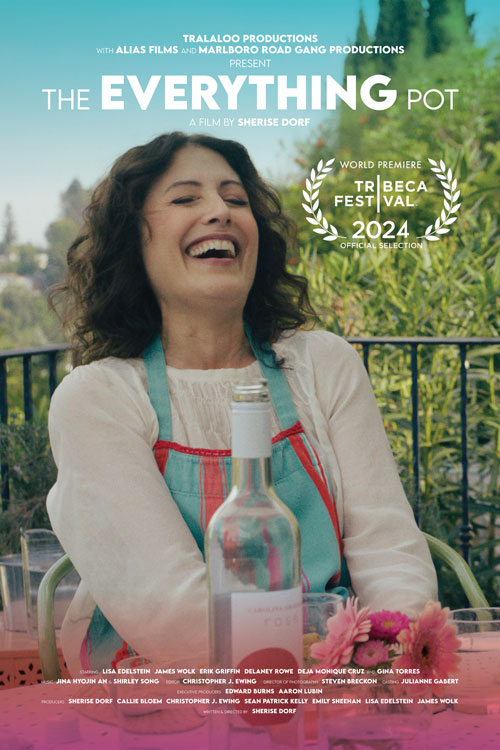
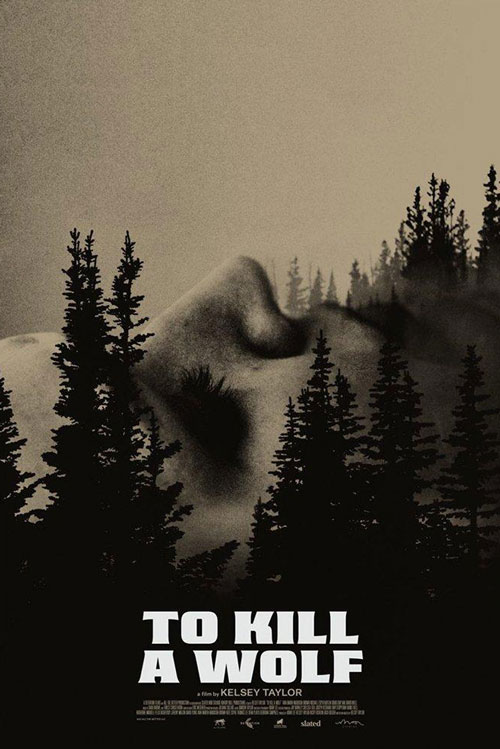
Eight of TPL’s 2025 recommended films trusted us to help bring their films to audiences:
The Theaters
- SIFF Film Center (Seattle, WA)
- cinéSPEAK (Philadelphia, PA)
- The Downer (Milwaukee, WI)
- The Independent Picture House (Charlotte, NC)
- Sidewalk Film Center (Birmingham, AL)
- State Theatre (Traverse City, MI)
- Vidiots (Los Angeles, CA)
- Roxie (San Francisco, CA)
- FilmScene (Iowa City, IA)
- Nightlight Cinema (Akron, OH)
Special Thanks: Archana Jain, Barbara Twist, Charity Hicks, Charlotte Simmons, Chris Hiti, David Averbach, Emily Christensen, Eric Moore, Fire on the Bluff, Gabrielle Wray, Garrett Sargent, Iddo Patt, Isis Masoud, Jeffrey Winter, Karl Ziegler, Kim Kauffman, Kylie Brown, Lynnette Gryseels, Maida Lynn, Marco Paolieri, Monika Sharma, Nina Winter, Onni Creative, Orly Ravid, Rich O’Brien, Robin Rose Singer, Ted Hope, Tejaswi Bhavaraju, Todd Looby, Trent Nakamura, Victoria Ash and to all the filmmakers, programmers, exhibitors and audiences who helped bring the Series to life.
Kathy Susca December 31st, 2025
Posted In: case studies, Community partnership, Distribution, DIY, Documentaries, Film Festivals, Publicity, Social Network Marketing, Theatrical, Trailers
What the hell is the “Blockchain” and why is everybody talking about it? (Part 1 of a 3-part series on Blockchain)
April 19, 2018 • Kathy Susca, TFC Films Manager

‘Blockchain’ is 2018’s buzziest word in regard to film distribution, so we want to make sure all of our readers are savvy to what it means, how it works, and its potential for distribution. This is the first post of 2-part blog on blockchain—in this article, we’ll define what the blockchain is, explain its technical structure, and discuss some of the possible applications for media. In part 2, we’ll discuss industry perspectives on advantages of these systems.
At its core, blockchain technology is based on a very simple concept. It is a distributed ledger system, meaning that its primary purpose is tracking transactions, like a pen-and-paper accounting ledger. ‘Distributed’ means that it is de-centralized; it is not maintained or controlled by any single authority or company. Rather, it is maintained and updated by the user base, on a peer-to-peer (P2P) basis.
The ledger is organized as a sequence of blocks (the “blockchain”), each including multiple transactions. It generally works like this:
- Any user can join the network and read all past transactions in the blockchain.
- To create a new transaction, the user signs a request and broadcasts it to the network.
- Other users can collect pending transactions, create a block and add it to the blockchain.
The special thing about blockchains is that blocks added to the chain are a permanent, verified, and public record of the history of all transactions within the system. To avoid tampering of blocks, the process of adding new blocks to the chain is made intentionally difficult: users compete to verify blocks and add them to the chain, and they are rewarded when they succeed.
In this article, we will be using Bitcoin as an example because it was the first successful large-scale implementation of a blockchain, where each block contains records of money transfers. However, blockchain technology is not limited to financial transactions—it can be used to record copyright ownership, royalty payouts, etc. It is important to understand that blockchain technology is just a method of recording data and verifying its existence at a certain point in time; different systems that we will discuss later in this article all employ their own unique implementation of these concepts.
Because of cryptocurrency’s prominence at the moment, there is a wealth of information available for further reading. The New York Times recently posted an excellent animated video with a basic explanation of cryptocurrency. Using Bitcoin as a lens, we can start to understand blockchain systems, their uses, and their limitations.
Hash functions are a key element of blockchains: they are used to “chain” blocks together and to verify their contents. A hash function generates a unique numeric ID from the data of an input block, like a fingerprint. If even one character is changed in the input data, the resulting hash can change entirely: this makes it very difficult to alter input data and get the same fingerprint. Bitcoin uses the SHA-256 hash function: you can try to enter some text here and see how the resulting hash changes if one character is altered.
Hash functions play two roles in the blockchain: linking a new block to the previous one and controlling the creation rate of new blocks.

from BraveNewCoin.com’s introduction to Blockchain technology
Linking new blocks to previous ones: Each block contains the fingerprint (hash) of the previous block. See the illustration above: when a block is added to the chain, it links itself to the chain by including the prior block’s fingerprint in addition to pending transactions. In this way, each block’s fingerprint is dependent on the chain of all blocks coming before it. Therefore, each block’s hash is a fingerprint for the history of the entire chain.
Controlling the creation rate of new blocks: In Bitcoin, blocks are added to the chain when they are “mined,” and users can earn money for mining blocks. To mine a block, miners must add a mystery number to the block, to make its hash start with a required number of zeroes. Given that hash functions are, by design, almost impossible to reverse-engineer, the only effective way to mine a block is to simply keep plugging in different values for the mystery number until it works. Once a block is mined, it is broadcast to the network and it becomes part of the blockchain, together with all of its transactions, and additional transactions rewarding the miner with new Bitcoins and transaction fees. There are server farms doing this lucrative work, all day every day.
One of the main points of a blockchain system is to do away with a potentially fallible central authority overseeing the record keeping. Thus blockchains are necessarily public – at least to the users on that system. The monetary rewards coming from mined blocks are how the Bitcoin system motivates its users to participate in processing transactions and adding them to the blockchain. But how does the system guarantee that recorded blocks are trustworthy, that a transaction won’t be removed or altered, creating an alternative history of recorded transactions?
Well, imagine that two blocks are added to the chain at exactly the same moment, creating two competing branches of the blockchain (this is called “forking”). As each chain grows, how does the network decide which one is the official record? The longer chain wins, and the transactions in the shorter fork go back into the pool of pending transactions. A transaction isn’t considered ‘confirmed’ until it is several blocks back in the chain, and therefore unlikely to be in a forked chain that will be dissolved. It currently takes about 10 minutes for a block to be mined, so transactions are considered ‘confirmed’ after about an hour (6 blocks). As the chain gets longer, the individual blocks (and the records they contain) become more and more secure.
To tamper with a block that is already in the chain, it would be necessary to do the difficult work of re-mining that block, and all the other blocks after it, in order to create a forked chain that is longer than the original chain. Meanwhile, other miners would be adding blocks to the original chain, making it longer and longer. In order to beat the rest of the network (working on the legitimate fork), a malicious user would have to implement what is known as a“51% attack”—to control 51% of the mining power in the entire network to have a statistically likely chance of mining several blocks in a row. Since having 51% of the hashrate is prohibitive both logistically and financially, and even then the success of the attack would not be guaranteed, users stand to make more profit by protecting and securing the blockchain.

Blockchain systems use a variety of methods to determine the probability of a user/node being the next one to add a block, but by far the most popular method is “Proof of Work.” In this system, a user’s hashrate (how many hashes they can compute, per second) determines their likelihood to mine the next block. Server farms, for instance, are more likely to mine a block quickly than an individual user. This is the system used by Bitcoin that we’ve been describing so far. Other systems are Proof of Stake (a lottery based on how much commodity a user owns), Leased Proof of Stake (users pool their commodities and share earnings), Delegated Proof of Stake (users elect nodes), and Proof of Importance (‘worthy’ users are selected). In each of the systems above, the users are financially motivated to maintain the integrity of the system, whether the benefit is direct, indirect, or collective.
This necessarily-public nature of the blockchain carries with it some privacy concerns for the users. All transactions a user engages in are publicly available, and therefore traceable. Anybody with access to the blockchain records is able to reconstruct a user’s entire history of transactions (and therefore discover their account balance). If that user is successfully identified as a specific person or entity, their privacy has now been compromised.
With Bitcoin, this problem has been tackled through the use of addresses – unique alpha-numeric identifiers linked to a user’s account. Each user can have multiple addresses, and it is standard practice to create a new one for each transaction in order to ensure privacy of both parties. When used properly, addresses can anonymize transactions.
Copyright Management: A blockchain system would be ideal for verifying who owns the copyright on a piece of intellectual property at any given point in time. Any sale of rights could potentially be recorded and accessible to the public. Furthermore, quoted in Information Week, Tiffany Li of the Yale Law School’s Information Society Project says, “Technically, one could imagine generating a hash for every piece of intellectual property you would like to identify as your creation and using a public blockchain-based registry to authenticate ownership of IP.” Other experts point out that integrating the new blockchain copyright management systems to work seamlessly with ‘legacy systems’ would be a complex, costly, and years-long process. However, some companies have already begun this work, like Po.et.
Royalty tracking and payouts: In a system in which media is created by more than just a single artist and distributed across a variety of platforms worldwide, royalty payments can become very complex. Blockchain Royalty Corp is one company doing this type of work in the music industry, and their system integrates smart contracts to automate the process and ensure that payouts are done accurately. The Open Music Initiative takes the idea of royalty tracking to the next level, by designing a system that also helps fans discover other works the artists are credited on.
Crowdfunding: iProdoos will allow the users of the platform to “decide what content is made and available on the iProdoos platform and how long that content lives”—essentially they’re crowdsourcing programming via crowdfunding on the blockchain. Initial Coin Offerings (ICOs) are a way to raise funds for a startup by pre-selling your cryptocurrency to investors. This type of model could be applied to fundraising for a film project, and facilitating paying back the investors using the blockchain records.
Direct Distribution: Creators could potentially use blockchain technology to track transactions. However, the content itself would likely have to be stored and distributed using a different platform, as the blockchain is not intended to store large amounts of data like a video file. One potential path would be to integrate blockchain verification with BitTorrent P2P technology, in which media is shared directly between users and the dissemination of the files is crowd-based. Like blockchain technologies, BitTorrent negates the need for a central company or figure to maintain records or even be involved in transactions beyond providing the platform. IPFS seeks to replace the current HTTP web with a decentralized P2P system (that employs hash functions to identify information in nodes)—ideal for saving bandwidth when sharing large files. Decent, Lightstreams, Treeti, White Rabbit, Cinezen, SingularDTV, Stream Space, and Vevue for example, are just a few of the companies already focusing on this type of distribution.
Some hurdles to consider: We’ve spent a lot of time discussing how users in Bitcoin are motivated to participate in the upkeep of the system. In decentralized systems, users must be incentivized, and a non-cryptocurrency-based system (that cannot necessarily offer financial incentives) complicates that issue. The public vs. private tension must be resolved as well—if a copyright attribution is anonymous, what good does it do? We have also discussed data storage concerns for large media files. Furthermore, while the blockchain may in itself be a secure ledger system, the peripheral systems that make it practical for use (data storage, cryptocurrency wallets, file encryption, smart contracts, etc.) are not necessarily as invulnerable as the blockchain itself. Finally, cryptocurrencies using blockchain technology aren’t necessarily well-suited to microtransactions due to transaction fees, so setting up royalty payouts on individual consumer purchases as they happen would be cost-prohibitive.
Kai Stinchcombe, a prominent critic of blockchain technology points out that “ten years in, nobody has come up with a use for blockchain,” and goes on to detail the lack of recourse if you are defrauded in these systems, as well as the overall clunkiness of the technology in comparison to centralized systems. In a subsequent article, the same author writes, not without reason, “Blockchain systems do not magically make the data in them accurate or the people entering the data trustworthy, they merely enable you to audit whether it has been tampered with.” We are just scratching the surface here, but these are conversations that must be had if artists are going to monetize their work using these new technologies.
Of course it is not possible to know what the future will bring, but let’s imagine these hurdles are all surmountable, that you could integrate the above technologies (Cosmos for example facilitates interoperability between blockchain systems). Then, you could develop a system that brings together copyright management, royalty payouts, direct-to-consumer-sales, distributed storage of media, and smart contract functionality; a system with completely decentralized, direct distribution and rights management that is functional across all cryptocurrencies. That would be a real media revolution—and it may not be too far off.
Keep an eye out for the second part of our series on the blockchain, in which we explore some entertainment industry perspectives on the advantages that blockchain technology can bring to some of the more challenging pieces of film distribution that we currently have.
How Bitcoin Mining Works
Bitcoin Wiki
Blockchain: What Business Leaders Need to Know About This Disruptive Technology
Blockchain Technology Moving Into Cable, Advertising Sectors
Can Blockchain Technology Solve Copyright Attribution Challenges of Digital Work?
Film Slate To Be Financed by Digital Currency and Distributed Via Blockchain
What is Blockchain and How Will It Change the World?
How Blockchain Could Start To Make Waves in Media and Entertainment in 2018
Betting on the Bitcoin Blockchain

Kathy Susca April 19th, 2018
Posted In: blockchain, Blockchain, Digital Distribution, Distribution, privacy, technology